

Your heating solution
How to choose between heating solutions
Start from what your home has and what you need — we will narrow the products down.
- NobelSolar Water Heaters
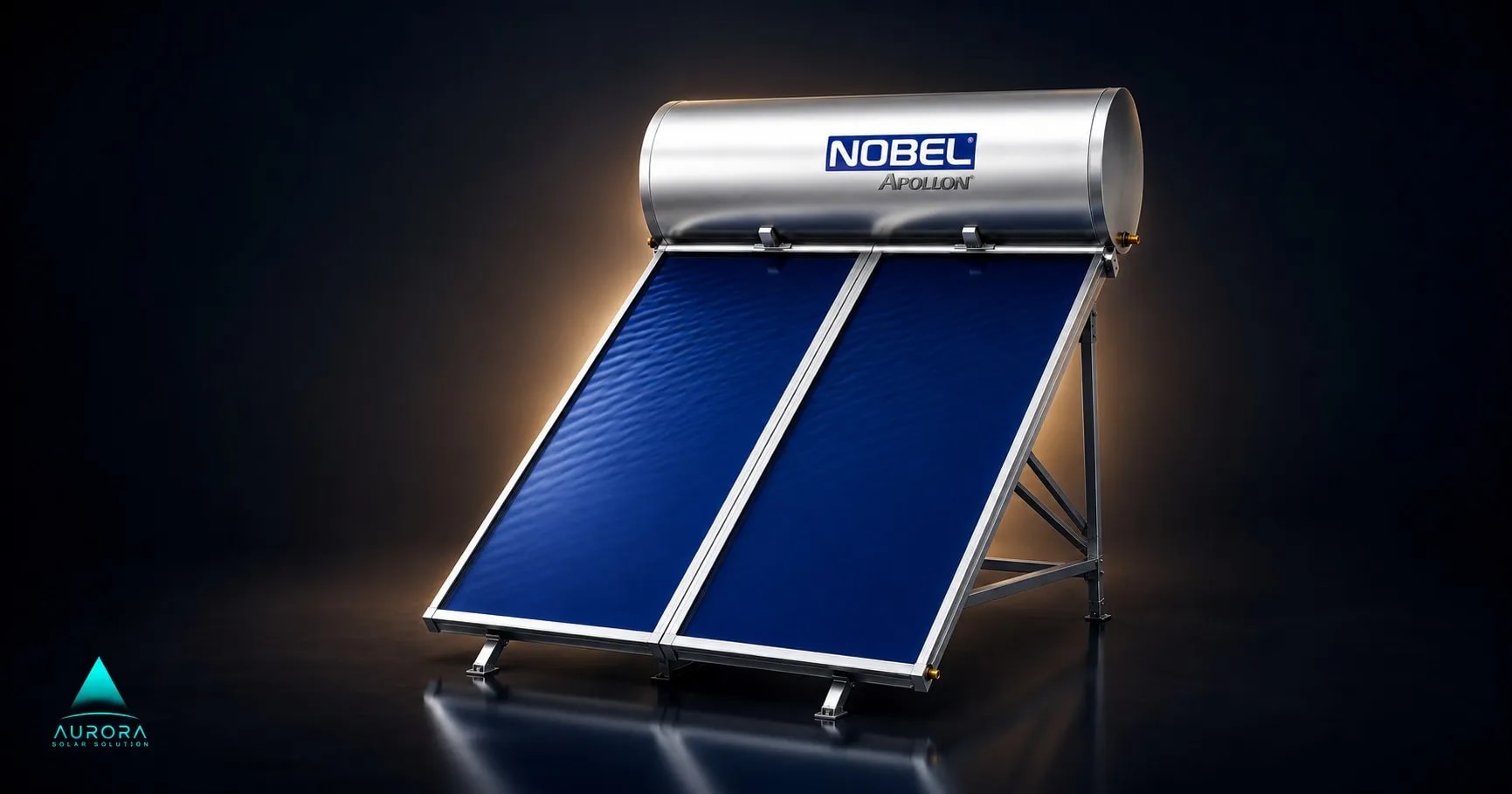
Nobel Apollon Solar Heater
Nobel’s top tier — double enamel, 10 cm insulation, thermosiphon.
Best for Villas and homes with heavy peak-hour demand
Learn more - NobelSolar Water Heaters
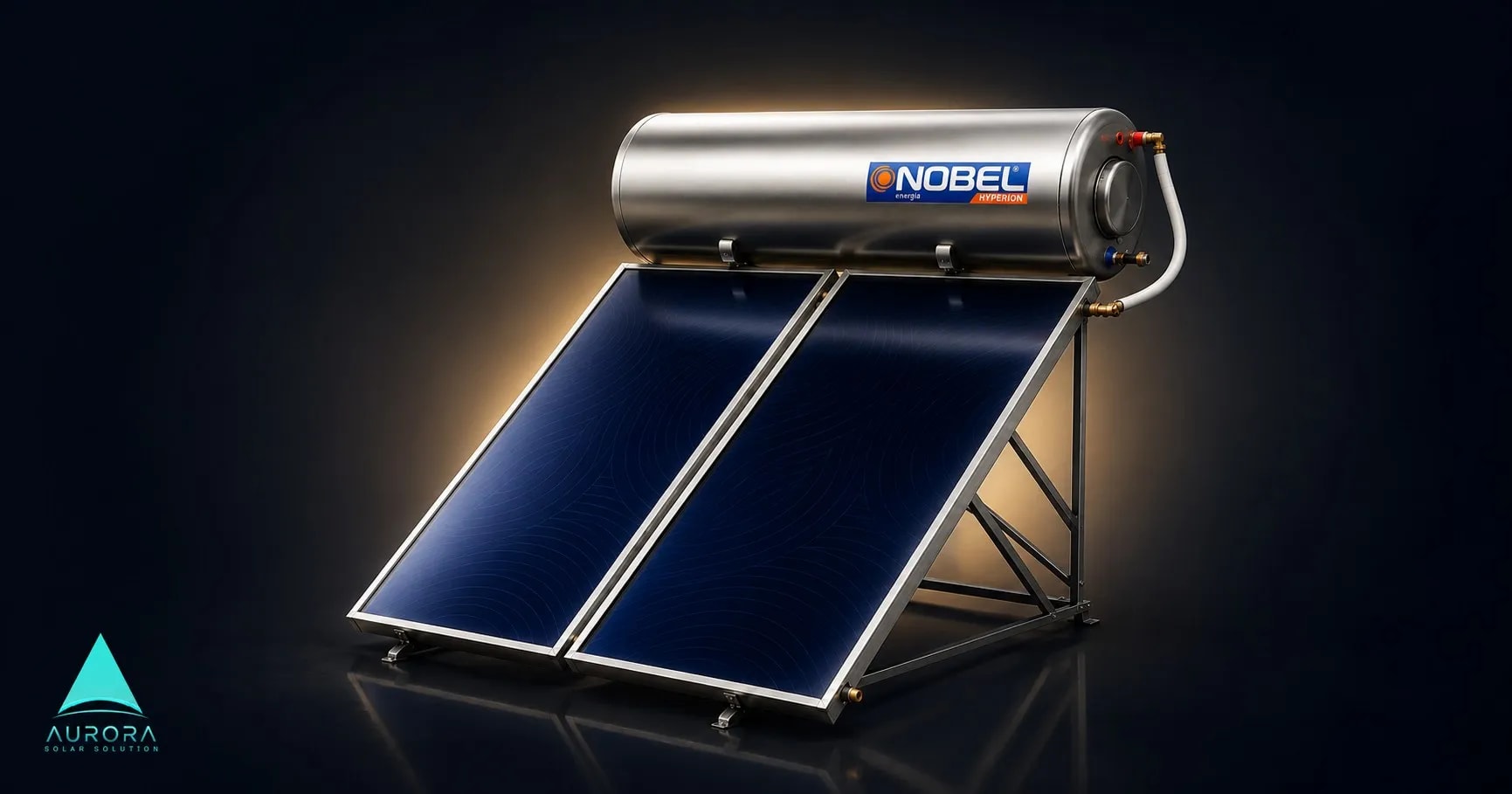
Nobel Hyperion Solar Heater
The balanced choice — marine aluminium, magnesium anodes, Solar Keymark.
Best for Coastal areas and high-salt water
Learn more - NobelSolar Water Heaters
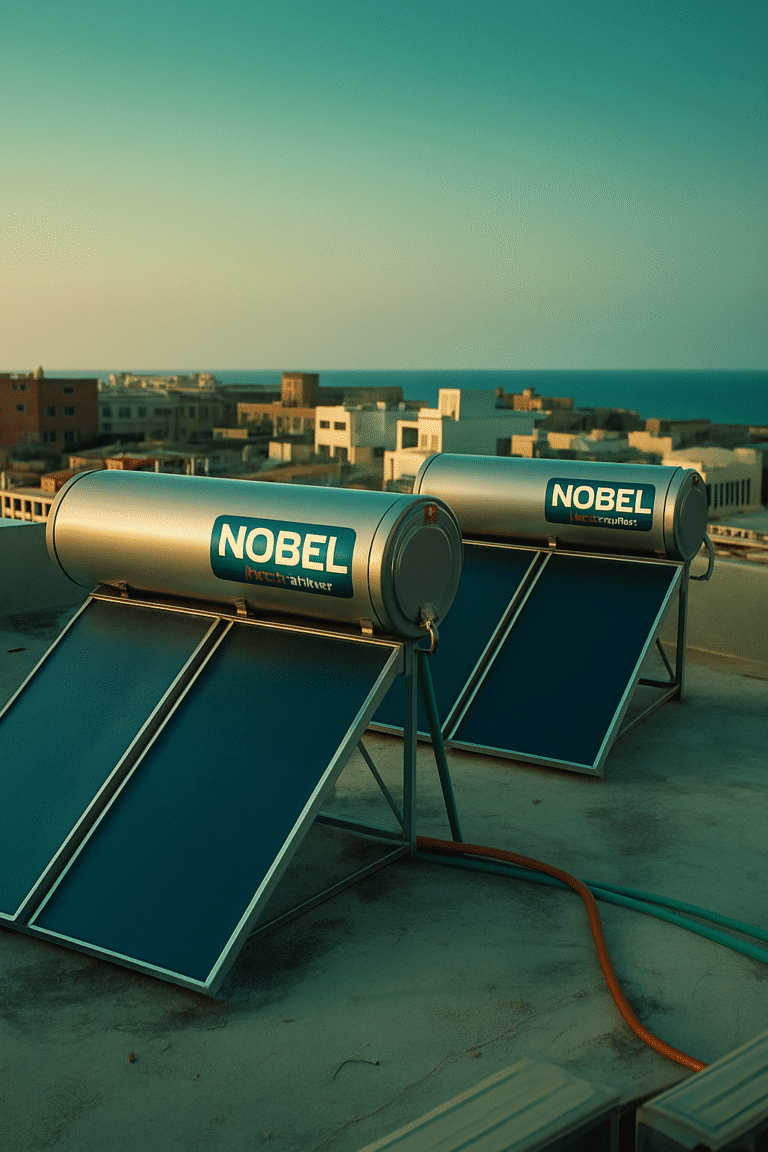
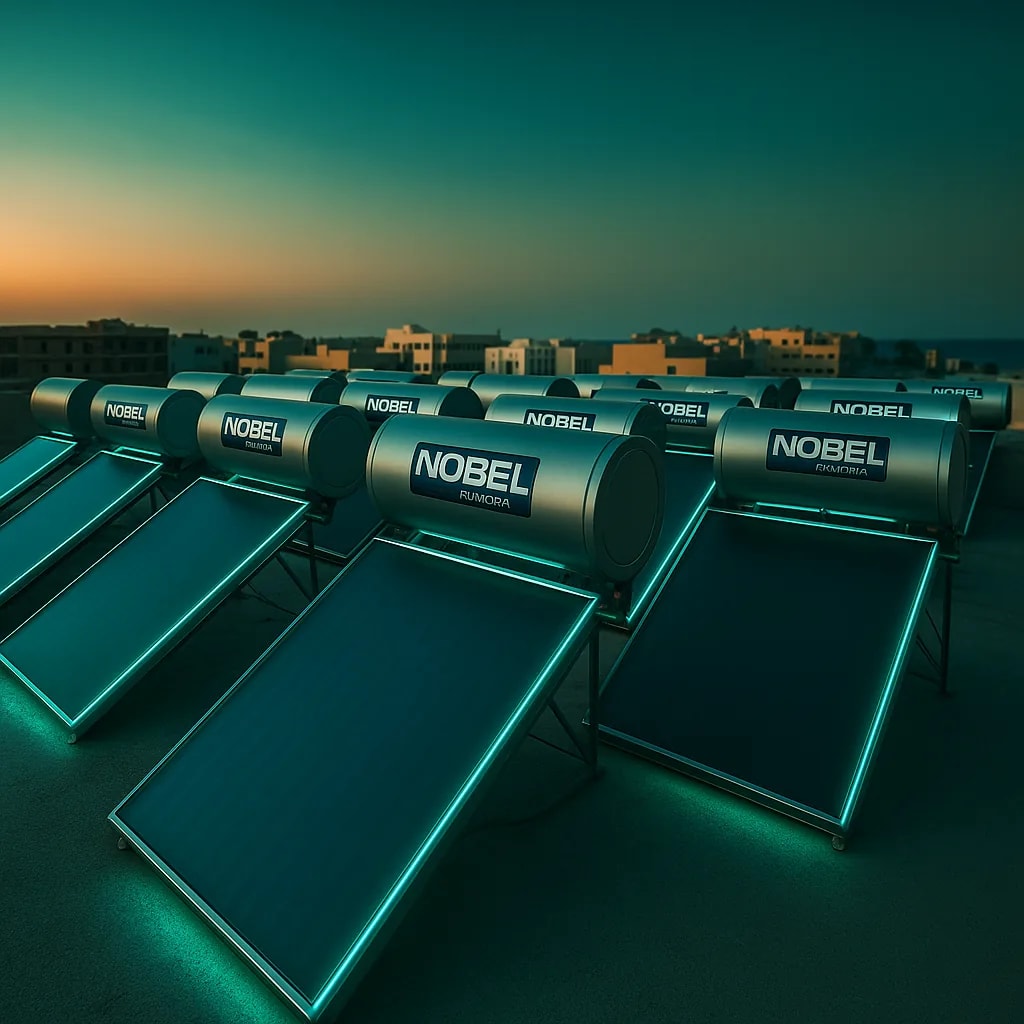
Solar Heaters for Projects
Central systems sized on the peak hour — never off the shelf.
Best for Hotels, resorts, hospitals and factories
Learn more - NobelSolar Water Heaters
Nobel Aelios Solar Heater
Nobel’s value pick — three capacities to 500 L and an inspection flange.
Best for Entering the Nobel range at the lowest cost — homes to large villas
Learn more - NobelSolar Water Heaters
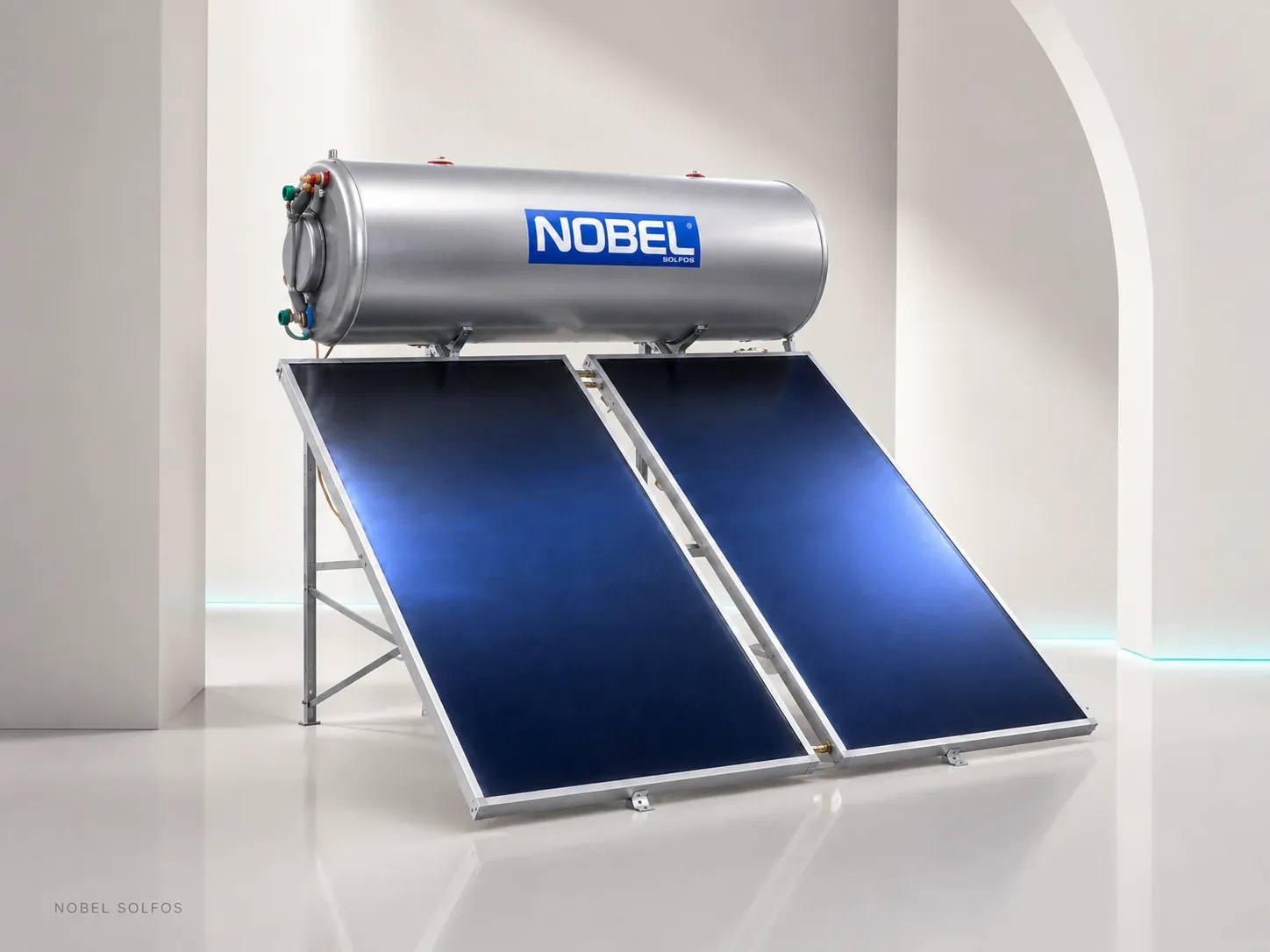
Nobel Solfos Solar Heater
The projects unit — DIN 4753 enamel and 50 mm polyurethane insulation.
Best for Hotels, hospitals and factories with a fixed demand peak
Learn more - Solar Water Heaters
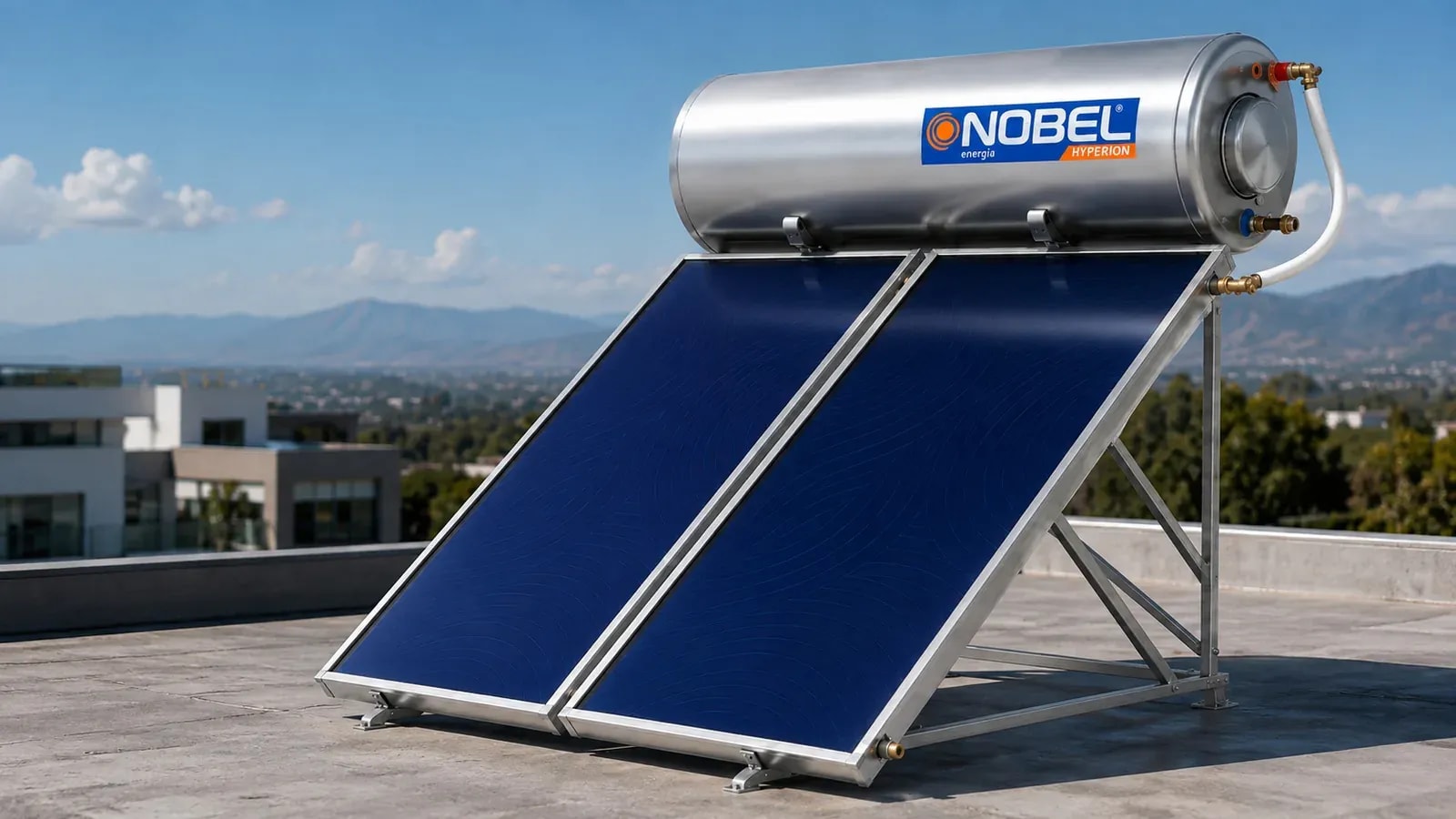
Economy Solar Water Heaters
A lower entry point — with the same installation and the same support.
Best for Flats and homes with moderate use and a mid-range budget
Learn more - Solar Water Heaters
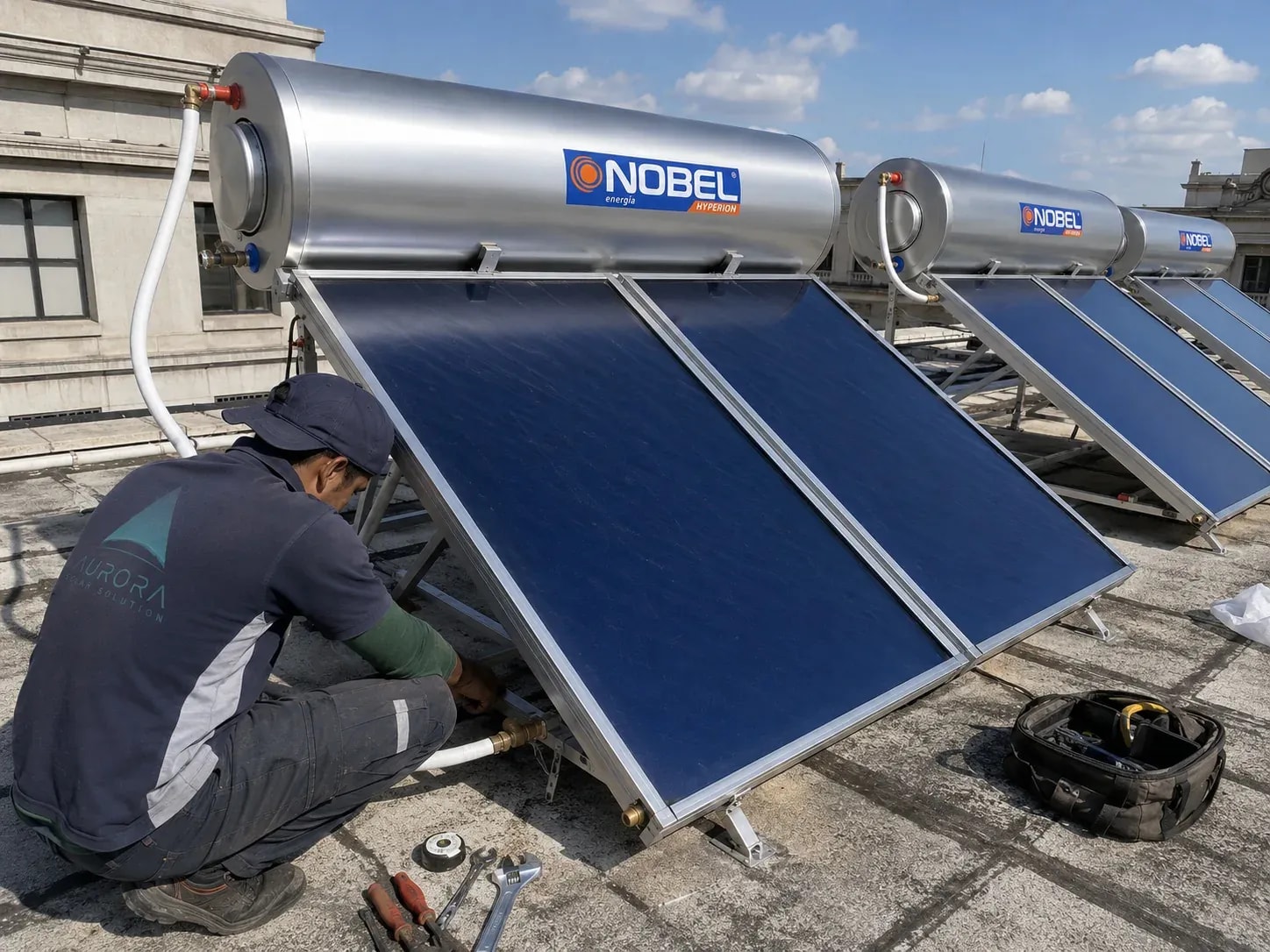
Central Forced-Circulation Solar Systems
Tank in the plant room, roof for collectors — 160 to 3,000 liters.
Best for Roofs that cannot carry a tank, and compounds with facade rules
Learn more - AristonGas Boilers
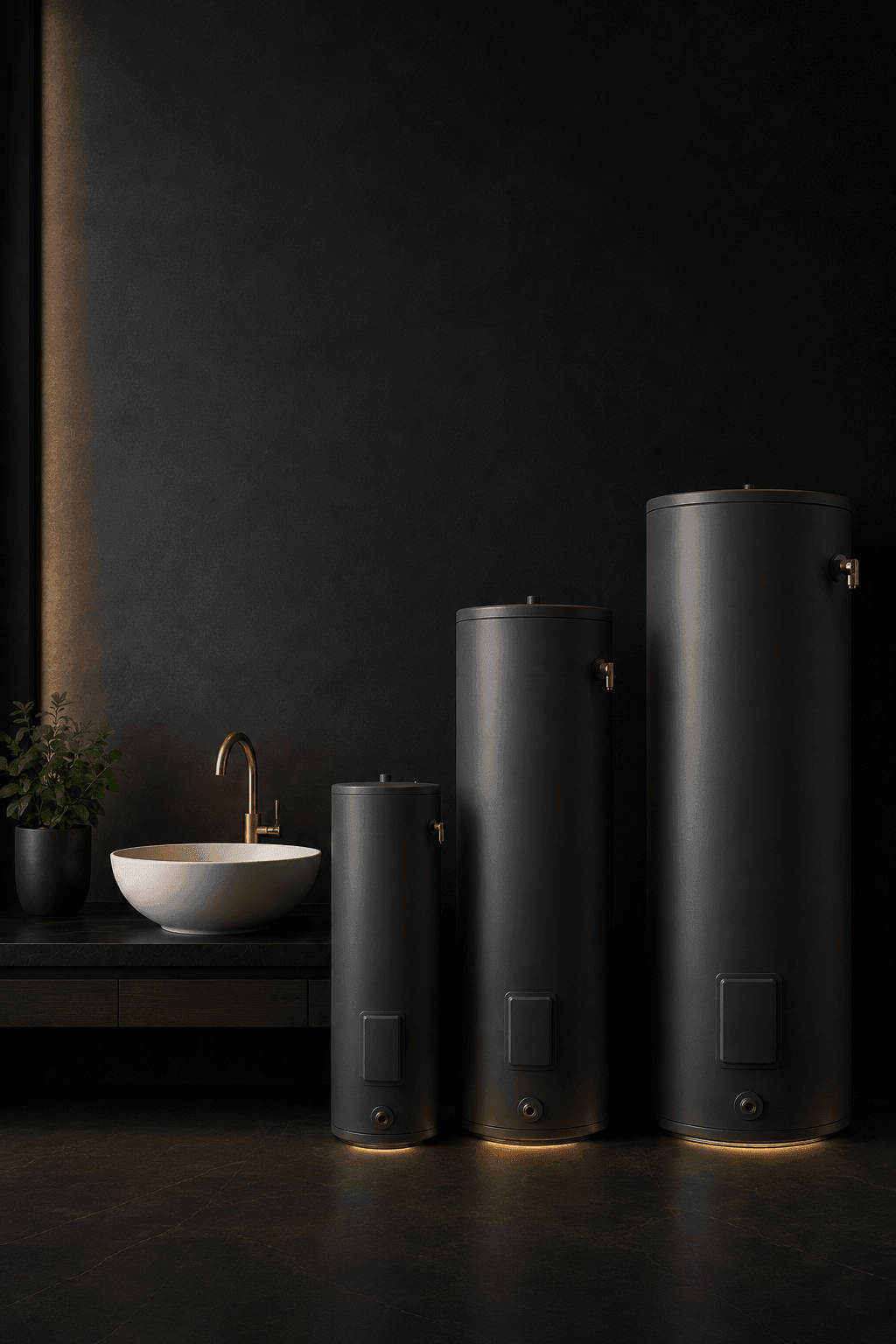
Ariston Natural-Gas Boilers
Stored hot water, ready for busy times.
Best for Villas and buildings on natural gas that also want heating
Learn more - Gas Boilers
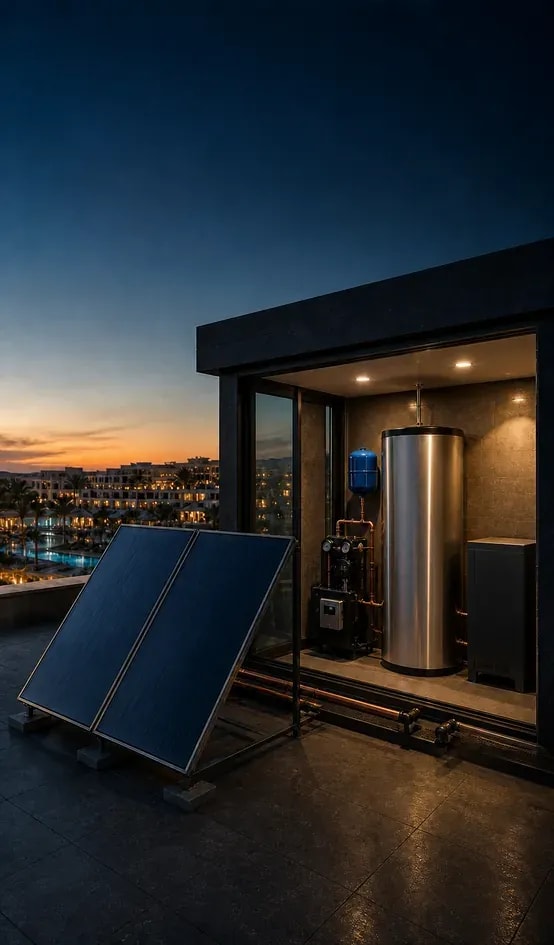
Central Hot Water Systems
Hot water in every bathroom — from one system.
Best for Homes with several bathrooms in use at the same time
Learn more - Gas Boilers
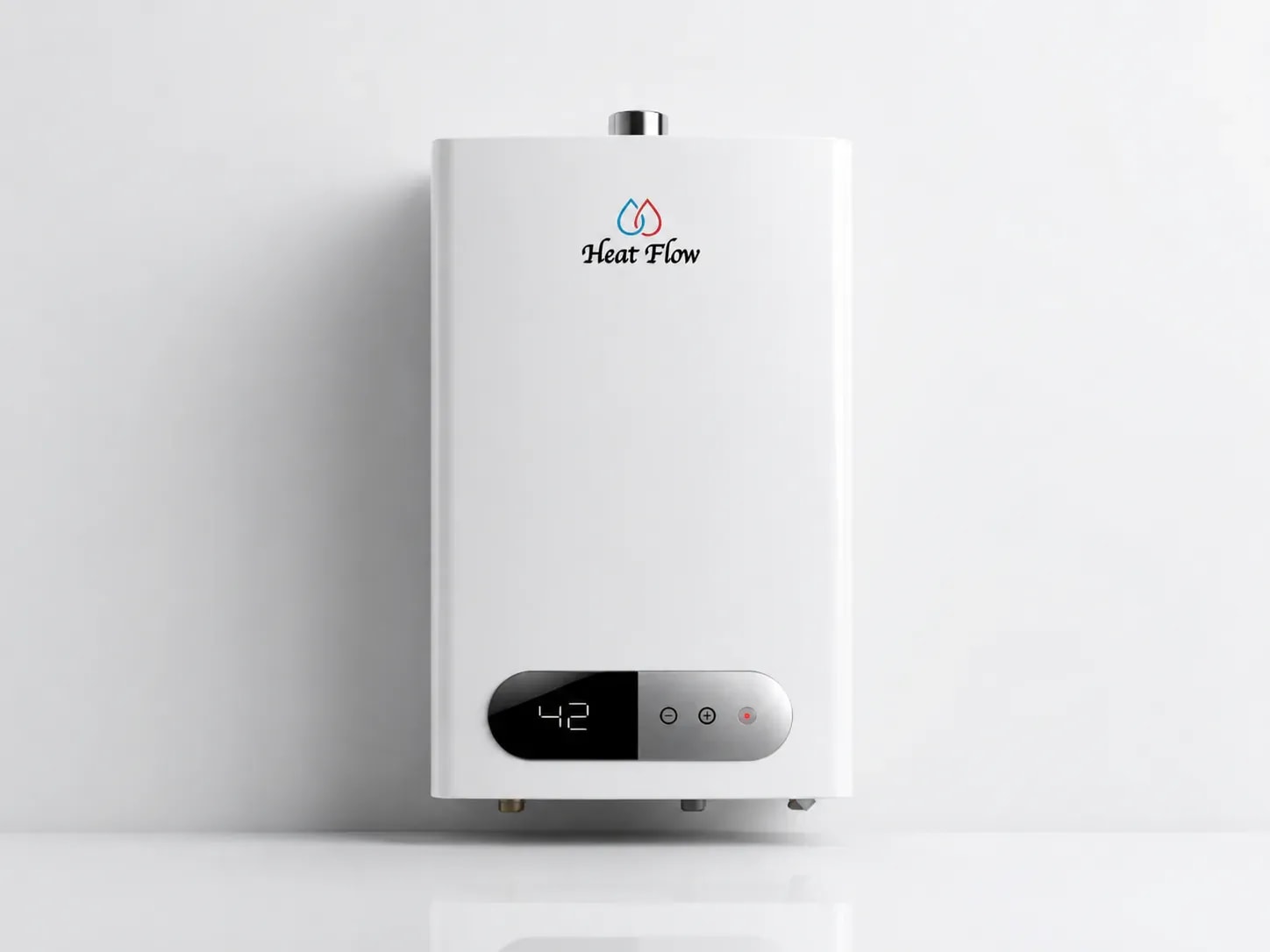
Instant Gas Water Heaters
Heats water as you use it, without a tank.
Best for Flats on gas that want hot water without a tank
Learn more - Gas Boilers
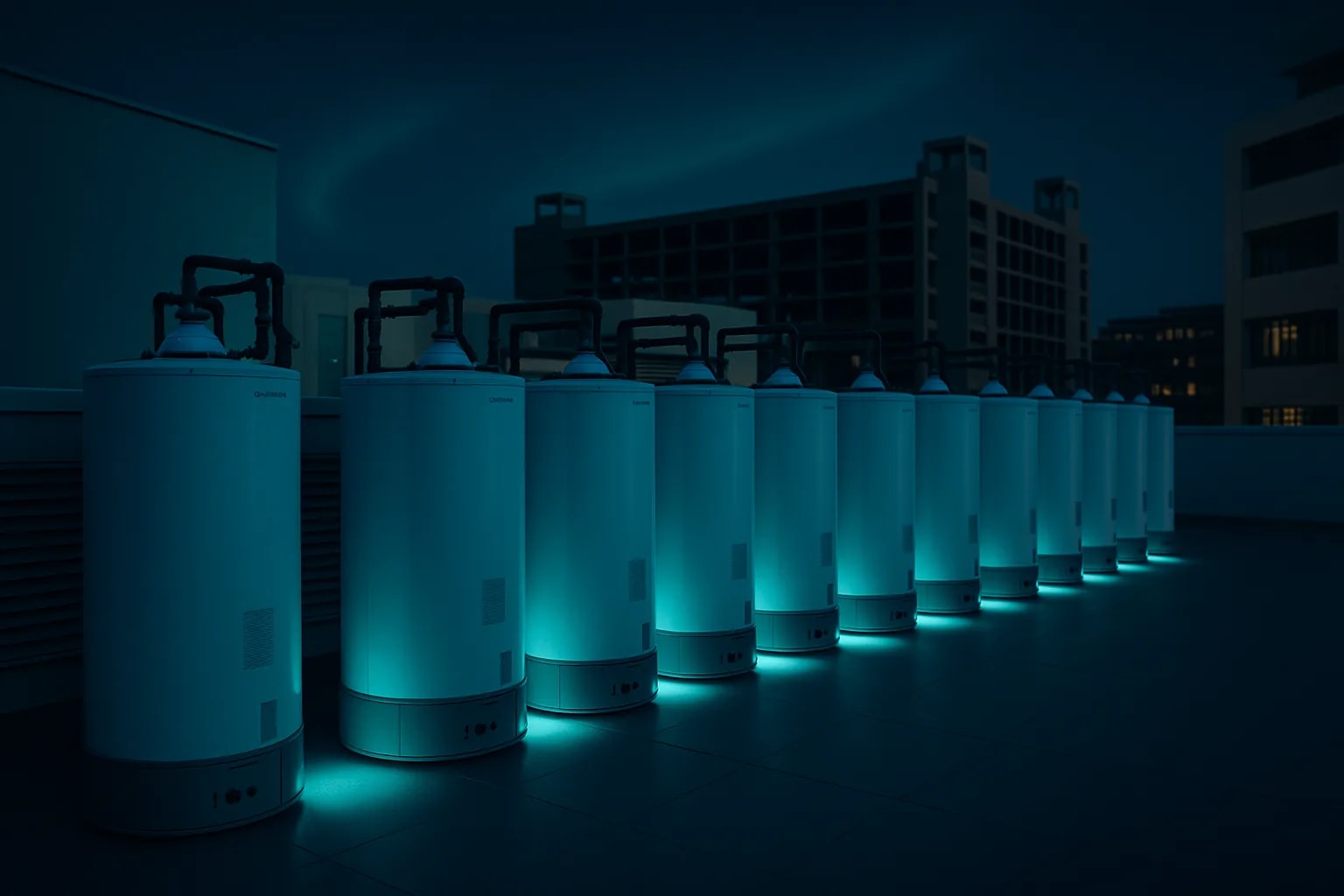
Home Water-Heating Heat Pump
An alternative to electric heaters and boilers — 60–75% saving.
Best for Homes with no natural gas and no suitable sunny roof
Learn more - NobelGas Boilers
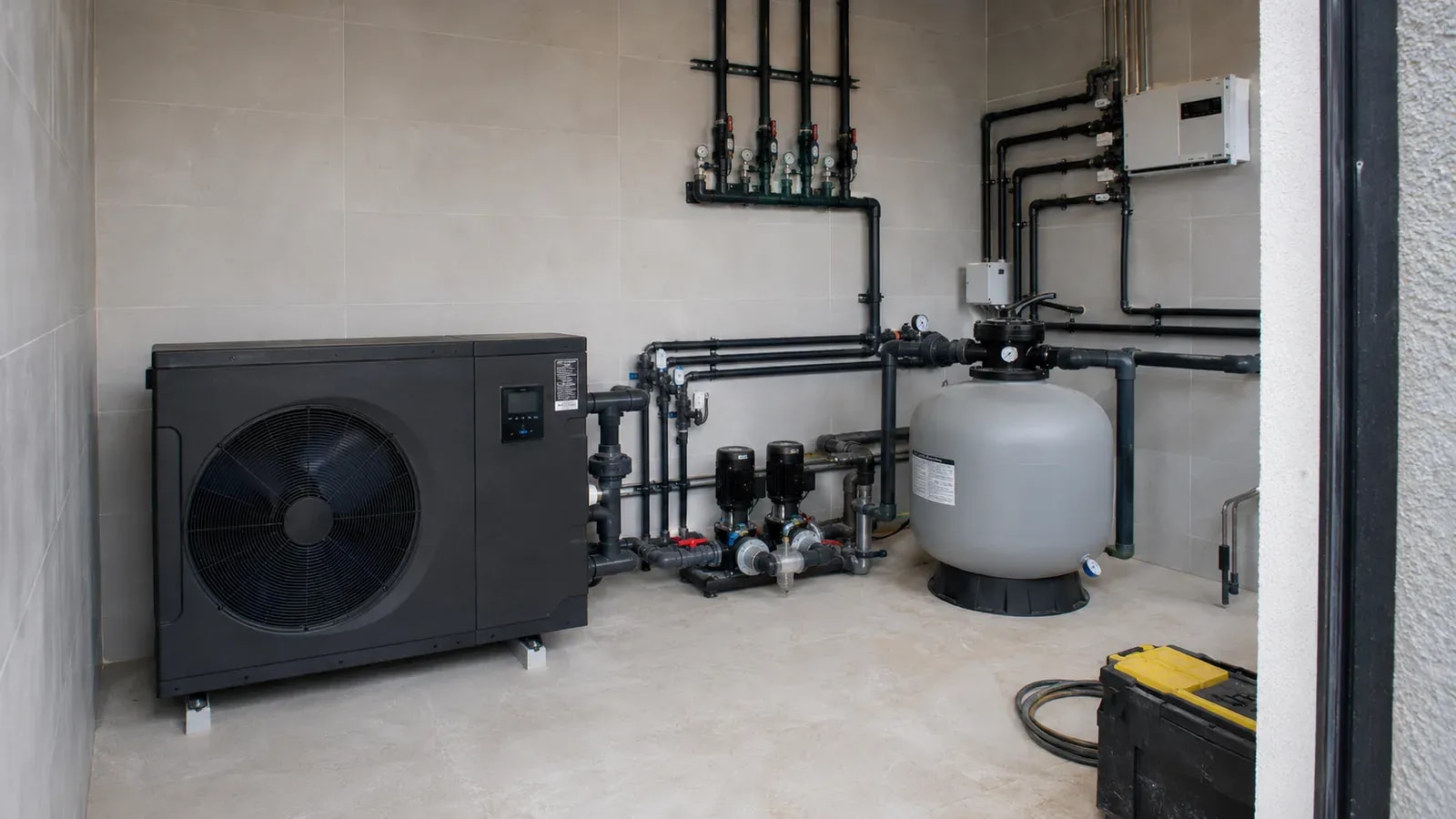
NOBEL Heat Pumps — Heating, Cooling and Hot Water
One unit for winter, summer and hot water.
Best for Homes wanting winter heating and summer cooling from one system
Learn more - Central heating
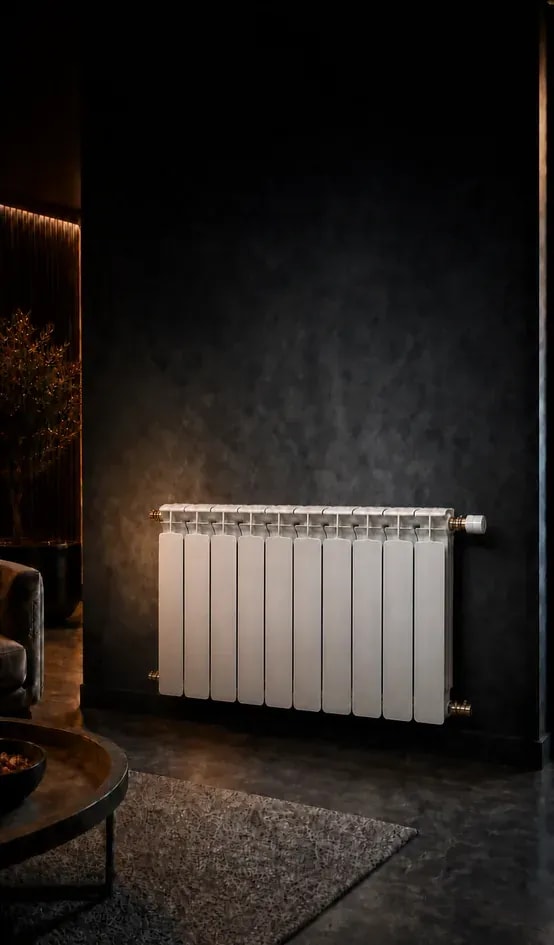
Radiator Heating
Fast room warmth — from the central boiler.
Best for Flats and villas that want per-room control
Learn more - Central heating
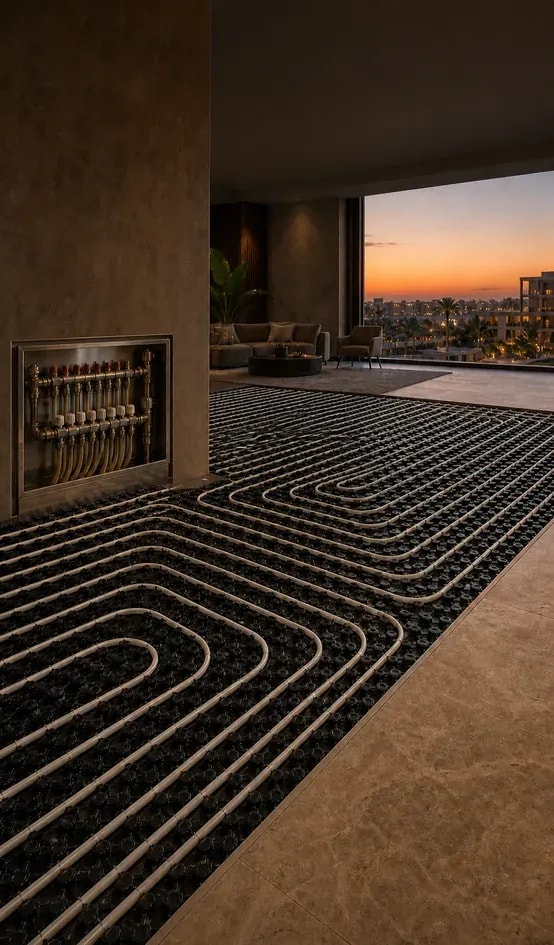
Underfloor Heating
Warmth spread under your feet — comfortable and hidden.
Best for Homes being finished or fully renovated
Learn more - Central heating
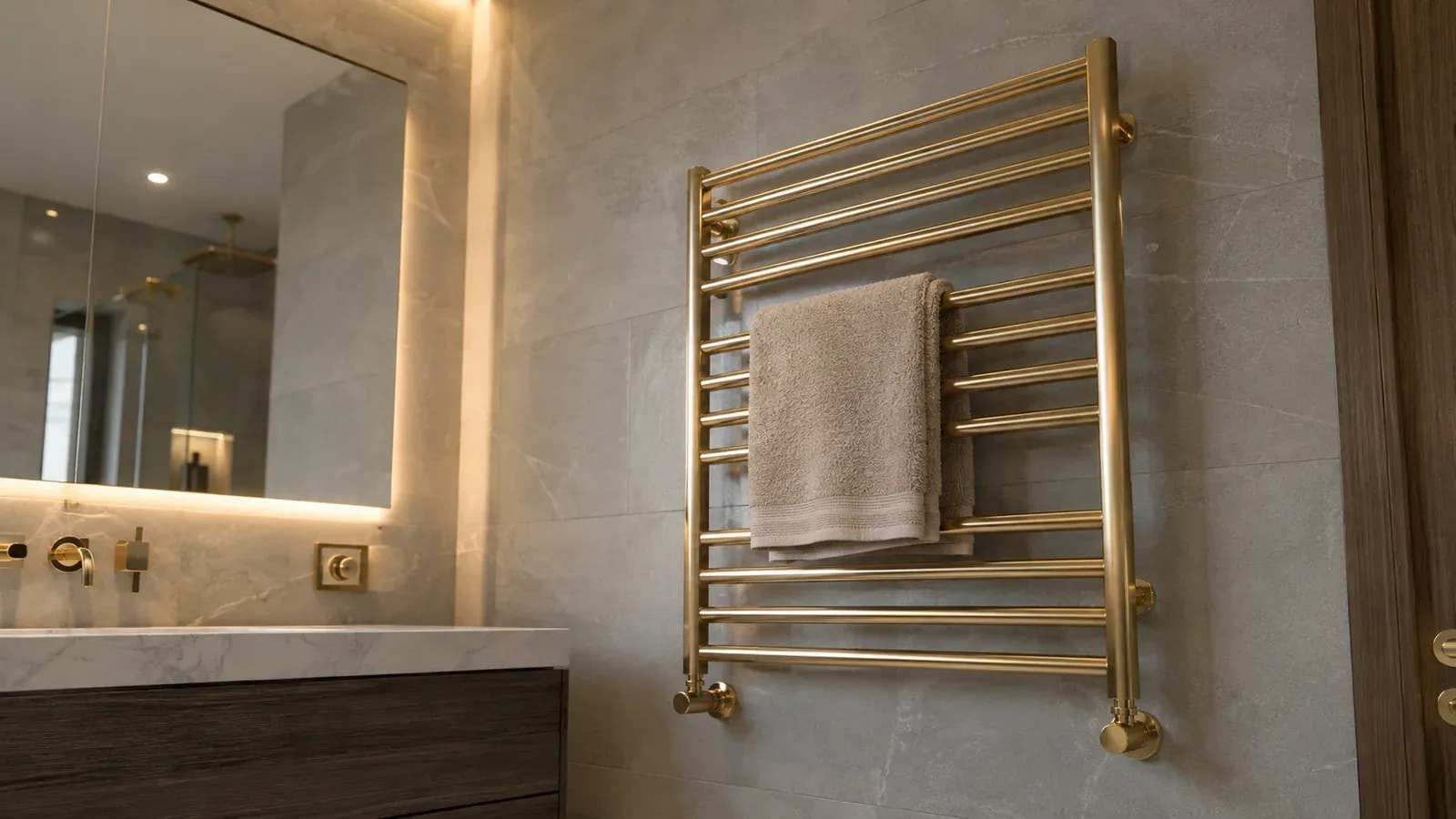
Towel Radiators
A warm bathroom and hot towels — practical and elegant.
Best for Bathrooms on a boiler-fed heating system
Learn more - Swimming Pool Heating
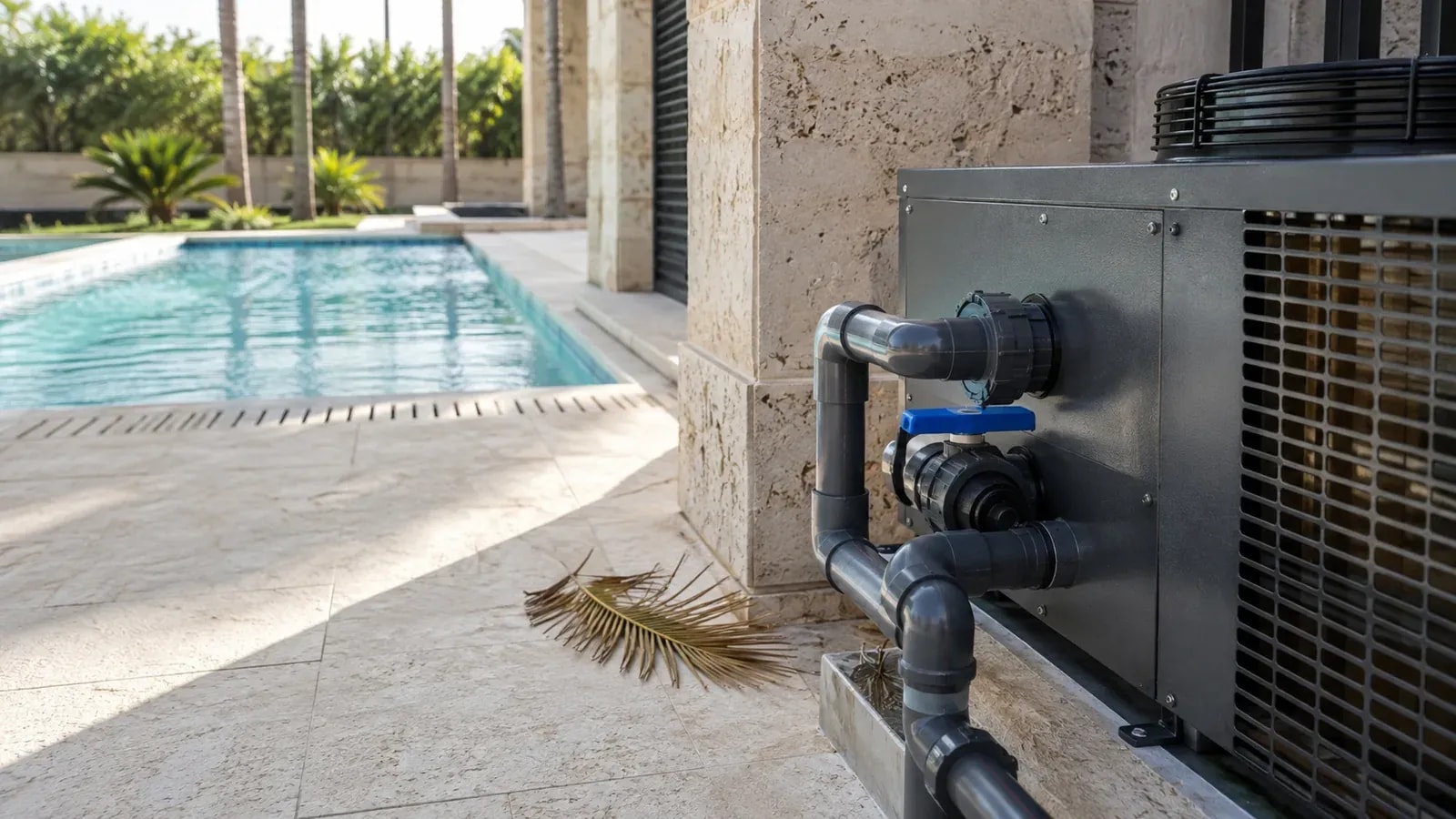
Pool Heat Pump
A warm pool all season — at the lowest electricity use.
Best for Villa pools in areas without natural gas
Learn more - Swimming Pool Heating
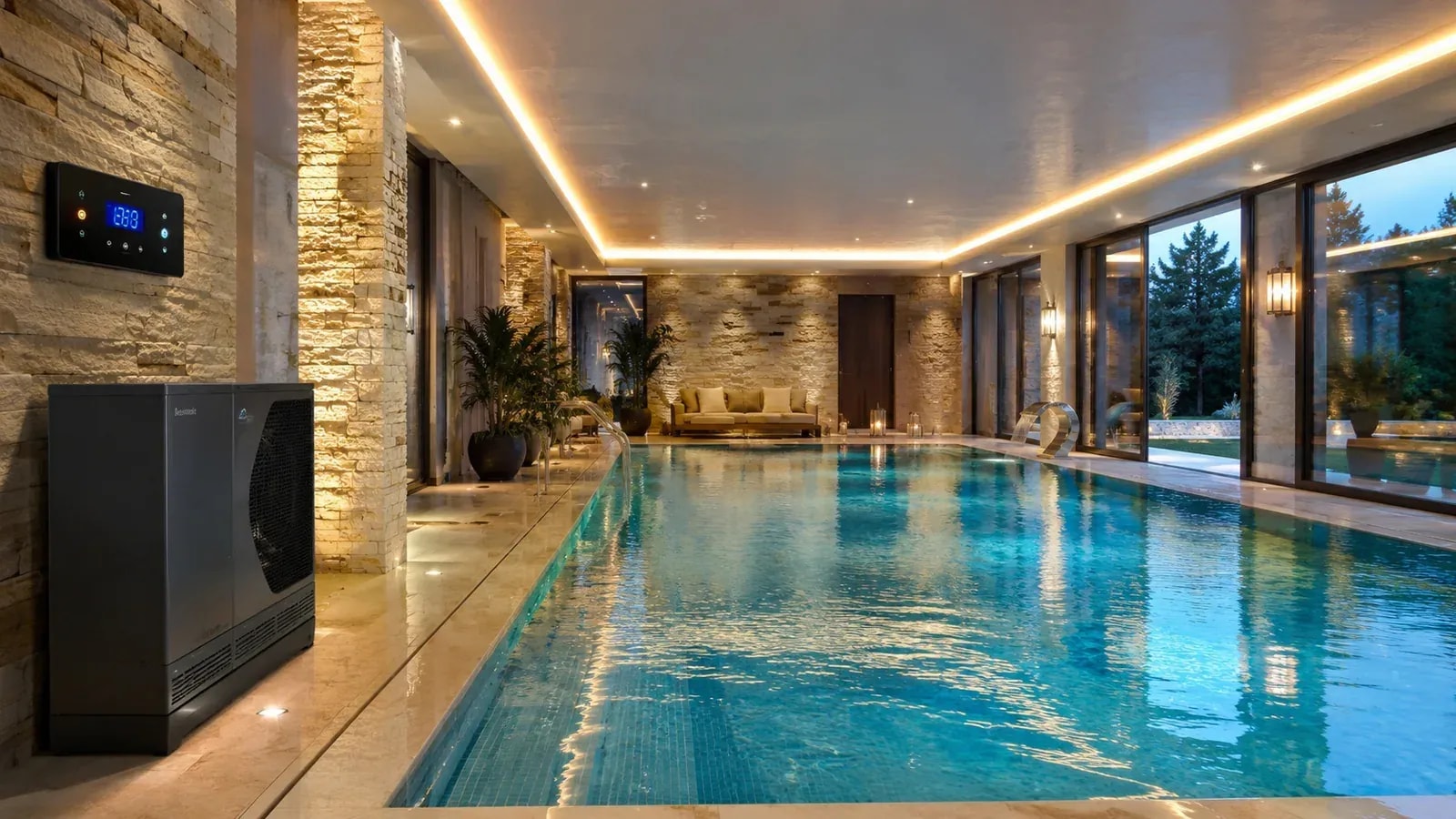
Pool Heater with Titanium Heat Exchanger
Resists chlorine and salt water — heating that lasts.
Best for Salt-water pools and pools with high chlorine
Learn more - Swimming Pool Heating
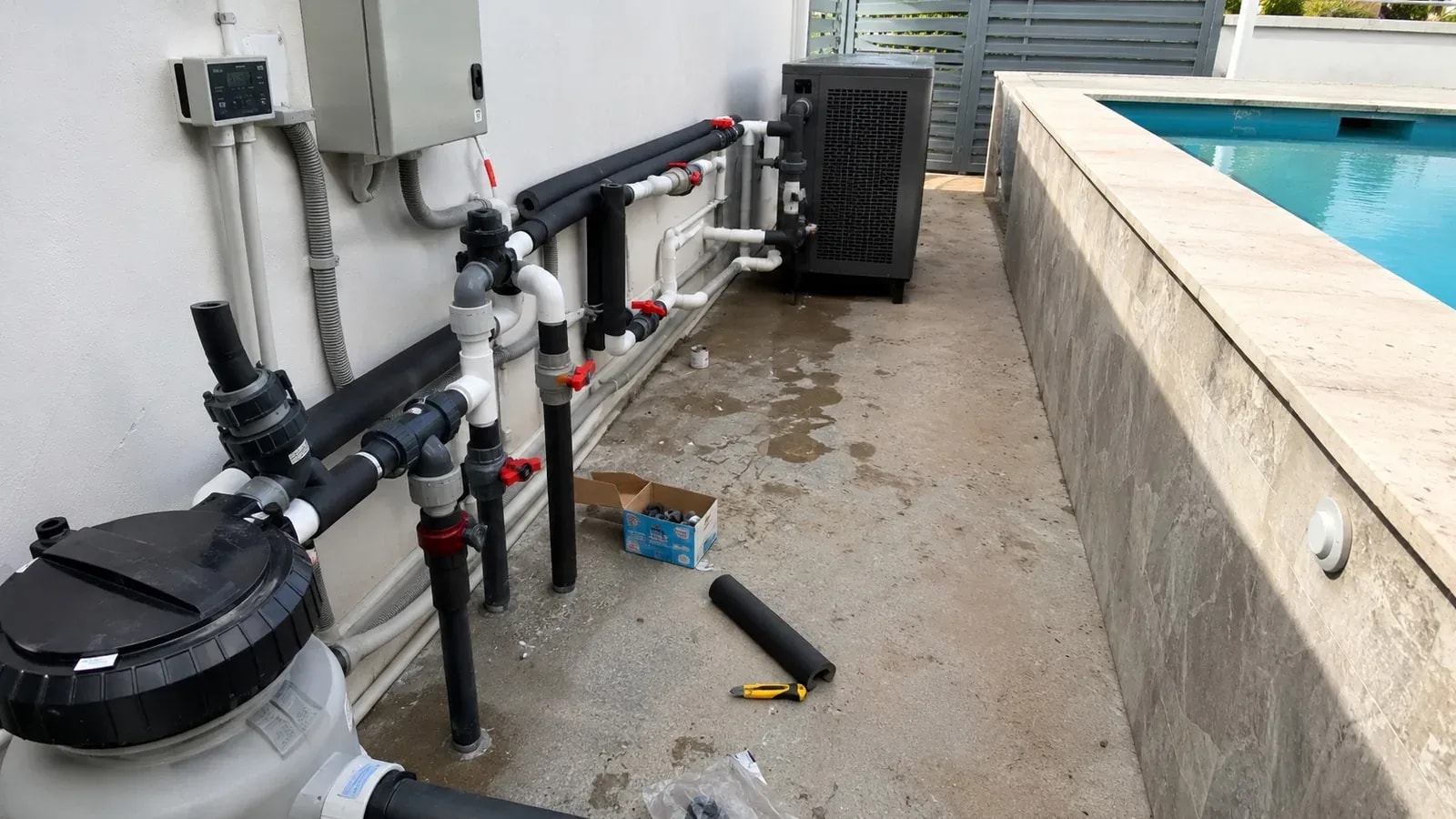
Pool Heating for Hotels and Resorts
An extended swimming season — engineered to your pool.
Best for Hotel, compound and club pools
Learn more - Accessories & Spare Parts
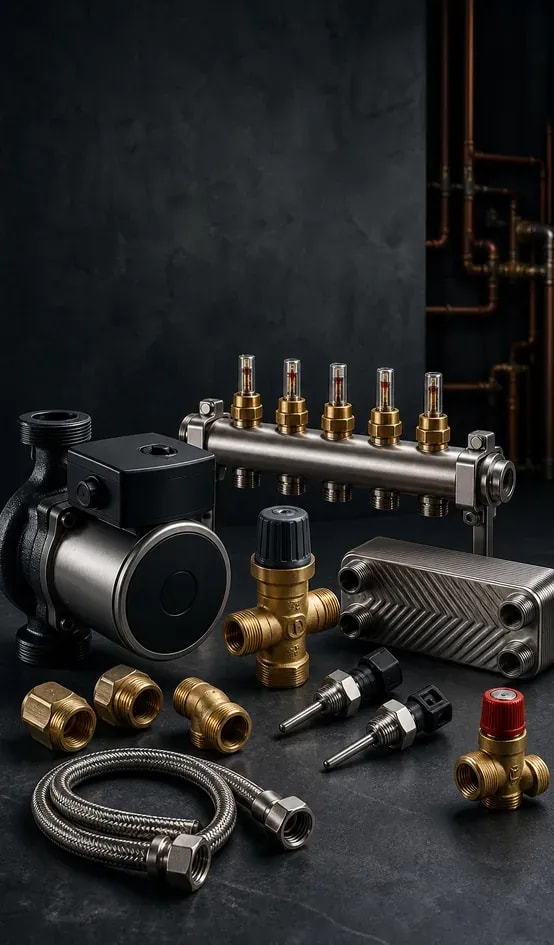
Accessories & Spare Parts
The right part — from the people who installed it.
Best for Anyone with a working heater, boiler or heating system who needs a part
Learn more
In detail: what decides the choice
Choosing between a solar water heater, a boiler and a heat pump comes down to two things before anything else: what your property has, and what you actually need. A sun-exposed roof opens up solar; natural gas opens up boilers and central heating; without either, heat pumps and electric solutions are the path.
Then comes the type of need. Hot water for showers and the kitchen is one thing, space heating in winter is another, and pool heating is a third with entirely different calculations. Systems that do more than one exist, but choosing them is an engineering decision rather than a matter of taste.
The last factor is size: household members and usage pattern in a home, or unit count and draw-off points in a project. That is what sets capacity and the number of units — without it any recommendation is guesswork.
Questions that come up before choosing
Solar water heater or gas boiler?
A solar heater runs on sunlight, so its energy source is free after installation, but output drops on overcast days and it needs an exposed roof. A boiler runs on natural gas, so it delivers instant, year-round hot water and can feed central heating too — at the cost of a continuing monthly bill. The choice depends on what your property has and on whether you also want heating.
And what is the difference between solar and a heat pump?
Solar takes its heat directly from sunlight, so performance is tied to the weather and it needs roof area. A heat pump runs on electricity and moves heat from the surrounding air, so performance is steady day and night, summer and winter, in far less space. That is why it is the usual answer for pools and for properties without a suitable roof.
My home has no roof — what are my options?
You have options. With natural gas, a boiler covers everything — hot water and heating. With neither gas nor roof, a heat pump works from the surrounding air and fits in a small footprint. An instant gas heater is a third option for apartments. The Smart Advisor gets you to the right one in at most five questions.
How do I work out the right capacity?
Capacity comes from household size and usage pattern, not from floor area. Simultaneity matters: a household showering across the day is not the same as one showering within the same hour. Pools are calculated completely differently, starting from water surface area. The Smart Advisor runs that calculation and the site visit confirms it in person.
Why are prices not published on the pages?
Because the price is not one number — this is a smart heating system sized around your home, not a product off the shelf. Five things move it, all measured on your own home: Capacity (how many litres your home actually needs) · Consumption (how much hot water you use per day) · Purchase timing (the season you buy in — costs are not fixed year-round) · Accessories (pump, controller, backup heater and safety valves) · Optional extras (any additions you ask for). Any published figure without those five describes a different house. That is why the quote comes after the site survey, and the survey is free with no commitment.
Are installation and warranty part of the purchase?
Aurora hands over a working system: site visit, then design and selection, then installation by a technical crew, then commissioning and handover. The warranty is activated after installation — its terms vary by product and are shown on each product page and on the warranty activation page.
What about spare parts and accessories?
They are a separate catalogue category covering the parts that wear over time: elements, thermostats, magnesium anodes, safety valves, circulation pumps, radiator valve sets and underfloor heating supplies. They are sold three ways — on their own, as part of an Aurora installation, or under a maintenance contract. And you do not need to know the part name: describe the unit and the fault you can see, and a technician identifies it — because the worst outcome is buying a part on a guess and discovering the fault was somewhere else.