

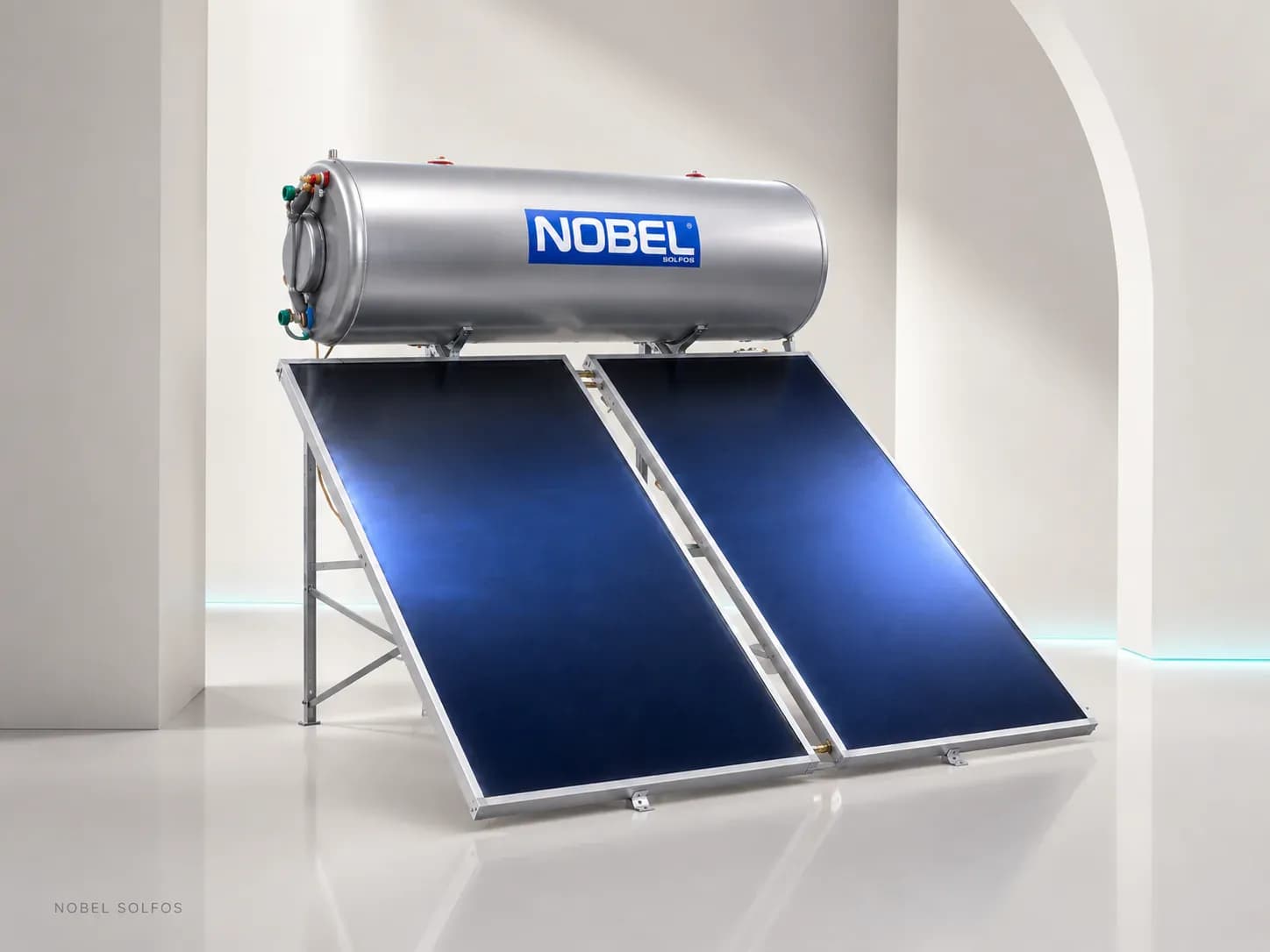
Solfos is a storage unit designed for projects, hotels and facilities: a 2.5 mm steel inner body, internal enamel cured at 860°C to DIN 4753, and a 1.5 mm surrounding exchanger for a closed loop. Two capacities: 200 and 300 L.
Last updated: September 30, 2026
We’ll call you within the hour to confirm details and set an inspection time.
Highlights
- Designed for projects, hotels and large facilities
- Internal enamel cured at 860°C to DIN 4753
- 1.5 mm surrounding exchanger for a closed loop
- 50 mm polyurethane insulation and a coated steel casing
Completed projects you can explore
- 109projects delivered
- 998units installed
- 16governorates
These figures come from the projects record on this site — you can count them yourself.
Solfos is not a domestic heater — it is a storage unit designed for projects: hotels, hospitals and facilities that run continuously. Its inner body is 2.5 mm steel with internal enamel cured at 860°C to DIN 4753, its surrounding exchanger is 1.5 mm for a closed loop, and it is insulated with 50 mm of polyurethane. Available in 200 L and 300 L, with the unit count set by an engineering survey.
Who it is for
- Hotels and resorts with a draw peak concentrated in specific hours
- Hospitals where service continuity is a design requirement rather than an option
- Factories and companies whose load follows shifts
- Any facility that needs parallel units so maintenance happens while operation continues
When it is not the right choice
It is not suited to an ordinary home — its specification is built for continuous operation, which a household does not need. For a villa, Apollon or Aelios fit better and cost less. And if the facility roof cannot take tanks above the collectors, the design moves to forced circulation.
How it works on a project
Units are installed in parallel rather than as one oversized unit, so any unit can be taken out for service while the rest carries the load. A facility is sized on the critical hourly load, not the daily total — room count, occupancy and the type of draw-off points set collector count and storage volume. An auxiliary heat source runs alongside it automatically, because solar alone does not carry a facility.
The benefit you feel
Lower running cost on a large load — this is where the saving shows most clearly, because consumption is substantial to begin with. And continuity: parallel units mean maintenance never stops the service. See the hotel and hospitality and hospital projects Aurora has delivered.
How it works in winter
On the roof, a collector captures the sun’s heat and a tank keeps the water hot. On sunny days the sun is enough on its own; on cloudy days or high demand, the electric backup runs automatically and tops up — so no cold water in winter.
The next step
Request an engineering survey for your facility — we measure the load and peak hours and produce the design and unit count, with no off-the-shelf sizing and no commitment.
Product images
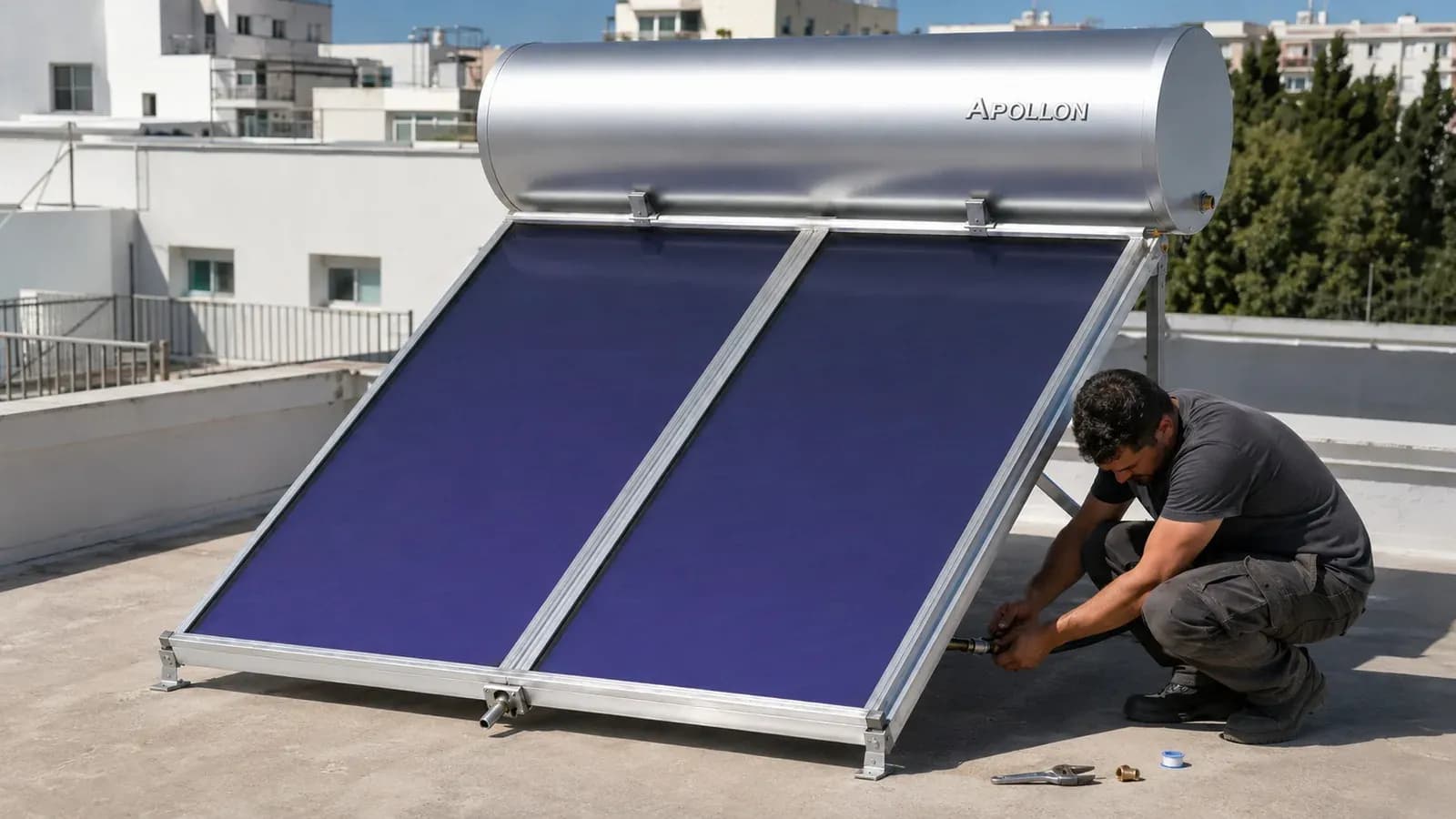
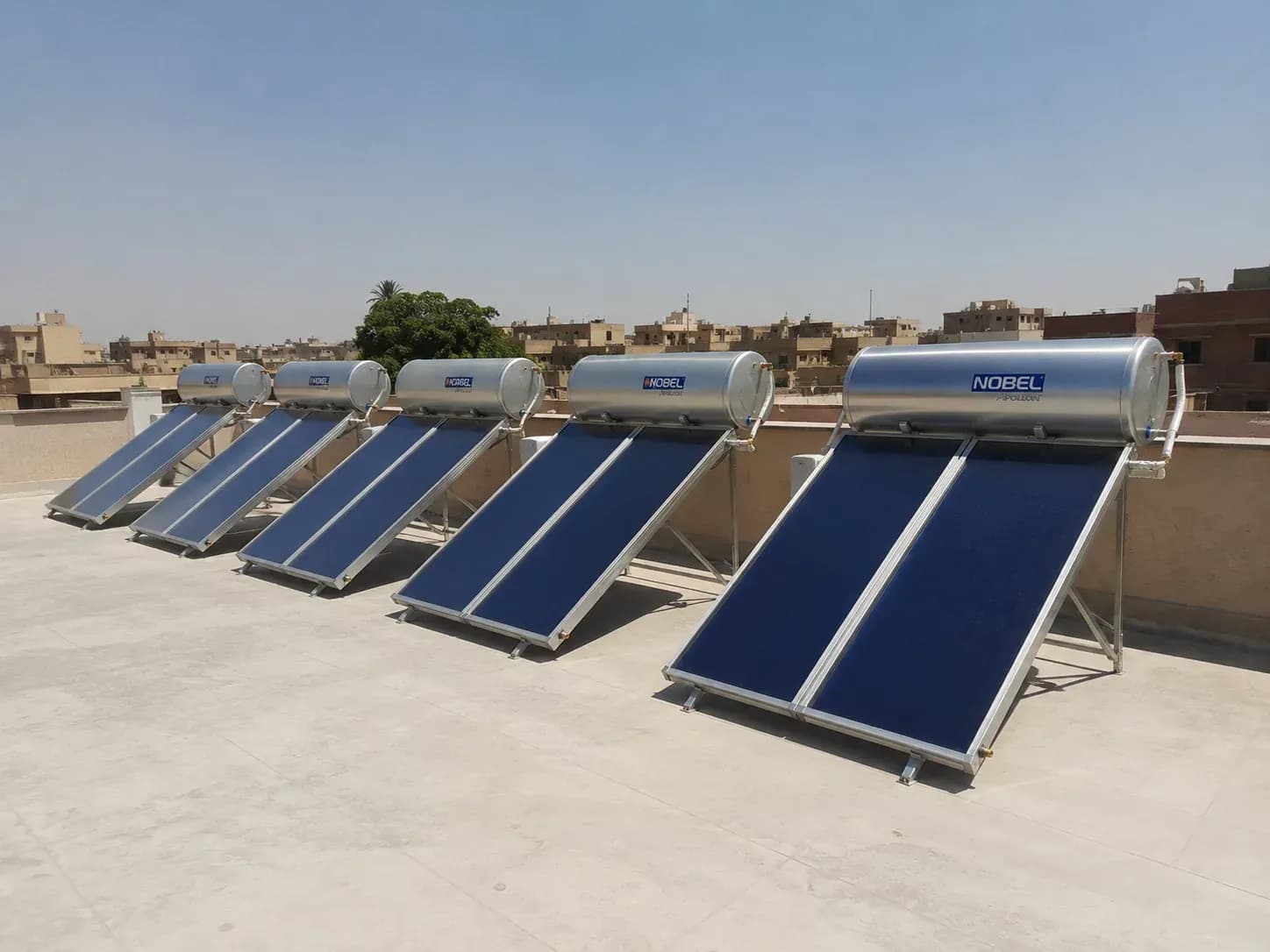
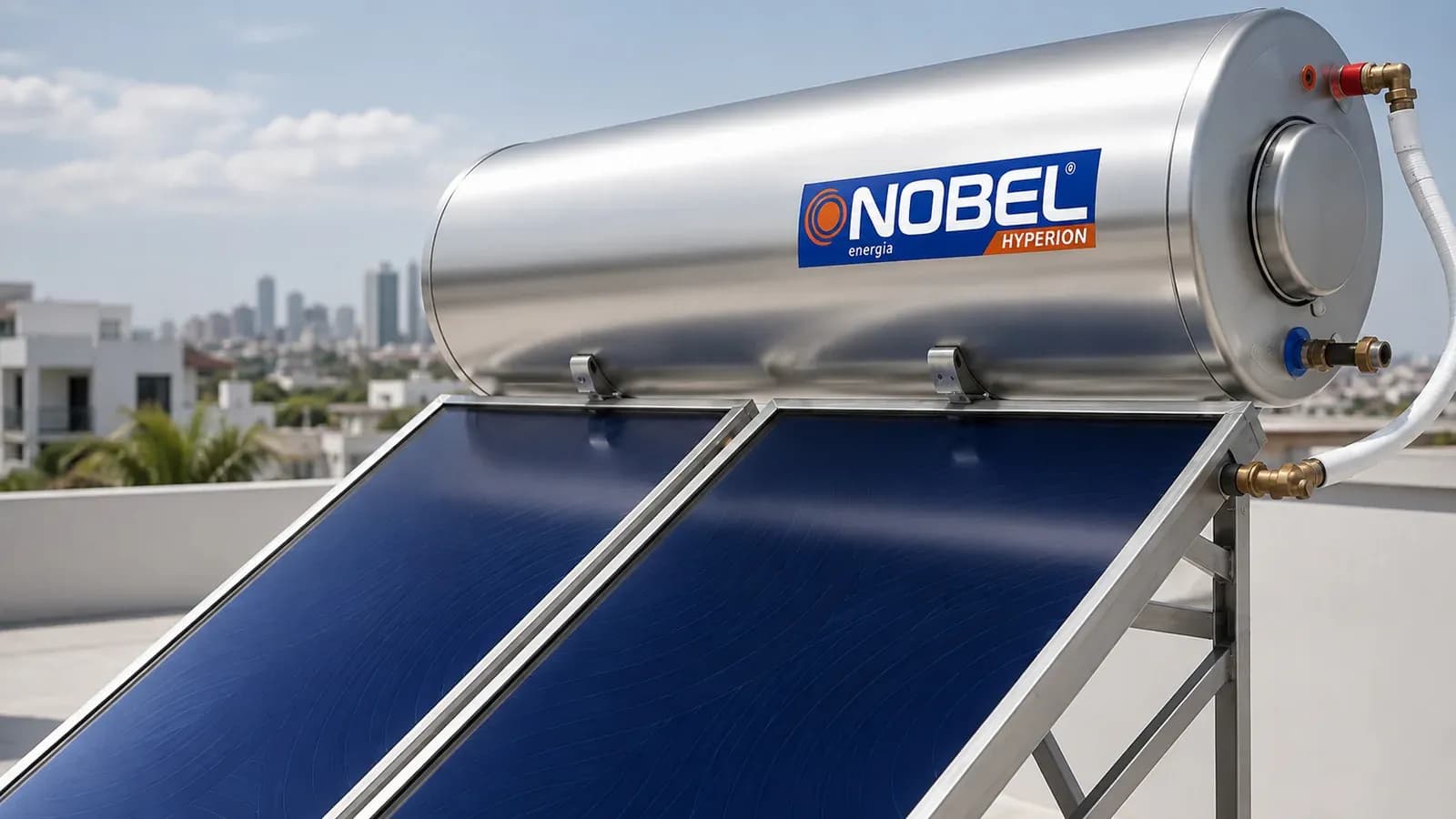
Specifications
| Available capacities | 200 L · 300 L |
|---|---|
| Intended use | Projects, hotels and large facilities |
| Inner tank | 2.5 mm steel |
| Tank lining | Internal glass enamel cured at 860°C to DIN 4753 |
| Heat exchanger | Surrounding, 1.5 mm, for the closed circuit |
| Insulation | 50 mm polyurethane |
| Casing | 0.5 mm coated steel |
Specifications from the approved Aurora catalogue. The right model and output for your property depend on how you use it — the Smart Advisor recommends and the site visit confirms.
NOBEL SOLFOS compared with the other Nobel models
NOBEL SOLFOS: Intended for projects, hotels and large facilities, configured to match the project needs. Available capacities: 200 L · 300 L
- NOBEL APOLLONThe only model whose approved specification states an actual capacity, an operating pressure and Solar Keymark certification — the most fully documented of the four.
- NOBEL HYPERIONPairs the APOLLON collector with the AELIOS tank and adds magnesium protection — a combination drawing on both.
- NOBEL AELIOSClosed-loop with an enamelled tank and a surrounding exchanger, plus a service flange, so the tank can be reached without dismantling the system.
FAQ
Who is Solfos for?
Solfos is built for projects, hotels and large facilities rather than ordinary domestic use. Its inner body is 2.5 mm steel with an internal enamel cured at 860°C to DIN 4753, and its surrounding exchanger is 1.5 mm for a closed loop — a build made for continuous operation, not a household. Available in 200 L and 300 L within a central system.
What capacity is Solfos?
It is available in 200 L and 300 L. The right number of units for a facility is set in the engineering survey based on consumption and peak hours — a hotel is designed around the peak hour, not the daily average. See [hotel and hospitality projects](/en/projects/sector/hotels).
What does enamel cured at 860°C to DIN 4753 mean?
DIN 4753 is a German standard governing the internal enamel lining of hot-water tanks: curing temperature, layer thickness and adhesion. Curing at 860°C fuses the layer to the metal instead of leaving it as a coating on top — and that is what determines long-term corrosion resistance, especially under the continuous operation of a facility.
Why 50 mm polyurethane insulation?
Polyurethane delivers high thermal resistance at a smaller thickness than other materials, which matters on projects where plant-room space is accounted for. Insulation determines overnight loss — how many degrees the water drops between late evening and early morning.
Solfos or a forced-circulation system for a facility?
Solfos is a storage unit designed for projects, while [forced circulation](/en/products/forced-circulation-solar-systems) is an operating method that lets the tank sit away from the roof. They are not necessarily alternatives — many facilities take units on a forced-circulation layout. The engineering survey decides the combination.
Who supports it after commissioning?
The same team that designed and installed it. Facilities take [scheduled maintenance](/en/services/maintenance) on an agreed plan, and as-built system documents are handed over with the project so any later service team can work on it.
How is the price decided?
We select a smart heating system sized around your home, not a product off the shelf. Price depends on Capacity (how many litres your home actually needs) · Consumption (how much hot water you use per day) · Purchase timing (the season you buy in — costs are not fixed year-round) · Accessories (pump, controller, backup heater and safety valves) · Optional extras (any additions you ask for). After the free assessment, our quote identifies the model, specifications, installation scope and warranty. You get a clear recommendation and know what the cost includes, with installation and support from Aurora.
Already have a solar heater running?
The element, magnesium anode, tank gasket and safety valve are wear parts that run out over time — and if the anode is left too long, corrosion starts eating the tank itself.
See accessories & spare partsFrom the first inspection to commissioning and maintenance
Every project begins with the real requirement and is handed over only after the complete system is tested
- 1
Inspection and design
We survey the site, analyse the requirement, then design the right solar, boiler or central-heating system
- 2
Installation and execution
Specialist technicians and certified European equipment deliver a safe system that fits the property
- 3
Commissioning and maintenance
We test every operating point, hand over a working system, and continue with warranty and scheduled maintenance