
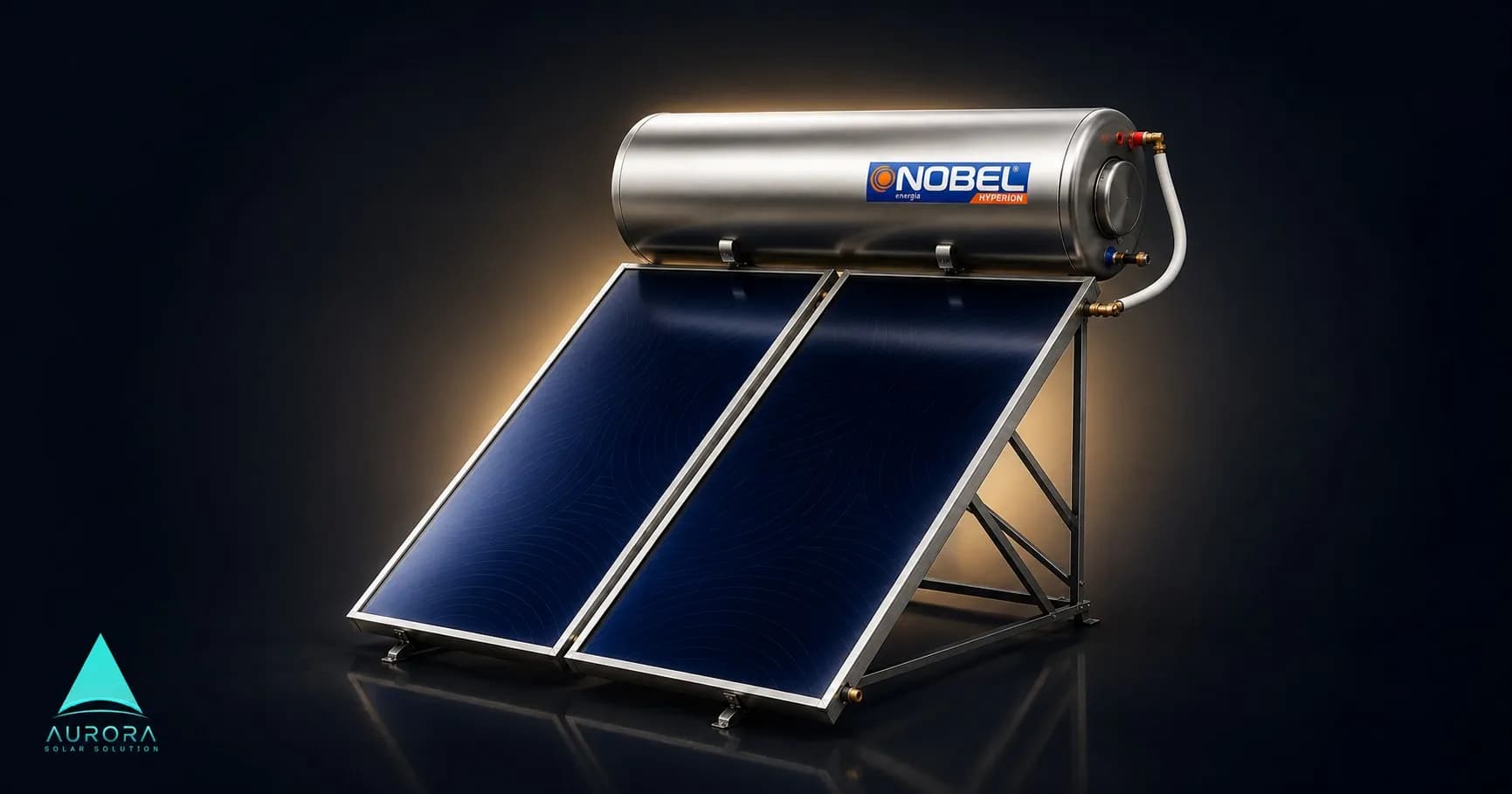
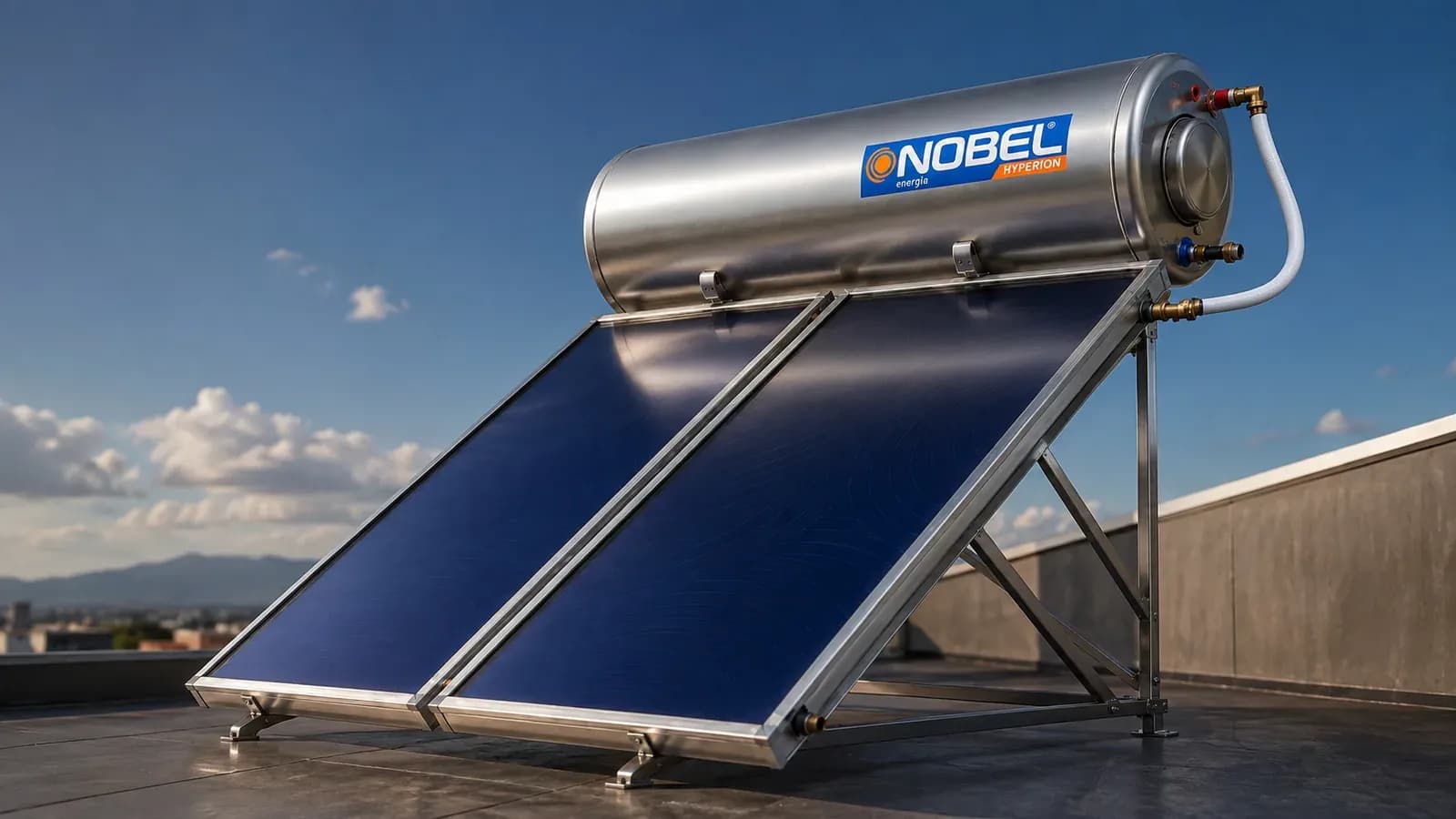
Hyperion is Nobel’s balanced choice: marine-grade aluminium casing, magnesium anodes, a laser-welded selective absorber and Solar Keymark certification. Two capacities, 200 and 300 L, installed by Aurora.
Last updated: September 30, 2026
We’ll call you within the hour to confirm details and set an inspection time.
Highlights
- Marine-grade aluminium casing for corrosion resistance
- Magnesium anodes protecting the tank
- Laser-welded selective absorber and tempered Low-Iron glazing
- Solar Keymark certified — measured in an independent laboratory
Completed projects you can explore
- 109projects delivered
- 998units installed
- 16governorates
These figures come from the projects record on this site — you can count them yourself.
Hyperion is the balanced choice among Nobel solar heaters: a build designed for harsh conditions with a documented, certified specification. Its inner body is 3 mm steel with double glass enamel cured at 860°C to DIN 4753, its casing is marine-grade aluminium, and it carries magnesium anodes against corrosion. Available in 200 L and 300 L.
Who it is for
- Coastal areas and salty air — the casing and anodes are there for exactly that
- Areas with water high in dissolved salts, where the anode corrodes instead of the tank
- Buyers who want a specification they can compare against an independent figure (Solar Keymark)
- Homes and villas in regular daily use
When it is not the right choice
If your demand exceeds 300 L, the logical option is Aelios in its largest capacity, or a project system, rather than two Hyperion units side by side. If the site is a facility running continuously, Solfos is built for that case. And like any thermosiphon heater, the roof must allow a tank above the collector.
How it works
The collector carries a laser-welded selective absorber with 95%±2 absorption and 5%±2 emission — it takes in as much solar radiation as possible and radiates back as little as possible. Tempered Low-Iron glazing transmits more light than ordinary glass, and the collector is insulated with 60 mm of rock wool. The loop is sealed with propylene glycol, which protects against freezing and reduces scale inside the loop.
The benefit you feel
Steady hot water and a lower electricity bill — international estimates (US Department of Energy) put the saving at about 50–80% of water-heating electricity depending on usage. The second benefit is longer range: corrosion protection, marine aluminium plus anodes, is what makes the difference years later in areas that eat metal, such as our Red Sea projects.
How it works in winter
On the roof, a collector captures the sun’s heat and a tank keeps the water hot. On sunny days the sun is enough on its own; on cloudy days or high demand, the electric backup runs automatically and tops up — so no cold water in winter.
How many liters for your home?
Nobel solar heaters are available in capacities including 200, 300 and 500 liters, and the right one for your home depends on the number of users and usage. Get an initial size from the calculator in under a minute, and the free inspection confirms it.
The next step
Book a free inspection and we’ll set the right capacity, placement and installation for your home on site — no guesswork, no commitment.
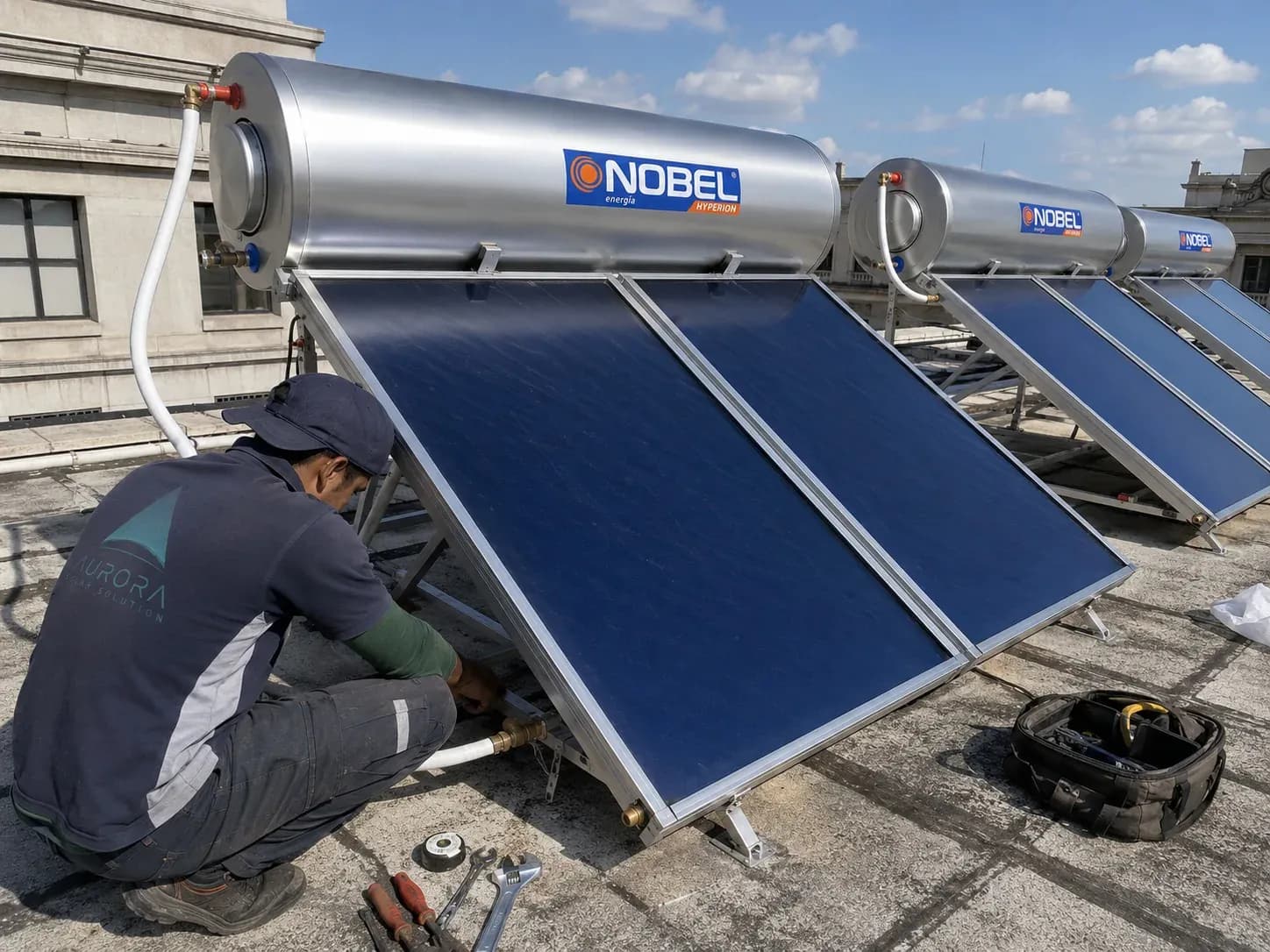
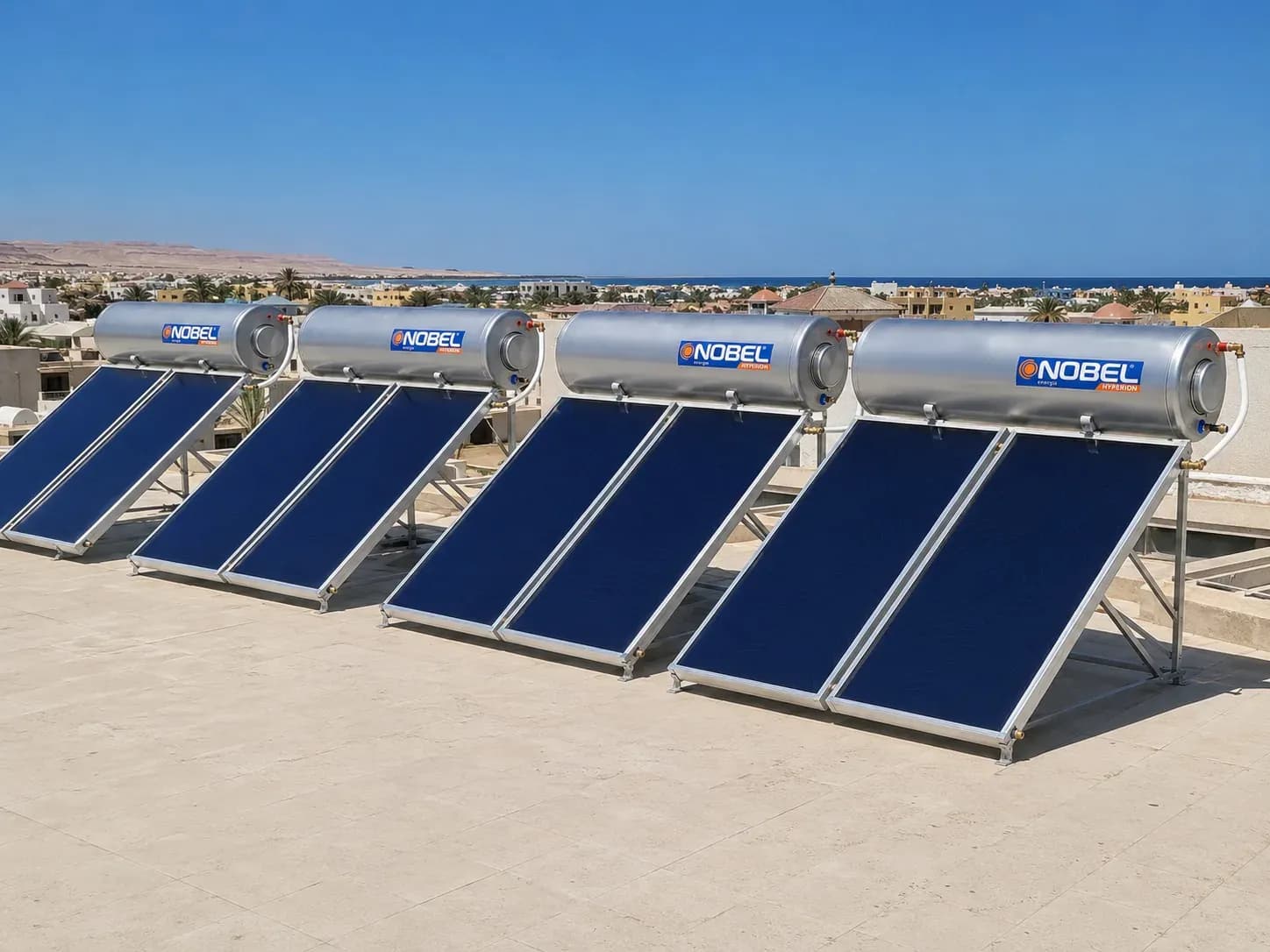
Product images
Specifications
| Available capacities | 200 L · 300 L |
|---|---|
| Inner tank | 3 mm steel |
| Tank lining | Double glass enamel cured at 860°C to DIN 4753 |
| Heat exchanger | Surrounding steel, 1.8 mm |
| Casing | Marine-grade aluminium for weather and corrosion resistance |
| Corrosion protection | Magnesium anodes |
| Collector insulation | 60 mm rock wool |
| Absorber | Laser-welded selective — 95%±2 absorption, 5%±2 emission |
| Glazing | Tempered Low-Iron glass |
| Heat-transfer fluid | Propylene glycol for frost protection |
| Certification | Solar Keymark |
Specifications from the approved Aurora catalogue. The right model and output for your property depend on how you use it — the Smart Advisor recommends and the site visit confirms.
NOBEL HYPERION compared with the other Nobel models
NOBEL HYPERION: Pairs the APOLLON collector with the AELIOS tank and adds magnesium protection — a combination drawing on both.
- NOBEL APOLLONThe only model whose approved specification states an actual capacity, an operating pressure and Solar Keymark certification — the most fully documented of the four.
- NOBEL AELIOSClosed-loop with an enamelled tank and a surrounding exchanger, plus a service flange, so the tank can be reached without dismantling the system.
- NOBEL SOLFOSIntended for projects, hotels and large facilities, configured to match the project needs. Available capacities: 200 L · 300 L
FAQ
Who is Hyperion for?
Hyperion is the balanced choice: a build made for harsh conditions at a reasonable price. Its casing is marine-grade aluminium for corrosion resistance and it carries magnesium anodes for protection, which makes it a strong pick for coastal areas and water high in dissolved salts. Available in 200 L and 300 L.
How much does Hyperion save on electricity?
It saves because you heat from the sun instead of electricity. International estimates (US Department of Energy) put the cut at about 50–80% of water-heating electricity, varying with your usage — [get an initial estimate](/en/advisor), and the detail is in [how much a solar heater saves](/en/blog/السخان-الشمسي-بيوفر-كام).
What capacity is Hyperion?
It comes in 200 L and 300 L, and the right one depends on your household, bathrooms and usage timing. [The advisor](/en/advisor) gives an initial estimate and the survey confirms it on site.
What is Solar Keymark?
Solar Keymark is a European performance certification carried out on the collector in an independent laboratory rather than in the manufacturer’s own plant. Its value is that it makes published figures comparable across brands instead of each one measuring its own way. Hyperion carries it.
I am on the coast — will Hyperion hold up?
That is precisely its best case. Airborne salt works on exposed components year round, and the marine-grade aluminium casing and magnesium anodes are there for exactly that. Even so, scheduled maintenance stays important in these areas — see [our Red Sea projects](/en/projects/governorate/red-sea).
What does propylene glycol do in the system?
It is the heat-transfer fluid in the closed loop, and it stops the loop freezing on very cold nights. Across most of Egypt freezing is rare, but in high-altitude and desert areas the difference shows. It also reduces scale inside the collector loop, because that loop is sealed and not fed from mains water.
How is the price decided?
We select a smart heating system sized around your home, not a product off the shelf. Price depends on Capacity (how many litres your home actually needs) · Consumption (how much hot water you use per day) · Purchase timing (the season you buy in — costs are not fixed year-round) · Accessories (pump, controller, backup heater and safety valves) · Optional extras (any additions you ask for). After the free assessment, our quote identifies the model, specifications, installation scope and warranty. You get a clear recommendation and know what the cost includes, with installation and support from Aurora.
Already have a solar heater running?
The element, magnesium anode, tank gasket and safety valve are wear parts that run out over time — and if the anode is left too long, corrosion starts eating the tank itself.
See accessories & spare partsFrom the first inspection to commissioning and maintenance
Every project begins with the real requirement and is handed over only after the complete system is tested
- 1
Inspection and design
We survey the site, analyse the requirement, then design the right solar, boiler or central-heating system
- 2
Installation and execution
Specialist technicians and certified European equipment deliver a safe system that fits the property
- 3
Commissioning and maintenance
We test every operating point, hand over a working system, and continue with warranty and scheduled maintenance