

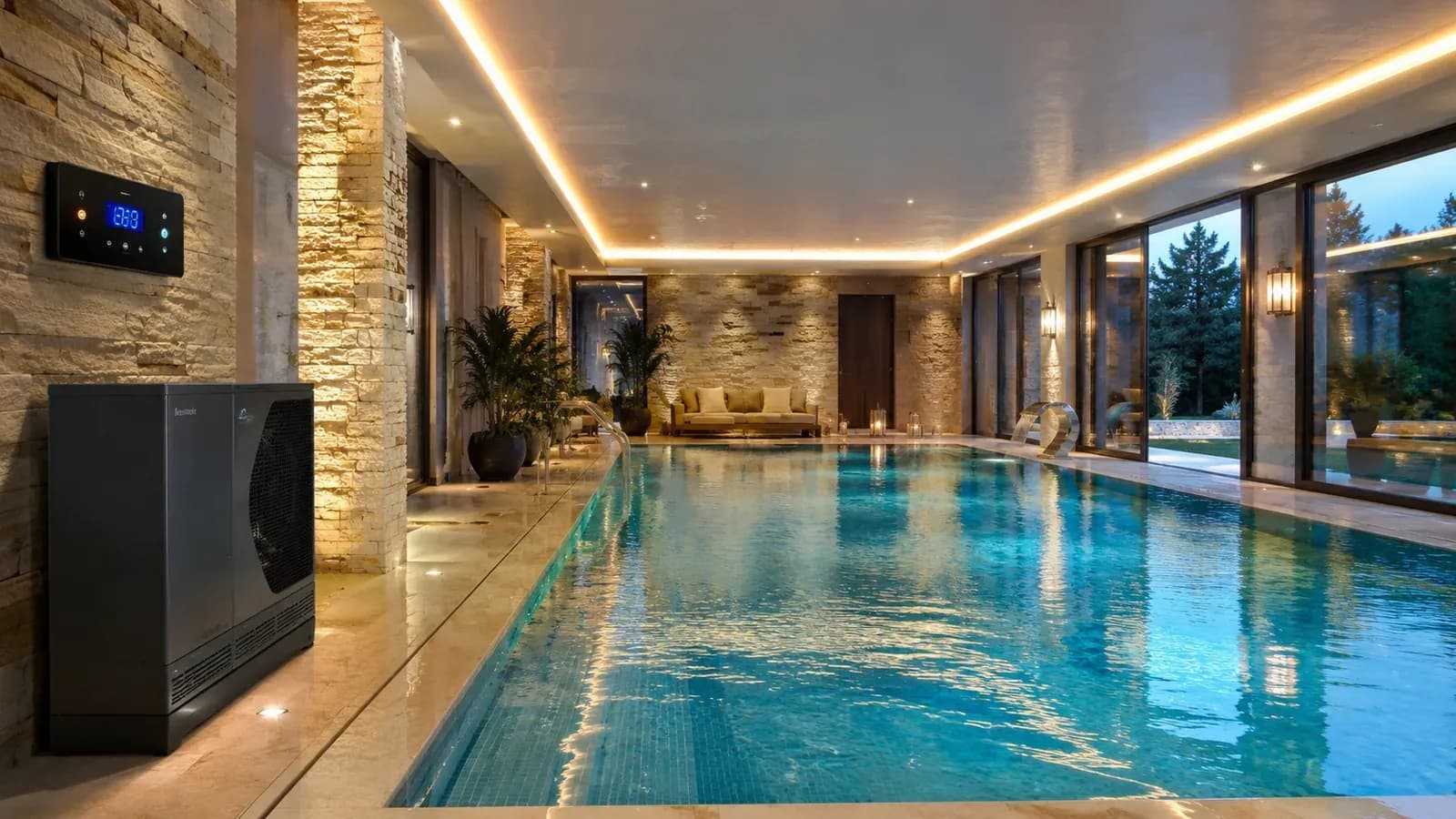
A swimming-pool heater with a corrosion-resistant titanium heat exchanger that withstands chlorine and salt water and outlasts standard exchangers. Engineered installation by Aurora.
Last updated: September 30, 2026
We’ll call you within the hour to confirm details and set an inspection time.
Highlights
- Titanium heat exchanger with high corrosion resistance
- Withstands chlorine and salt water
- Longer service life than standard exchangers
- Sized to your pool and installed by Aurora
Completed projects you can explore
- 109projects delivered
- 998units installed
- 16governorates
These figures come from the projects record on this site — you can count them yourself.
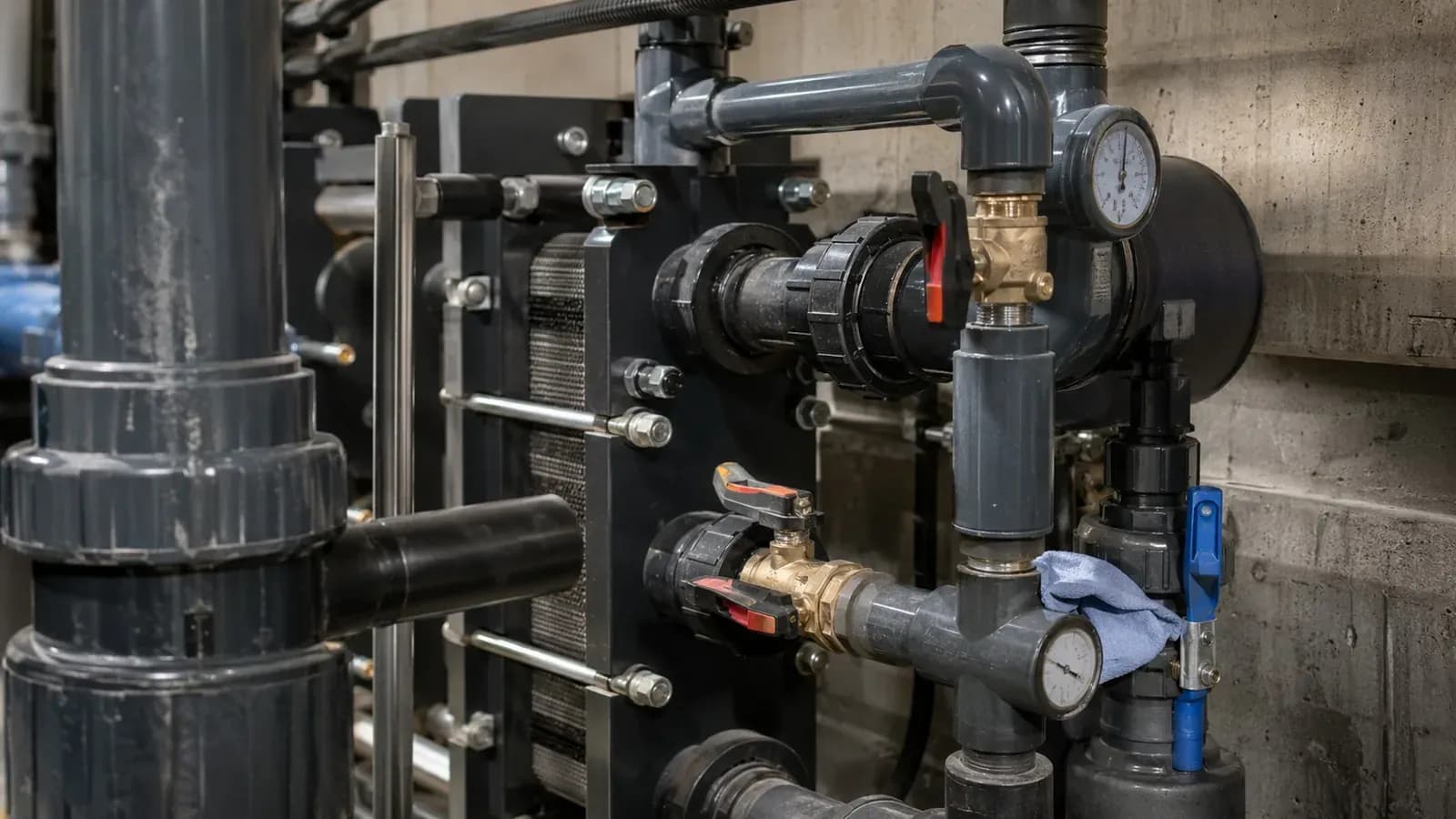
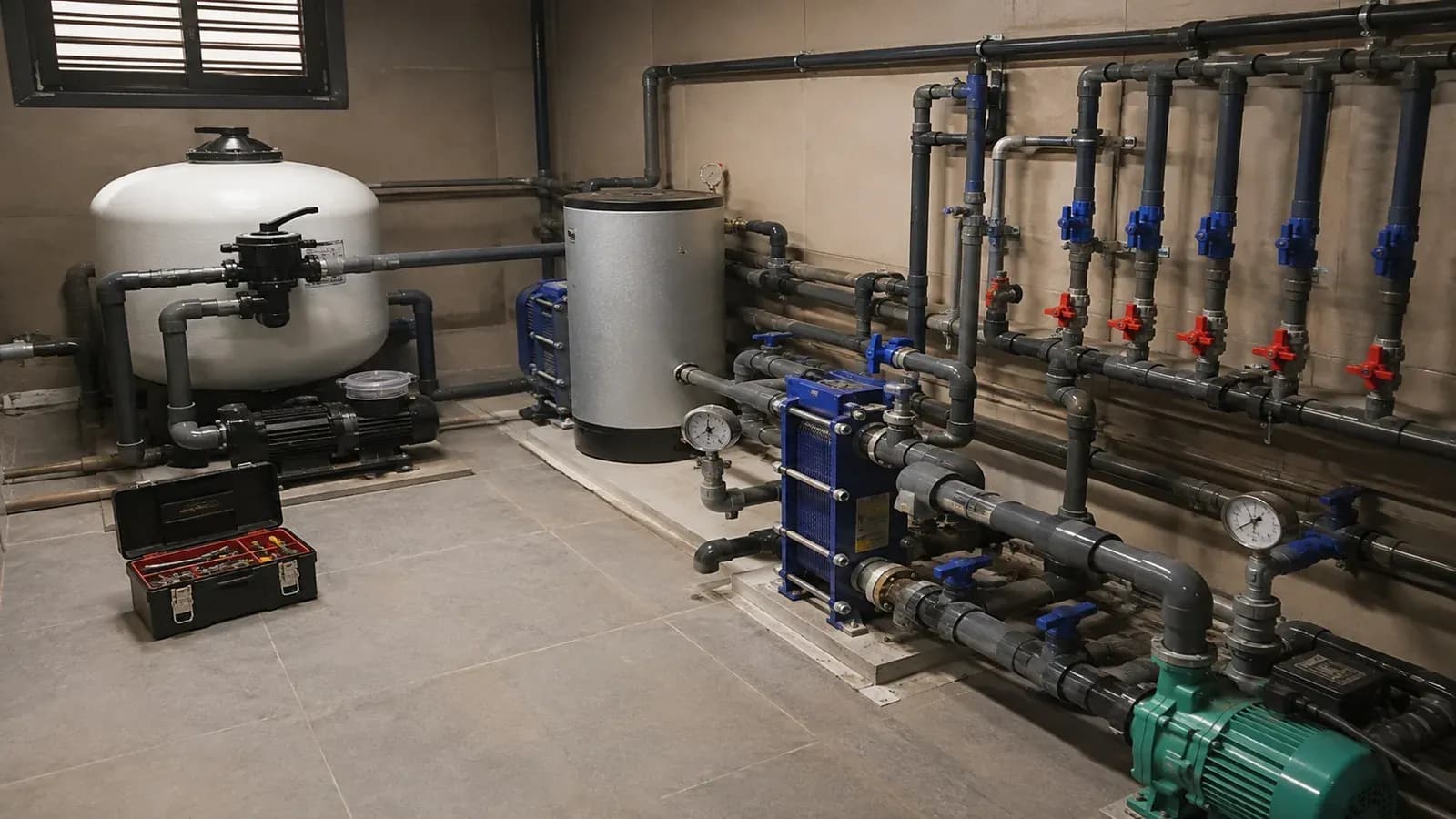
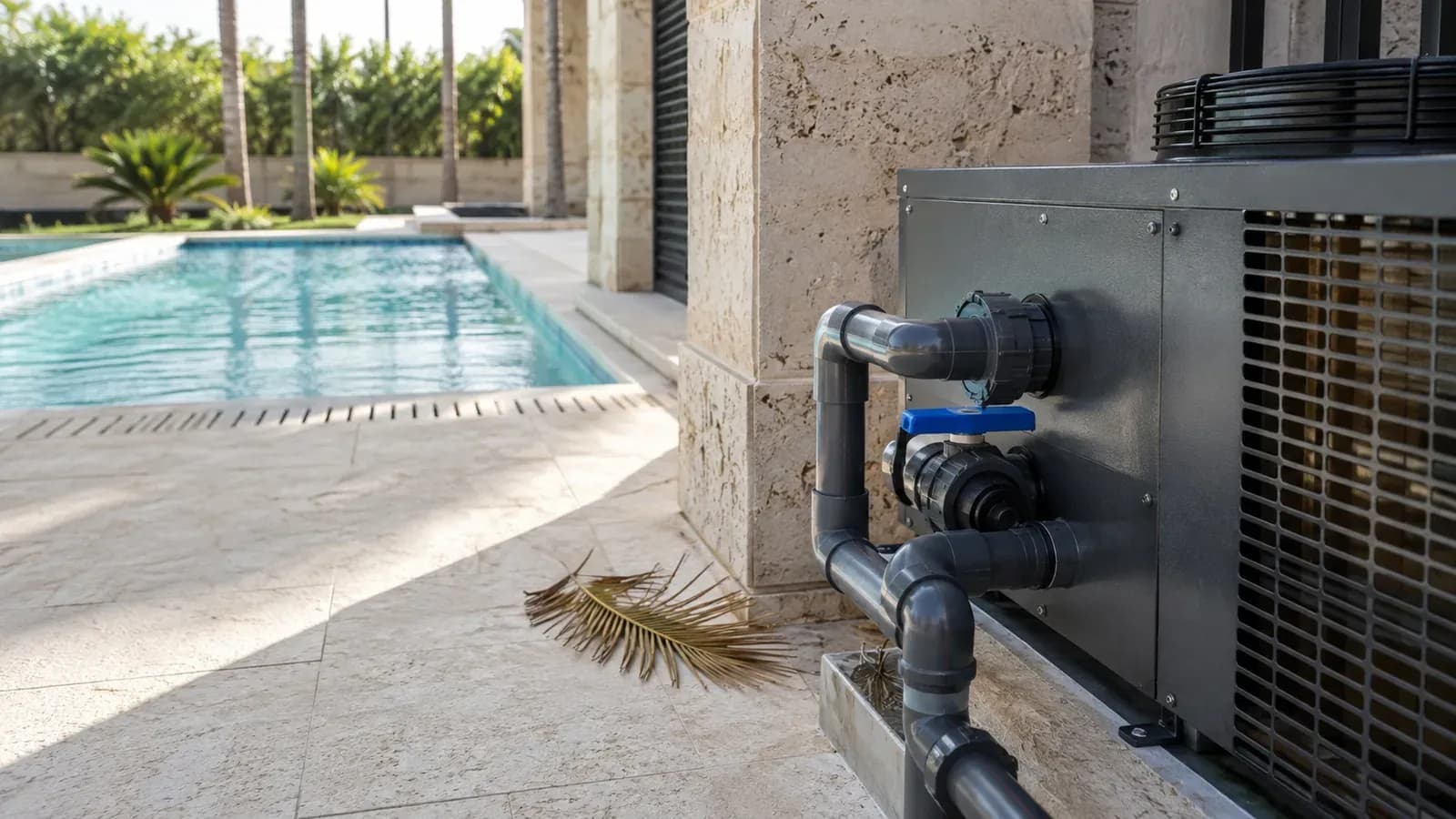
A heat exchanger transfers heat from a source circuit into pool water without mixing the two water circuits. Titanium is a corrosion-resistant material selected against water conditions and model requirements. The exchanger does not generate heat; system performance depends on its heat source, sizing and connections.
When should a separate exchanger be considered?
- A suitable heat source needs separation from pool water.
- Pool water or treatment requires a particular exchanger material.
- The project connects a heat source to an existing pool circuit.
- The design requires practical access for exchanger cleaning and servicing.
Match the material to actual water conditions
The approved FIORINI plate-exchanger range includes AISI 316L plates for chlorinated-water applications and titanium for salt water. This does not make every chlorine or salinity concentration acceptable. We check the specific model’s water-quality, pressure, temperature and flow limits alongside the treatment system.
Titanium’s corrosion resistance does not remove water-chemistry checks or cleaning requirements. Salt-treatment pools also have operating limits that need review; material name alone does not guarantee a service life.
Will it heat faster than a heat pump?
Material alone does not determine warm-up speed. We review source output, temperatures entering and leaving both circuits, flow, water volume and pool surface losses. We can then compare warm-up time and consumption with a heat-pump system under the same conditions.
If you already have a boiler
We need its model, instructions, output and existing loads. Having a boiler is not enough to connect it to a pool: we review circuit suitability, available output, controls and any domestic-water or heating priority. Reusing an existing source may suit the installation; a separate source may suit operations better.
Servicing and expansion
The listed FIORINI provisions include glue-free CLIP-ON gaskets and the option to add plates in a suitable configuration. Expansion must be reviewed with source output, pumps and connections; adding plates alone does not guarantee more pool heat. Scheduled maintenance covers leaks, components and flow according to the installed system.
What do we need to recommend a system?
Pool details, water-treatment method, any existing heat-source specifications and plant-room photos. Book a free survey to review configuration and installation scope. For complete-system comparisons, start with the pool-heating category.
Product images
Specifications
| Exchanger | FIORINI plate type — full separation between heat source and pool water |
|---|---|
| Chlorinated pool | AISI 316L plates |
| Salt-water pool | Titanium plates |
| Gaskets | Glue-free CLIP-ON — easier to open and clean |
| Expansion | Plate count grows with pool capacity |
| Before shipping | Leak test |
Specifications from the approved Aurora catalogue. The right model and output for your property depend on how you use it — the Smart Advisor recommends and the site visit confirms.
FAQ
Why does the exchanger need to be titanium?
Not every exchanger must be titanium. Approved FIORINI options include 316L for chlorinated-water applications and titanium for salt water. Model and material selection follow water-chemistry limits, operating temperatures and manufacturer instructions.
How fast does it heat the pool?
It depends on water volume, starting and target temperatures, actual transferred output and losses during warm-up. The result is an estimate with conditions; exchanger material alone does not determine the time.
Does it work with a saltwater pool?
Titanium is used for salt water in the approved solutions, provided the model suits salinity, chemistry and operating conditions. Water-chemistry monitoring and servicing remain necessary even with a corrosion-resistant material.
I already have a boiler — can it feed the pool?
It may be possible in a suitable configuration after checking the boiler model, instructions, available output, existing loads, connections and controls. Having a water heater does not prove pool compatibility or lower cost.
Is it hard to maintain?
Maintenance follows the model, water conditions and operation, covering leaks, flow, plates, gaskets and required cleaning. Corrosion resistance does not remove water-chemistry checks. Aurora provides [scheduled maintenance](/en/services/maintenance) for the installed scope.
Is it faster than a heat pump?
Not from the exchanger name alone. Speed depends on the heat source, output transferred to the water and pool losses. Compare both systems at the same starting and target temperatures and weather, with each output and its conditions specified.
How do I know the right output?
We review pool heat load and both circuits’ temperatures and flow, then select exchanger size and configuration. Pool volume alone is insufficient, and more plates do not replace a suitable heat source.
How is the price decided?
We select a smart heating system sized around your home, not a product off the shelf. Price depends on Capacity (pool volume and water surface area) · Consumption (how many months a year you want it warm, and at what temperature) · Purchase timing (the season you buy in — costs are not fixed year-round) · Accessories (heat exchanger, circulation pump and controller) · Optional extras (any additions you ask for). After the free assessment, our quote identifies the model, specifications, installation scope and warranty. You get a clear recommendation and know what the cost includes, with installation and support from Aurora.
From the first inspection to commissioning and maintenance
Every project begins with the real requirement and is handed over only after the complete system is tested
- 1
Inspection and design
We survey the site, analyse the requirement, then design the right solar, boiler or central-heating system
- 2
Installation and execution
Specialist technicians and certified European equipment deliver a safe system that fits the property
- 3
Commissioning and maintenance
We test every operating point, hand over a working system, and continue with warranty and scheduled maintenance