Central solar heating systems for hotels, hospitals, factories and facilities: an engineering survey, sizing on the critical hourly load, parallel units and an auxiliary source. Delivered and supported by Aurora.
Last updated: September 30, 2026
We’ll call you within the hour to confirm details and set an inspection time.
Highlights
- Sized on the critical hourly load, not the daily average
- Parallel units — maintenance happens while operation continues
- Auxiliary heat source engaging automatically
- As-built documents and a maintenance plan at handover
Completed projects you can explore
- 109projects delivered
- 998units installed
- 16governorates
These figures come from the projects record on this site — you can count them yourself.
Project systems are not sold off the shelf — they are designed. Aurora starts with an engineering survey that measures the critical hourly load: number of units or rooms, peak hours, and the type of draw-off points. Those figures set collector count, storage volume and the size of the auxiliary source, and delivery and support follow.
Who it is for
- Hotels, resorts and tourist villages
- Hospitals and medical facilities
- Factories and companies, for sanitary or process hot water
- Educational bodies, clubs and government facilities
When it is not the right choice
If the facility’s demand is small and scattered — a small office, for instance — a central system is added cost for no return, and a single unit is enough. And if the roof cannot carry the load or offers less area than required, we say so at the survey before any offer. Honesty here is cheaper for both sides than discovering it mid-installation.
How it works
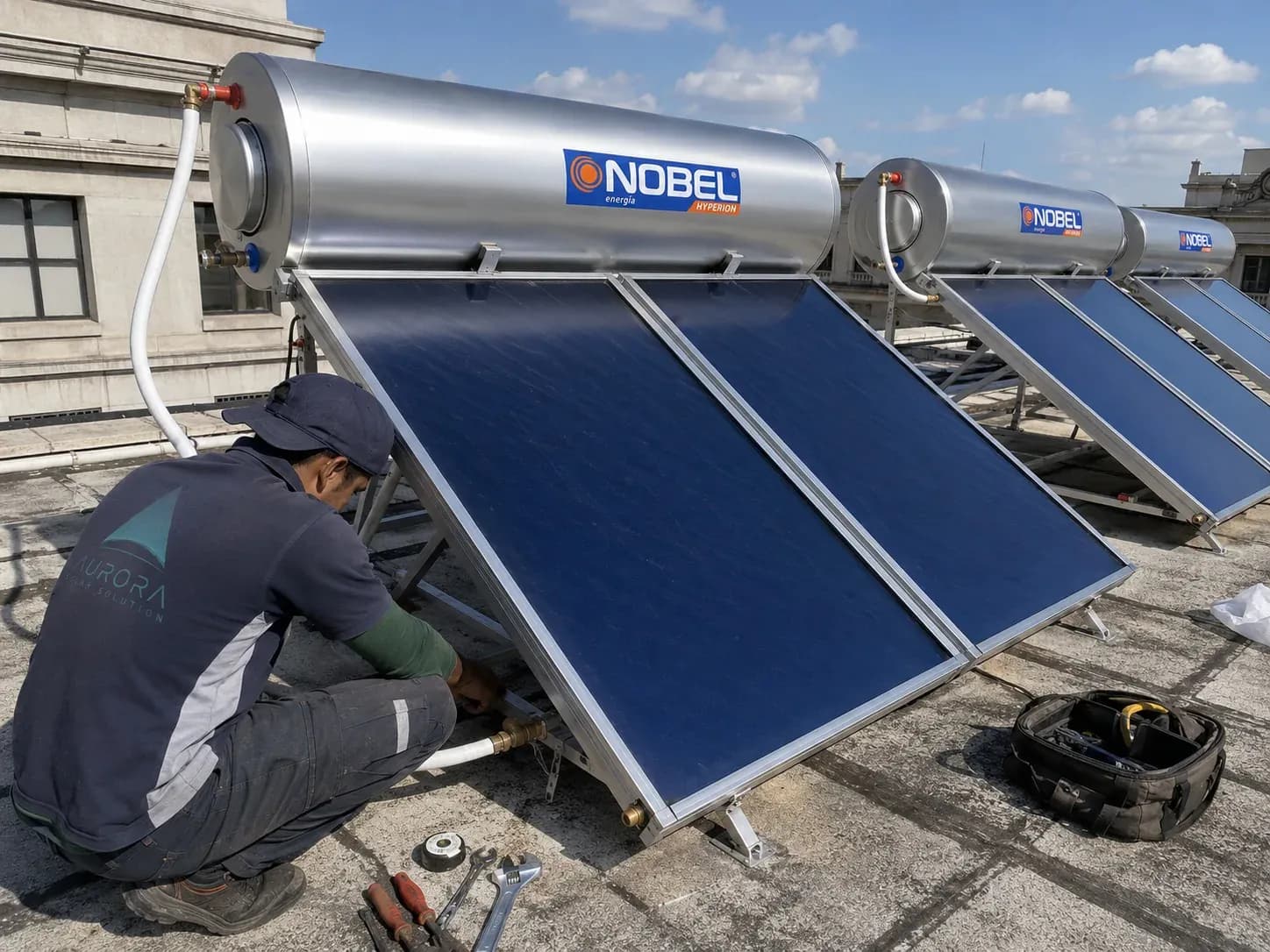
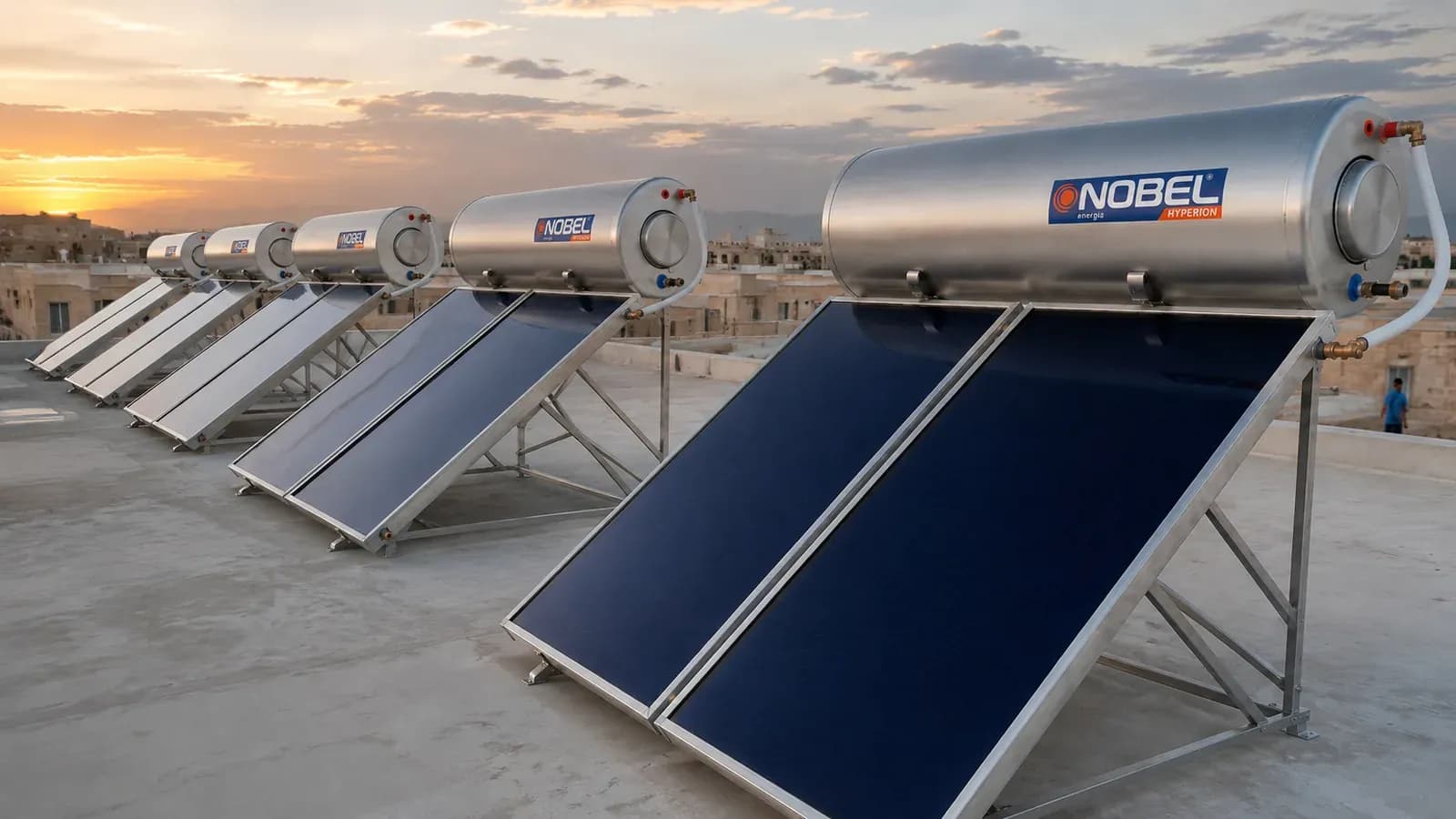
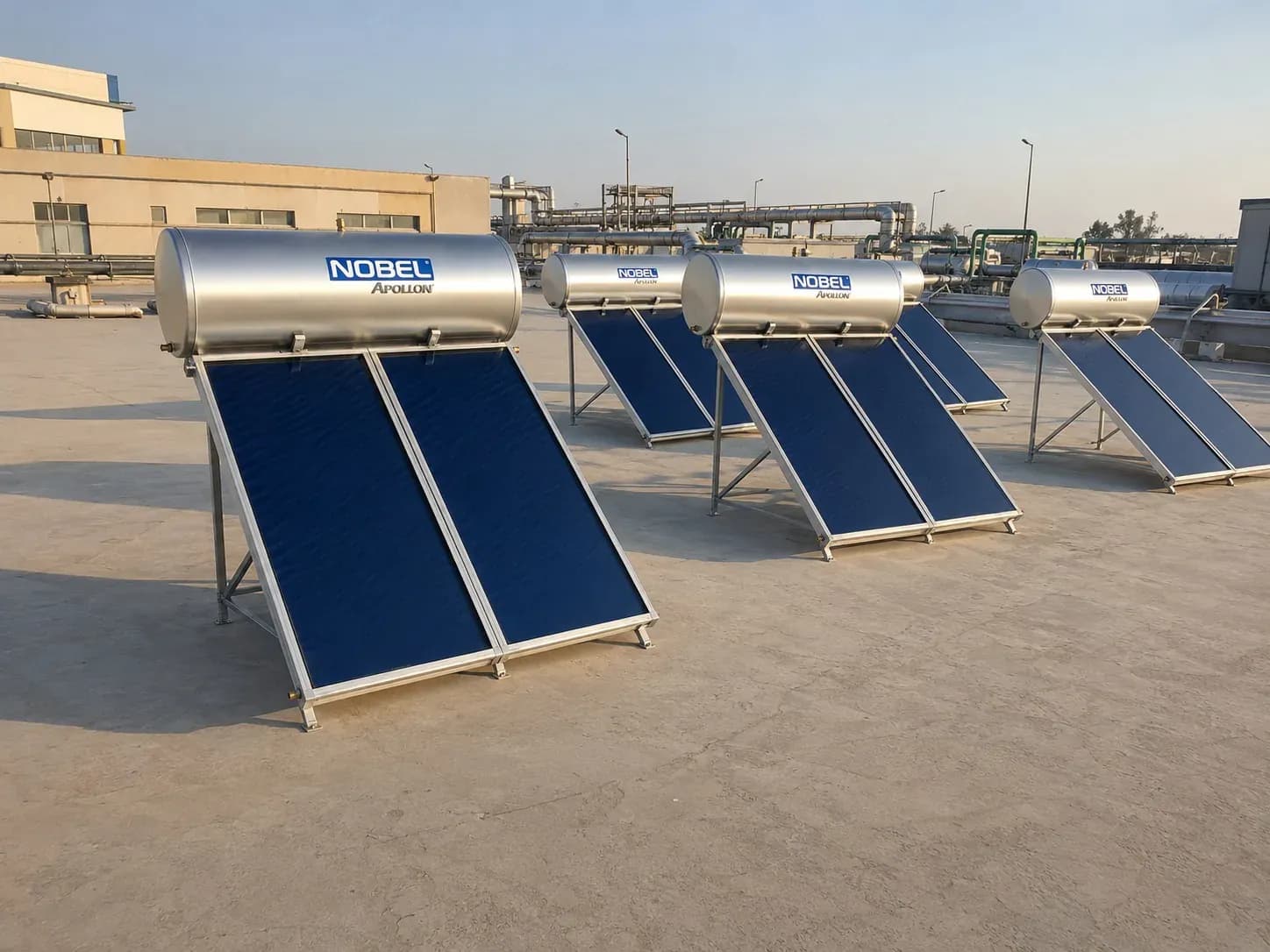
The governing logic is solar as primary, backup ready: the solar system covers the larger share of the load through the year, and the auxiliary source, electric or boiler, completes it automatically on overcast days and at peak occupancy. The system is split into parallel units rather than one oversized unit, so maintenance happens while the facility operates. Each sector has its own logic — the differences are set out in the project hubs.
Sanitary water or process water?
That distinction is the first question on any industrial project, and leaving it unasked changes the whole design. Sanitary hot water for showers, basins and kitchens has its own target temperature and water-quality requirements. Process water feeding production has entirely different requirements, often a higher temperature and a separate route. We separate the two in the design from the start, rather than trying to serve both from one line and producing a system that satisfies neither.
The benefit you feel
Lower running cost on large consumption, and uninterrupted service through maintenance. And what matters most on projects: a single accountable party — the same team that surveyed and designed it installs and supports it, with scheduled maintenance on an agreed plan and as-built system documents.
The next step
Request an engineering survey — we measure, design and give you the layout and unit count before any commitment.
Product images
FAQ
How do you size a project system?
There is no off-the-shelf system for projects. We measure the critical hourly load rather than the daily total: number of units or rooms, peak hours, and the type of draw-off points such as showers, basins, laundry and kitchen. Those figures set collector count, storage volume and the size of the auxiliary source.
What projects are these systems for?
Hotels, hospitals, clubs, factories and commercial facilities — anywhere hot-water demand is large and simultaneous. Each sector is designed on a different logic; see [the project hubs by sector](/en/projects) for the practical differences.
The facility is operating — will installation stop it?
It does not have to. The work splits into a preparation phase outside the operating path — bases, collectors and new pipework — and a short tie-in scheduled during low occupancy or planned downtime. The system is also split into parallel units so one part keeps running while another is connected.
Is solar alone enough for a facility?
No, and no serious design claims otherwise. The solar system covers the larger share of the load through the year, and the auxiliary source — electric or boiler — completes it on overcast days and at peak occupancy. The correct design is hybrid: solar as the primary source with a backup that engages automatically.
We have a working boiler — should we replace it?
Not necessarily, and usually that is not the most economical move. The solar system acts as a pre-heat stage ahead of the boiler, so the boiler receives warmer feed water and runs for less time to reach the same temperature. It is tied into the existing network, and [gas boilers](/en/products/category/boiler) remain part of the setup.
What documentation do you hand over?
An as-built system drawing, equipment data and model references, warranty terms, and a proposed preventive maintenance plan. That package is what lets any later service team work on the system instead of starting from scratch.
How is the price decided?
We select a smart heating system sized around your home, not a product off the shelf. Price depends on Capacity (how many litres your home actually needs) · Consumption (how much hot water you use per day) · Purchase timing (the season you buy in — costs are not fixed year-round) · Accessories (pump, controller, backup heater and safety valves) · Optional extras (any additions you ask for). After the free assessment, our quote identifies the model, specifications, installation scope and warranty. You get a clear recommendation and know what the cost includes, with installation and support from Aurora.
Already have a solar heater running?
The element, magnesium anode, tank gasket and safety valve are wear parts that run out over time — and if the anode is left too long, corrosion starts eating the tank itself.
See accessories & spare partsFrom the first inspection to commissioning and maintenance
Every project begins with the real requirement and is handed over only after the complete system is tested
- 1
Inspection and design
We survey the site, analyse the requirement, then design the right solar, boiler or central-heating system
- 2
Installation and execution
Specialist technicians and certified European equipment deliver a safe system that fits the property
- 3
Commissioning and maintenance
We test every operating point, hand over a working system, and continue with warranty and scheduled maintenance