

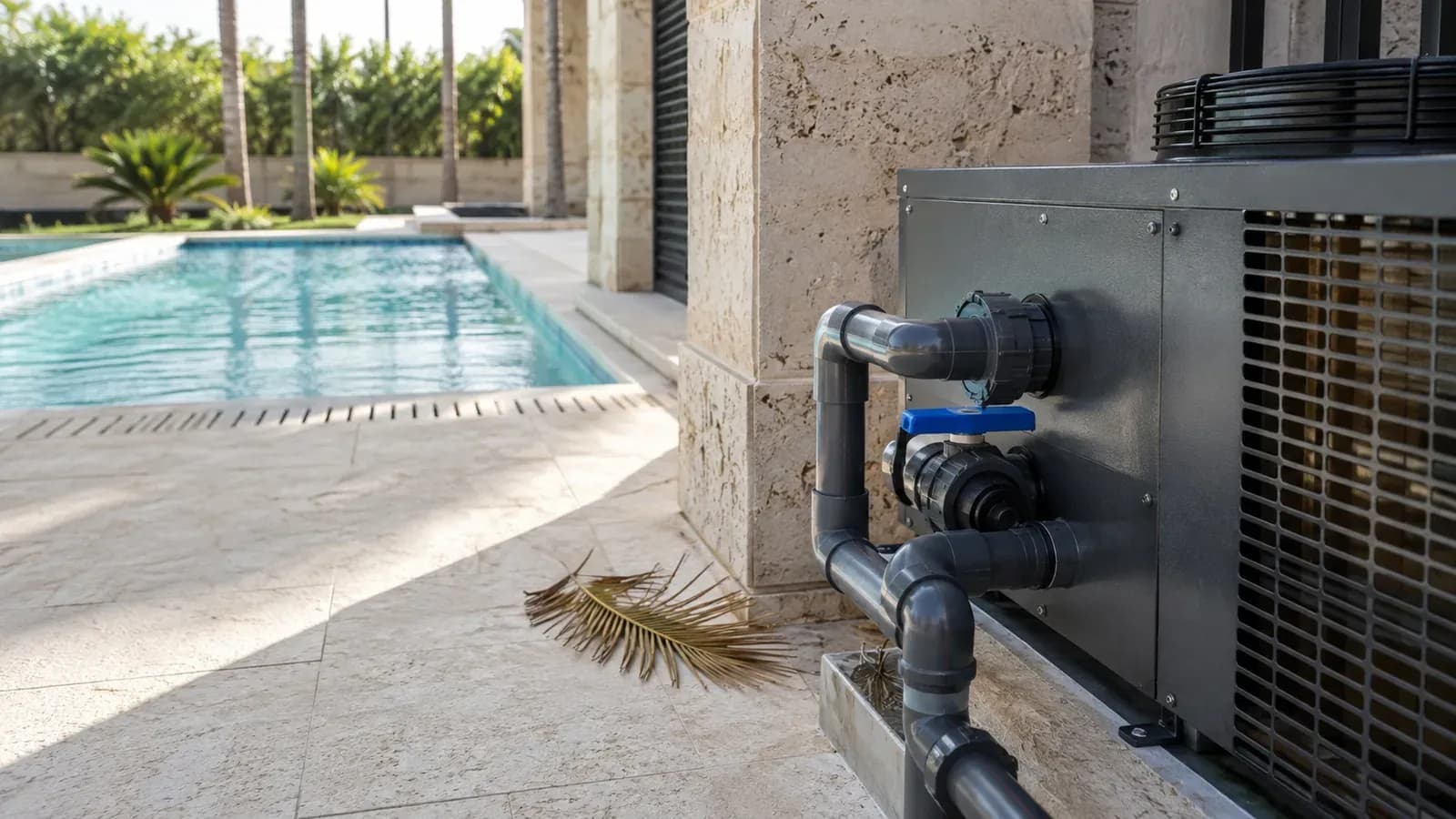
A heat pump for swimming-pool heating with savings of up to 80% compared with an electric heater, suited to locations without natural gas. Designed and installed by Aurora.
Last updated: September 30, 2026
We’ll call you within the hour to confirm details and set an inspection time.
Highlights
- Up to 80% saving versus an electric heater
- Ideal for areas and compounds without natural gas
- An extended swimming season at a measured running cost
- Sized to your pool and installed by Aurora
Completed projects you can explore
- 109projects delivered
- 998units installed
- 16governorates
These figures come from the projects record on this site — you can count them yourself.
A heat pump uses electricity to move heat from the air into pool water. It is worth comparing for regular pool use when you want lower heating energy consumption, with or without gas on site. Start with the target water temperature and operating season, then review the model and output.
Read output alongside its rating conditions
The listed models deliver 28, 40.5 and 51.5 kW in maximum-output mode at 28°C air, 80% humidity and 28°C water. These are specific rating conditions, not constant output in every weather condition. For winter heating, review performance data closer to your site conditions and required water temperature.
What determines whether it can meet demand?
- Water volume, pool surface area and wind exposure.
- Initial and target water temperatures, and time available for warm-up.
- Cover availability and use, and pool operating hours.
- Filtration flow, unit location and electrical supply.
The listed models have an operating range of -10°C to 43°C. Being within that range does not guarantee coverage of any heating load at that temperature. A suitable heat pump may cover winter use; another site may need different output or configuration. Selection follows model data and load rather than the calendar alone.
Understand the savings estimate
The stated saving is up to 80% of heating electricity compared with a conventional electric heater. Actual results depend on air and water temperatures, operating hours and cover use. Ask for consumption estimates with assumptions, and whether they include filtration-pump electricity or only heating. Compare the same scope across quotes.
Unit location is part of selection
The fan and compressor produce operating noise, and the unit needs ventilation and service clearances following its instructions. We review proximity to bedrooms and seating areas as well as pipe routes. Existing pools may need circulation or electrical changes identified before installation.
Heat pump or titanium exchanger?
A heat pump is a heat source; titanium is exchanger material. The listed heat pumps themselves use titanium-tube exchangers. A useful comparison is between a heat pump and a complete system using another source, with source and exchanger outputs and operating conditions specified. The exchanger page explains the distinction.
Start with your pool details
Prepare dimensions, depth, schedule, target water temperature and equipment-location photos, then book a free survey. For multiple pools or daily facility operation, see project pool heating so loads and controls can be reviewed together.
Product images
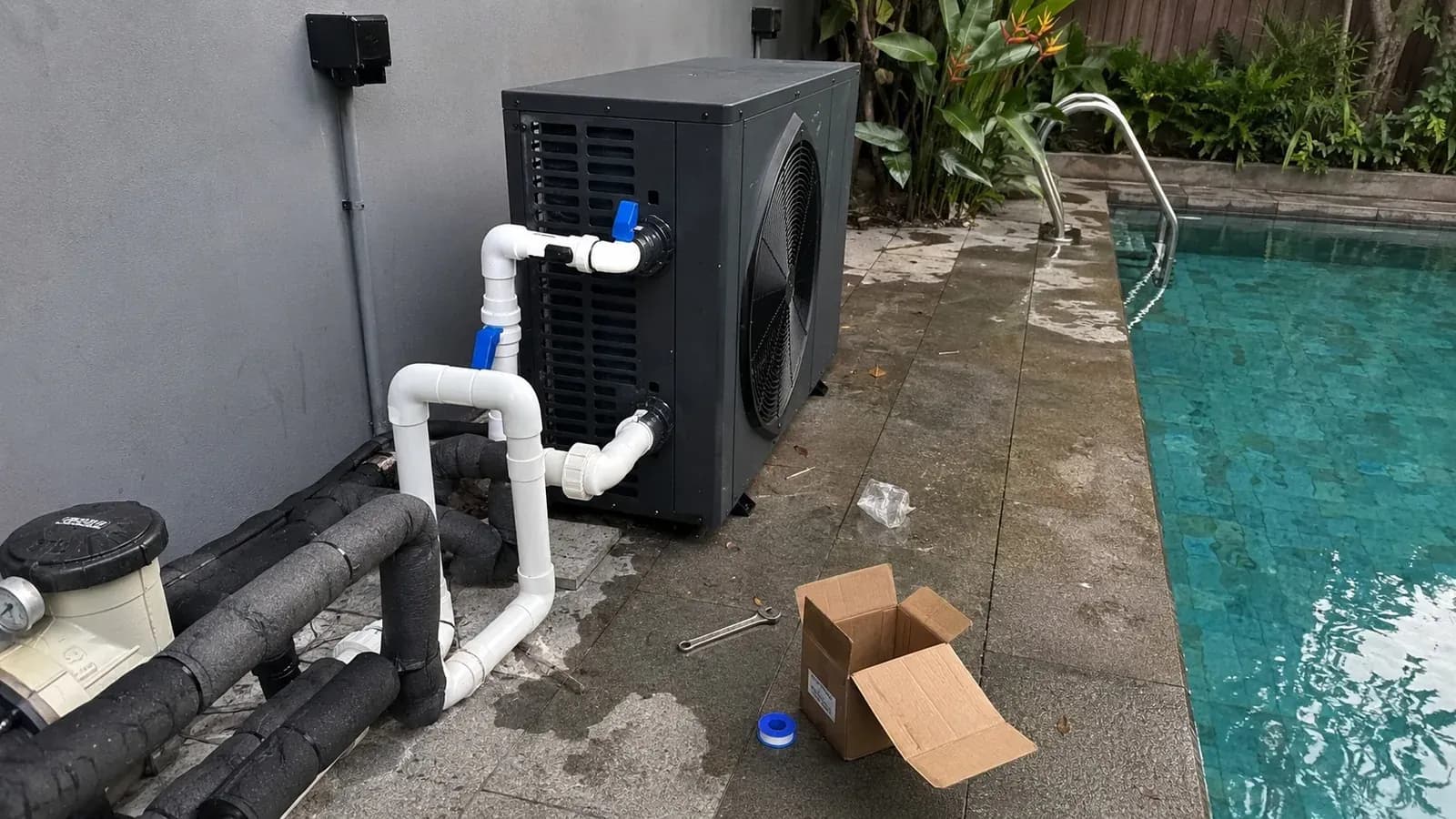
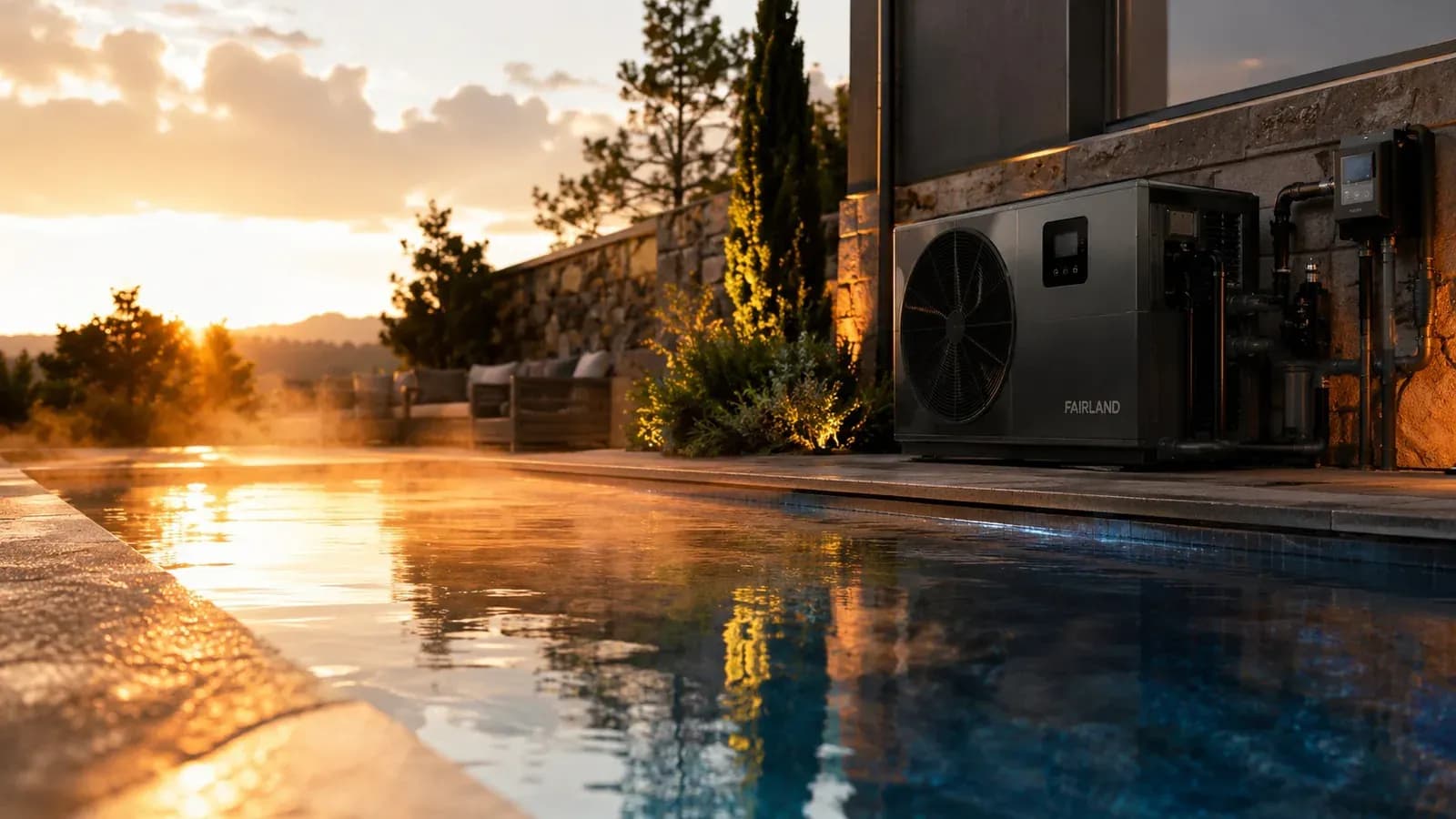
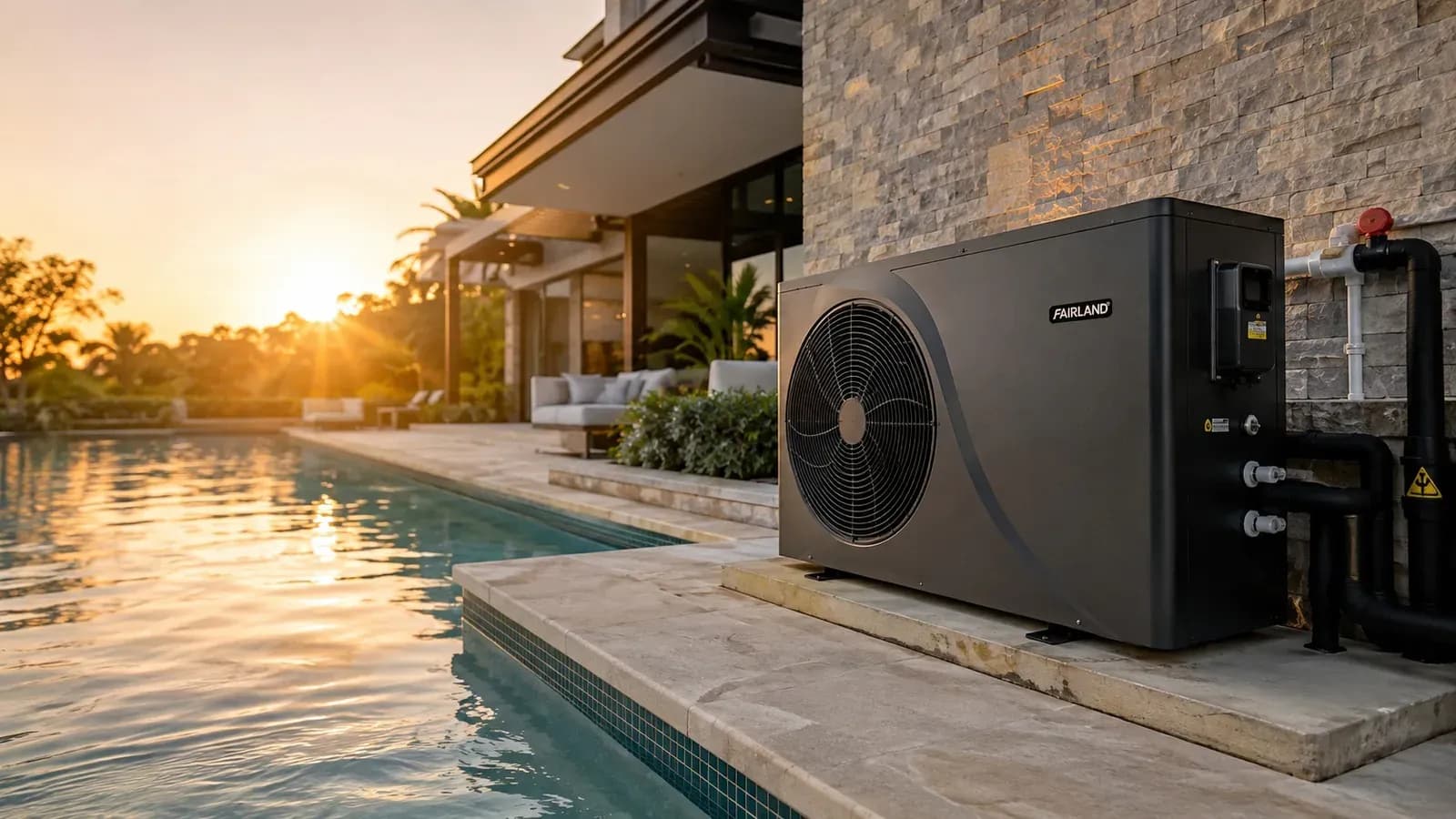
Specifications
| Models and capacities | LPRY-25I/Bp: 28 kW · LPRY-35II/Bp: 40.5 kW · LPRY-50II/Bp: 51.5 kW |
|---|---|
| Capacity measured at | Maximum-performance mode, 28°C air, 80% humidity, 28°C water |
| Coefficient of performance (COP) | Up to 10.9 under the operating conditions stated in the catalogue |
| Compressor | Panasonic Full Inverter — load-following variable capacity |
| Heat exchanger | Titanium tubes inside a PVC shell — made for pool water |
| Refrigerant | R32, with a lower GWP than R410A |
| Operating range | -10°C to 43°C |
| Water temperature setpoint | 15°C to 40°C |
| Savings | Up to 80% less electricity than conventional electric heaters |
Specifications from the approved Aurora catalogue. The right model and output for your property depend on how you use it — the Smart Advisor recommends and the site visit confirms.
FAQ
How much does a heat pump save?
The stated saving is up to 80% compared with a conventional electric heater. Actual results depend on model, weather, water temperature, cover use and operating hours. An estimate uses explicit assumptions; actual performance is reviewed after operation.
My location has no natural gas — does it work?
It uses electricity without requiring gas. We still check supply capacity, location, ventilation and model performance against the load. No gas supply makes it an option to compare, not automatically the best choice.
Does it work in winter?
It may, depending on the model, load and site conditions. The operating range does not guarantee identical output at every temperature; we review performance under the required winter conditions and the pool’s heat losses.
Should I take this or a titanium-exchanger heater?
Titanium is exchanger material, and a heat pump may itself use titanium. Compare complete systems with identified heat sources under the same load, weather and schedule to assess speed and consumption.
Is it noisy?
It has a fan and compressor, so we review model noise data and proximity to bedrooms and seating. Ventilation clearances also matter; enclosing the unit to reduce noise must not conflict with its installation requirements.
What does it cost to run per month?
We need the season, operating hours, target water temperature, cover use and site conditions. The estimate should state electricity-price and heating-use assumptions and whether filtration and circulation pumps are included. It is not a fixed monthly bill.
Do I need a pool cover with it?
A suitable cover reduces evaporation when the pool is unused, but we review whether and how it will actually be used. If the pool operates without it, losses and consumption must be calculated accordingly.
How is the price decided?
We select a smart heating system sized around your home, not a product off the shelf. Price depends on Capacity (pool volume and water surface area) · Consumption (how many months a year you want it warm, and at what temperature) · Purchase timing (the season you buy in — costs are not fixed year-round) · Accessories (heat exchanger, circulation pump and controller) · Optional extras (any additions you ask for). After the free assessment, our quote identifies the model, specifications, installation scope and warranty. You get a clear recommendation and know what the cost includes, with installation and support from Aurora.
From the first inspection to commissioning and maintenance
Every project begins with the real requirement and is handed over only after the complete system is tested
- 1
Inspection and design
We survey the site, analyse the requirement, then design the right solar, boiler or central-heating system
- 2
Installation and execution
Specialist technicians and certified European equipment deliver a safe system that fits the property
- 3
Commissioning and maintenance
We test every operating point, hand over a working system, and continue with warranty and scheduled maintenance