

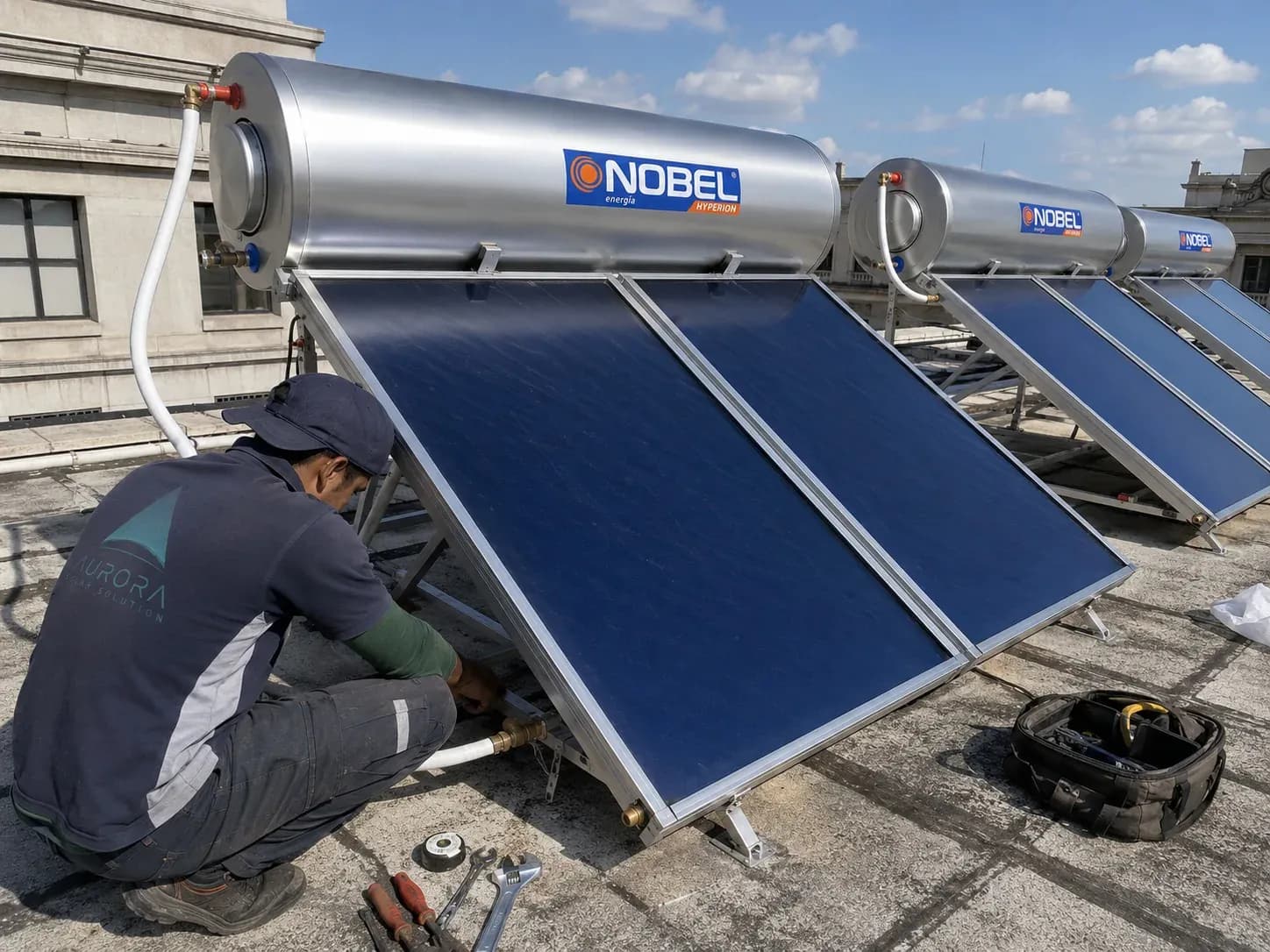
Forced-circulation solar systems: a pump moves the water, so the tank can sit away from the roof. Tanks in 316L stainless steel or galvanized steel enamelled at 860°C, in capacities from 160 to 3,000 liters.
Last updated: September 30, 2026
We’ll call you within the hour to confirm details and set an inspection time.
Highlights
- The tank can sit in a basement or plant room
- Capacities from 160 to 3,000 liters
- 316L stainless or galvanized enamelled steel tanks
- Engineered design based on actual consumption
Completed projects you can explore
- 109projects delivered
- 998units installed
- 16governorates
These figures come from the projects record on this site — you can count them yourself.
In a standard heater the water moves on its own by density difference, so the tank must sit above the collector on the roof. In forced circulation a pump moves the water, so the tank can go in a basement or plant room while the roof carries collectors only. Capacities run from 160 to 3,000 liters, with tanks in 316L stainless steel or galvanized steel enamelled at 860°C.
Who it is for
- Roofs that cannot carry a tank, or whose regulations forbid it
- Compounds with rules about roof and elevation appearance
- Large distances between roof and draw-off points
- Capacities beyond any single unit — projects and multi-unit buildings
When it is not the right choice
If your roof allows a tank above the collector and your demand is ordinary, a thermosiphon system is simpler, cheaper and has no moving parts — the Nobel models cover that case. Forced circulation adds a pump, a controller and a longer loop, which is extra cost and extra points to watch. It earns its place only when it is the one layout that works.
How it works
The controller compares collector temperature with tank temperature and starts the pump once the difference is large enough, moving the heat across. That gives finer control than thermosiphon and allows collectors to be spread across more than one area of the roof — useful when the sunlit area is broken up. The tank material, 316L or galvanized enamelled, is chosen on water quality and system size.
What goes into the plant room?
The tank, the pump, the controller, safety valves and an expansion vessel — a group that needs service access, not a tight corner. The first thing we measure at the survey is exactly that space, because it determines whether the design is viable at all. And if the space falls short, we say so before supply rather than during installation, when it is too late to change course.
The benefit you feel
The main benefit is that it makes the project possible at all in cases where a thermosiphon system would not work. Beyond that: a tank in a plant room is easier to reach and service than one on the roof, and the roof stays visually cleaner — a real consideration in villas and compounds, as covered in the best place to install a solar heater.
The next step
Request an engineering survey — we measure consumption, peak hours and pipe routes, then produce the design and capacity, with no off-the-shelf sizing.
Product images
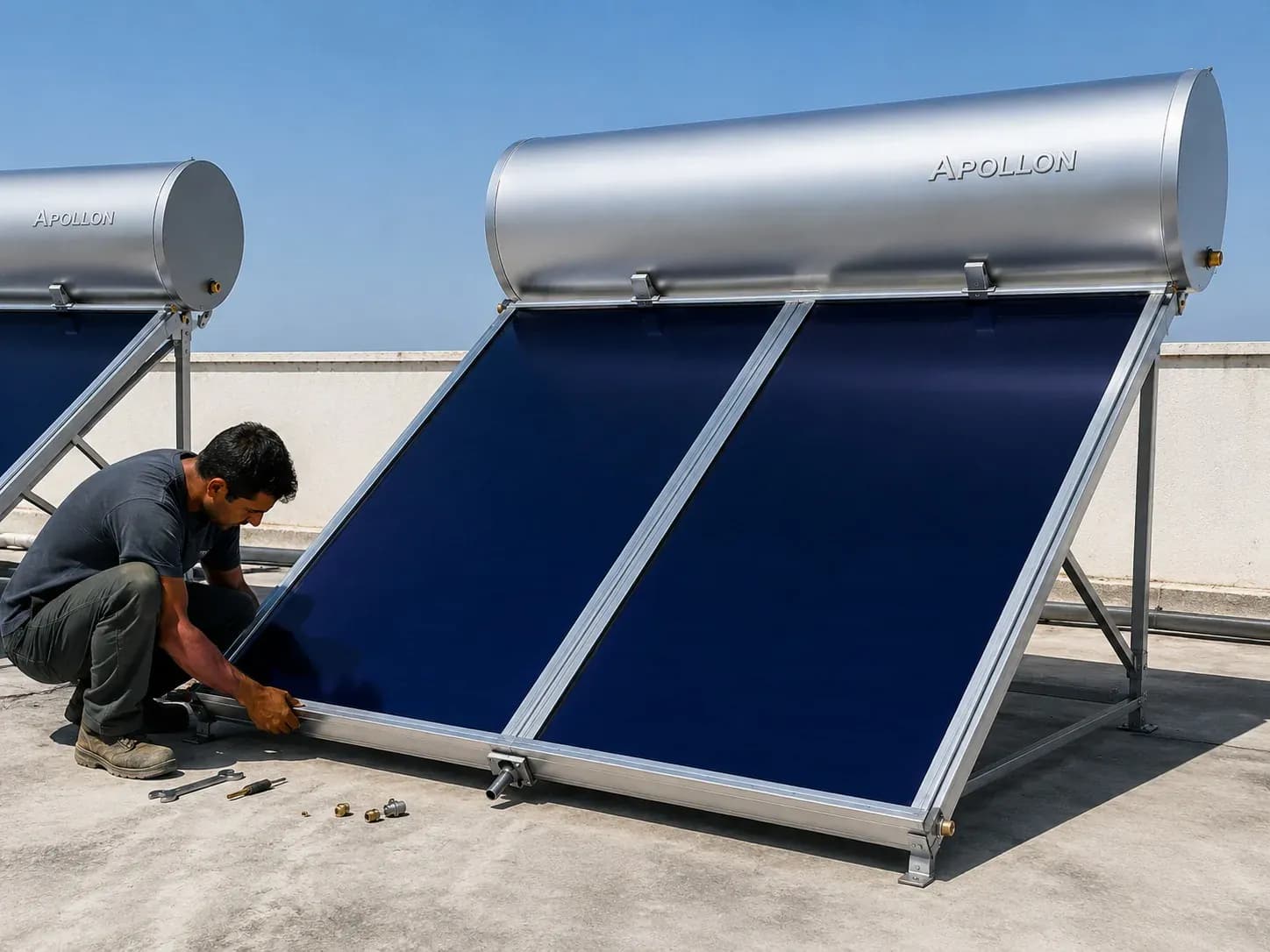
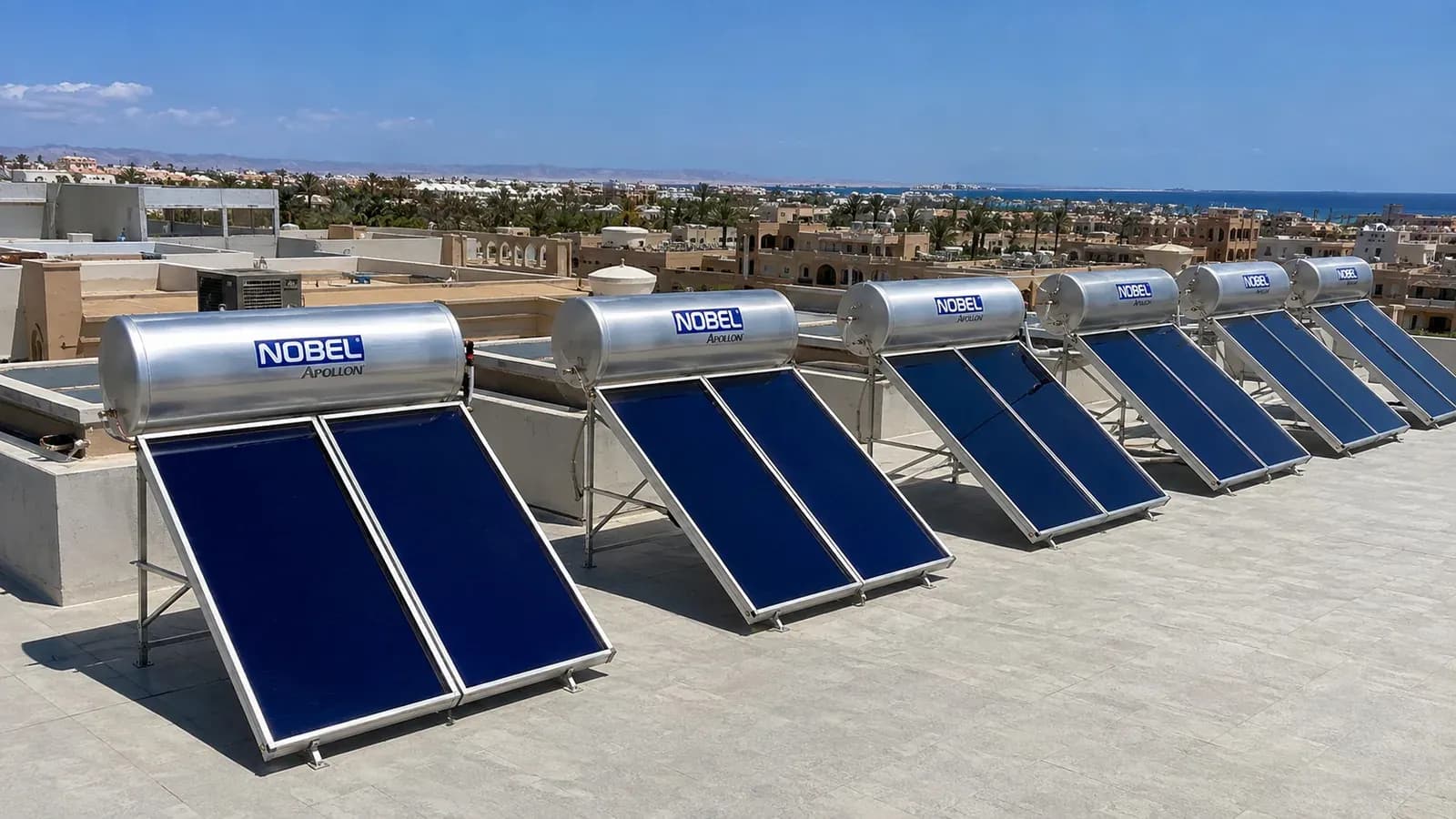
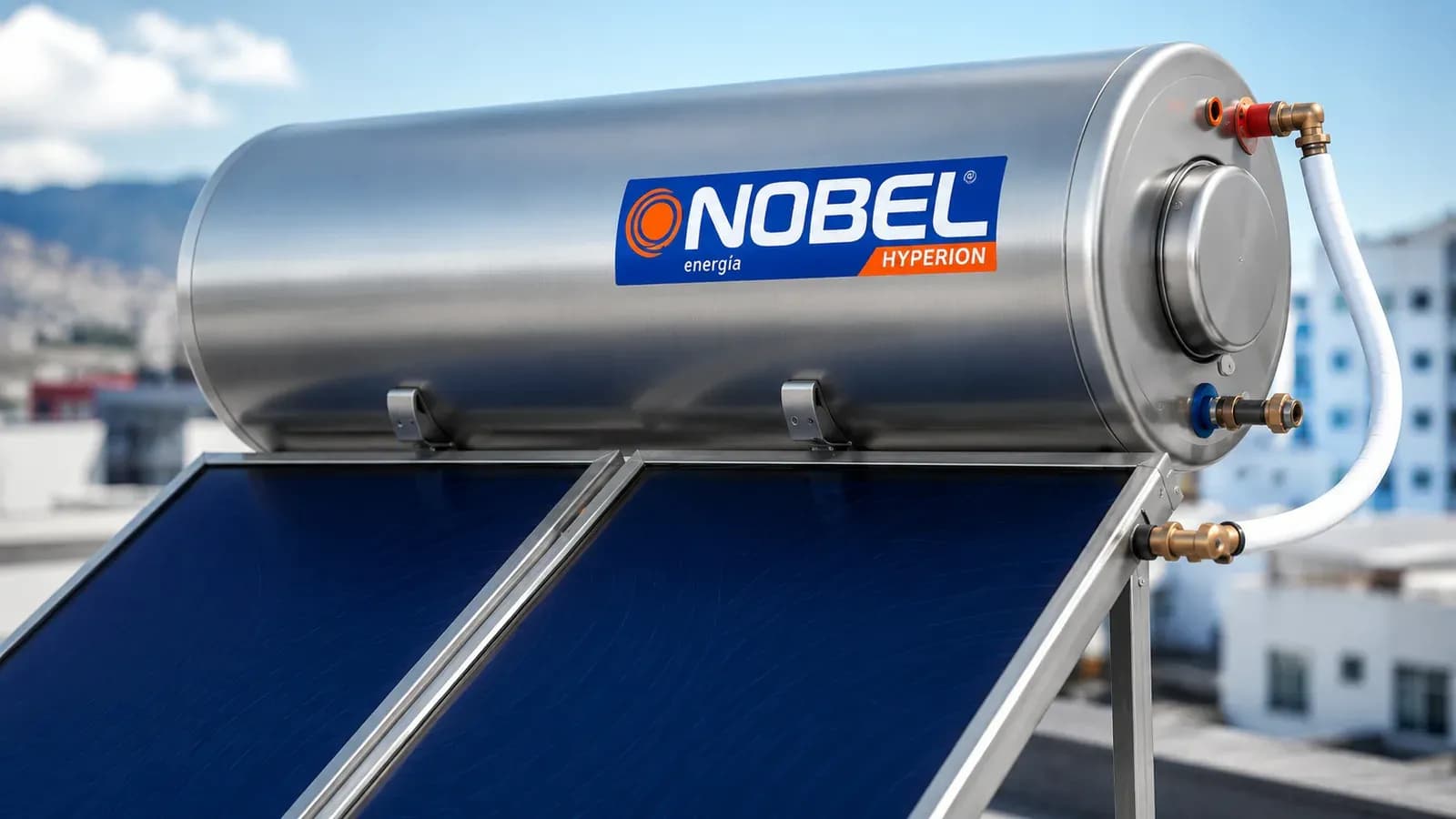
Specifications
| Configurations | FC0 no exchanger · FC1 one solar exchanger · FC2 two exchangers (solar + backup) |
|---|---|
| Tank capacities | 160 · 200 · 300 · 400 · 500 · 800 · 1000 L |
| Tank | Double enamel at 860°C to DIN 4753 |
| Control | Pump starts at a 6–10°C difference, stops at 4°C |
| Expected savings | 70% to 100% of water-heating energy |
Specifications from the approved Aurora catalogue. The right model and output for your property depend on how you use it — the Smart Advisor recommends and the site visit confirms.
FAQ
What is a forced-circulation system?
In a standard heater, water moves on its own by density difference, so the tank must sit above the collector on the roof. In forced circulation a pump moves the water, so the tank can go anywhere — a basement or plant room — leaving the roof for collectors only.
What capacities are available?
From 160 up to 3,000 liters. Capacity and design are set by an engineering survey based on actual consumption and peak hours — there is no off-the-shelf size for these systems.
What are the tanks made of?
Available with 316L stainless steel tanks, or galvanized steel enamel-coated at 860°C. The choice between them depends on water quality, system size and project budget.
When do I need forced circulation instead of a standard heater?
Mainly in three cases: the roof cannot take a tank above it, whether for structural load, compound regulations or the look of the elevation; the distance between roof and draw-off points is large; or the required capacity exceeds any single unit. In those cases forced circulation is not a luxury, it is the only layout that works.
Is forced circulation more expensive?
It does carry extra components — a pump, a controller and a longer loop — so the upfront cost is higher than a thermosiphon system of the same capacity. In return it solves cases where a thermosiphon system would not work at all. The fair comparison is not what it costs more than, but what else would actually work at your site.
Is it harder to maintain?
It has moving parts — the pump — and a controller, so there are more points to watch than in a thermosiphon system. In practice that is handled by [scheduled maintenance](/en/services/maintenance) on a plan, and a tank inside a plant room rather than on the roof is easier to reach in the first place.
How is the price decided?
We select a smart heating system sized around your home, not a product off the shelf. Price depends on Capacity (how many litres your home actually needs) · Consumption (how much hot water you use per day) · Purchase timing (the season you buy in — costs are not fixed year-round) · Accessories (pump, controller, backup heater and safety valves) · Optional extras (any additions you ask for). After the free assessment, our quote identifies the model, specifications, installation scope and warranty. You get a clear recommendation and know what the cost includes, with installation and support from Aurora.
Already have a solar heater running?
The element, magnesium anode, tank gasket and safety valve are wear parts that run out over time — and if the anode is left too long, corrosion starts eating the tank itself.
See accessories & spare partsFrom the first inspection to commissioning and maintenance
Every project begins with the real requirement and is handed over only after the complete system is tested
- 1
Inspection and design
We survey the site, analyse the requirement, then design the right solar, boiler or central-heating system
- 2
Installation and execution
Specialist technicians and certified European equipment deliver a safe system that fits the property
- 3
Commissioning and maintenance
We test every operating point, hand over a working system, and continue with warranty and scheduled maintenance