
What separates a solar heater that runs strong for ten years from one that starts giving trouble after two usually isn't the model — it's installation and maintenance. An excellent heater installed wrong (bad orientation, poorly insulated piping) underperforms from day one. An ordinary heater installed correctly and looked after keeps cutting your electricity bill for years without drama. This guide walks through every installation step and what maintenance actually involves, so you know exactly what you're signing up for before you book.
Installation: what actually happens?
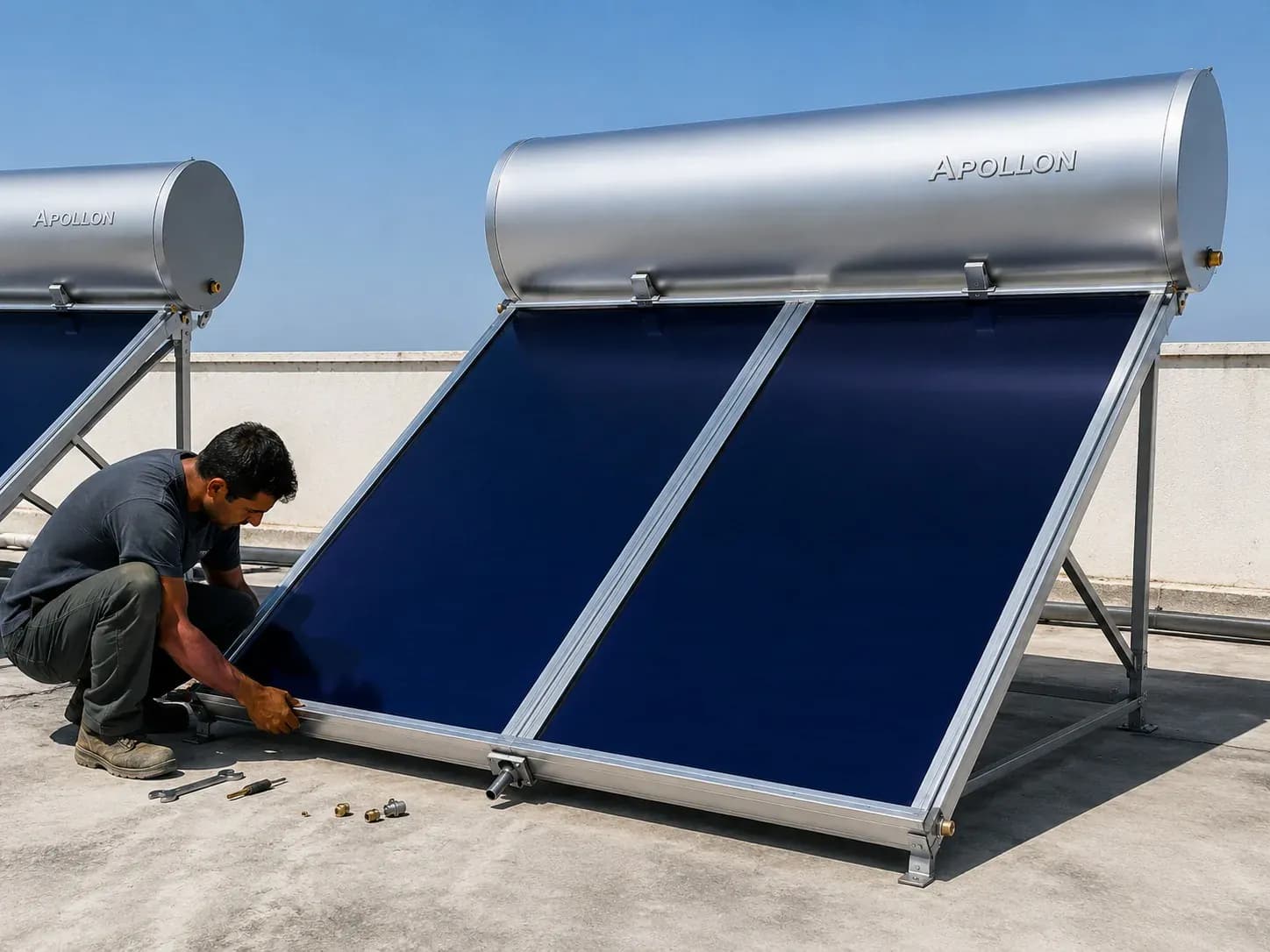
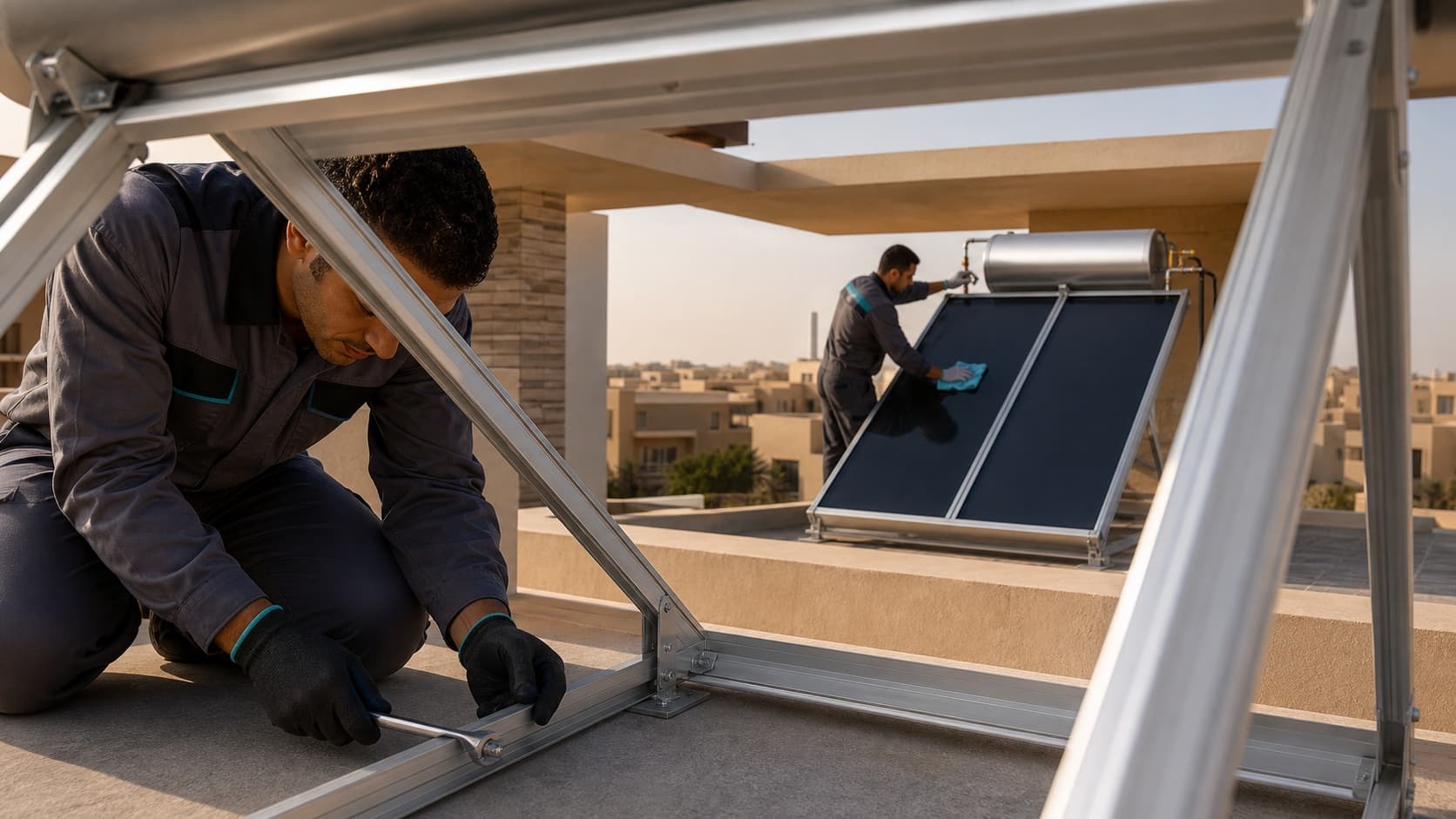
Installation isn't "strap a panel to the roof and go." Five things have to happen correctly: picking the right spot and orientation for the panels (for the longest possible sun exposure), building a base that safely carries the system's weight, mounting the insulated tank, connecting the hot- and cold-water piping tightly, and wiring the backup heating element. Rush any one of these, or hand it to someone under-qualified, and it turns into a problem months later — a small leak, weaker-than-expected output, or higher electricity bills. The gap between a professional technician and a general handyman shows up on your bill over time, not on installation day. (Every step, in order, with what actually determines the timeline: Solar heater install time and steps.)
Place and orientation: the single biggest decision
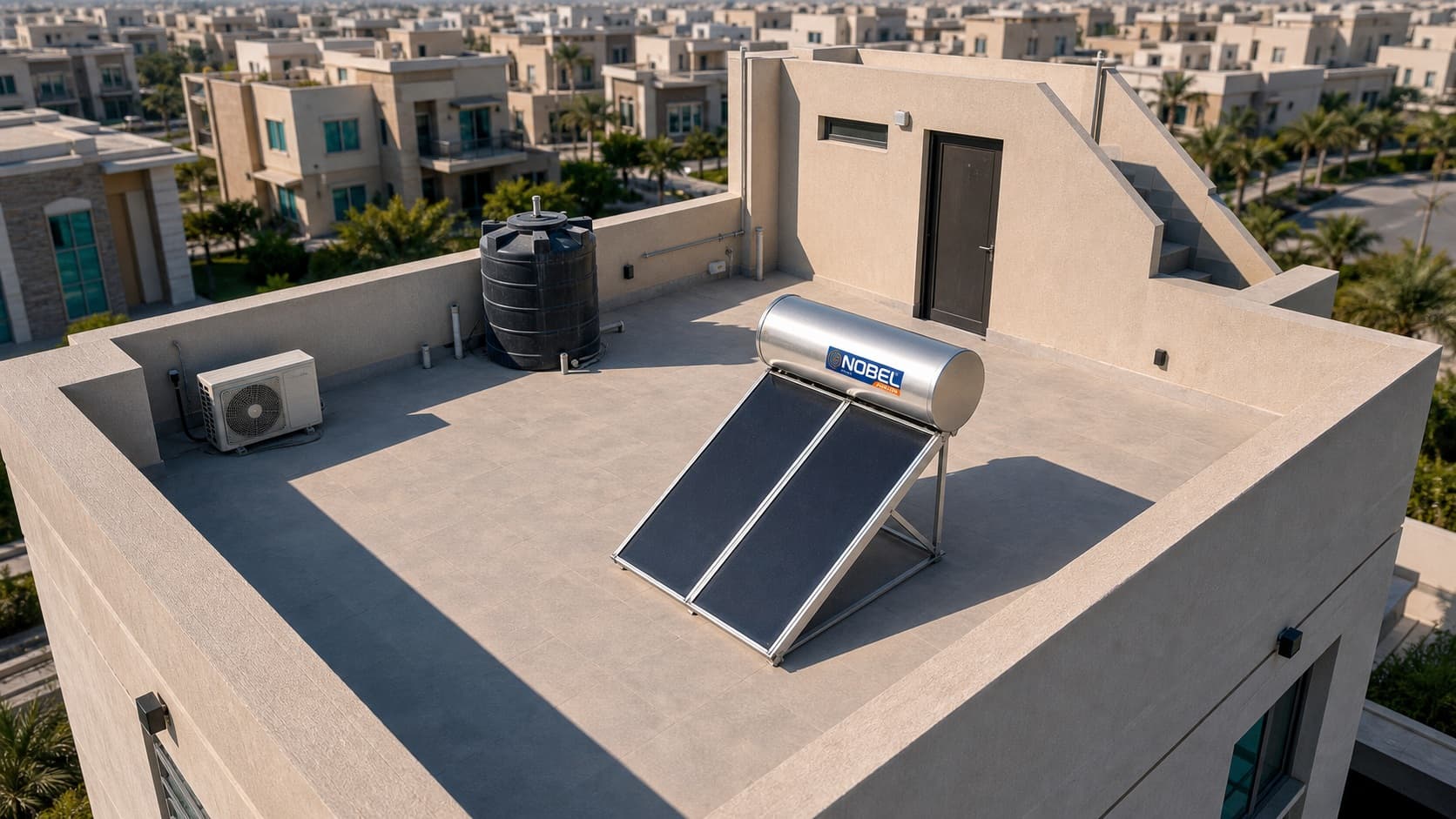
The most important call in the whole installation is where the panels go and which way they face. A roof that sees sun for most of the day, clear of shade from a neighboring building or a water tank, performs noticeably better — and the gap widens in winter, when the sun's angle is already lower. An experienced technician reads your roof in person before deciding anything, and checks shade across the whole day, not just at the moment of the visit. This isn't a minor detail — it decides whether your heater runs at full efficiency or leans on the backup element more than it should. (Full breakdown: Best place to install a solar heater.)
Maintenance: simple, but not optional
A solar heater doesn't need the kind of upkeep an AC unit does, but it does need simple, regular attention to keep performing like day one:
- Cleaning the panels of dust — a buildup noticeably cuts sun absorption, and it's the single most common cause of gradually weaker heating.
- Periodic checks of the piping, insulation and connections, to catch a small leak before it grows.
- Confirming the backup element is working, since it's your fallback on cloudy days and through winter.
Neglect here doesn't stop the heater suddenly — it quietly lowers efficiency until you notice a higher electricity bill without knowing why. Aurora offers scheduled follow-up and emergency call-outs after the sale through periodic maintenance and emergency maintenance. (Common faults, causes and fixes in detail: Solar heater faults and how to fix them.)
The magnesium anode and the safety valve — two easy-to-forget tank parts
Two parts inside every solar heater's tank get neglected simply because you never see them:
- Magnesium anode: a metal rod inside the tank designed to corrode itself instead of the tank walls — a form of "cathodic protection" standard in insulated water tanks. It wears down over time, so it needs periodic inspection and replacement (your technician can tell you the right interval for your area's water quality, since that makes a real difference) to keep the tank protected as long as possible.
- Safety (pressure-relief) valve: opens automatically if pressure inside the tank exceeds the safe limit, releasing the excess instead of stressing the tank and piping. Checking it during routine maintenance confirms it hasn't scaled up or seized — practically speaking, it's the first line of defense against any abnormal pressure buildup in the system.
Neither needs daily attention from you — both are part of the routine check included in Aurora's maintenance service.
Does the model itself affect how easy maintenance is?
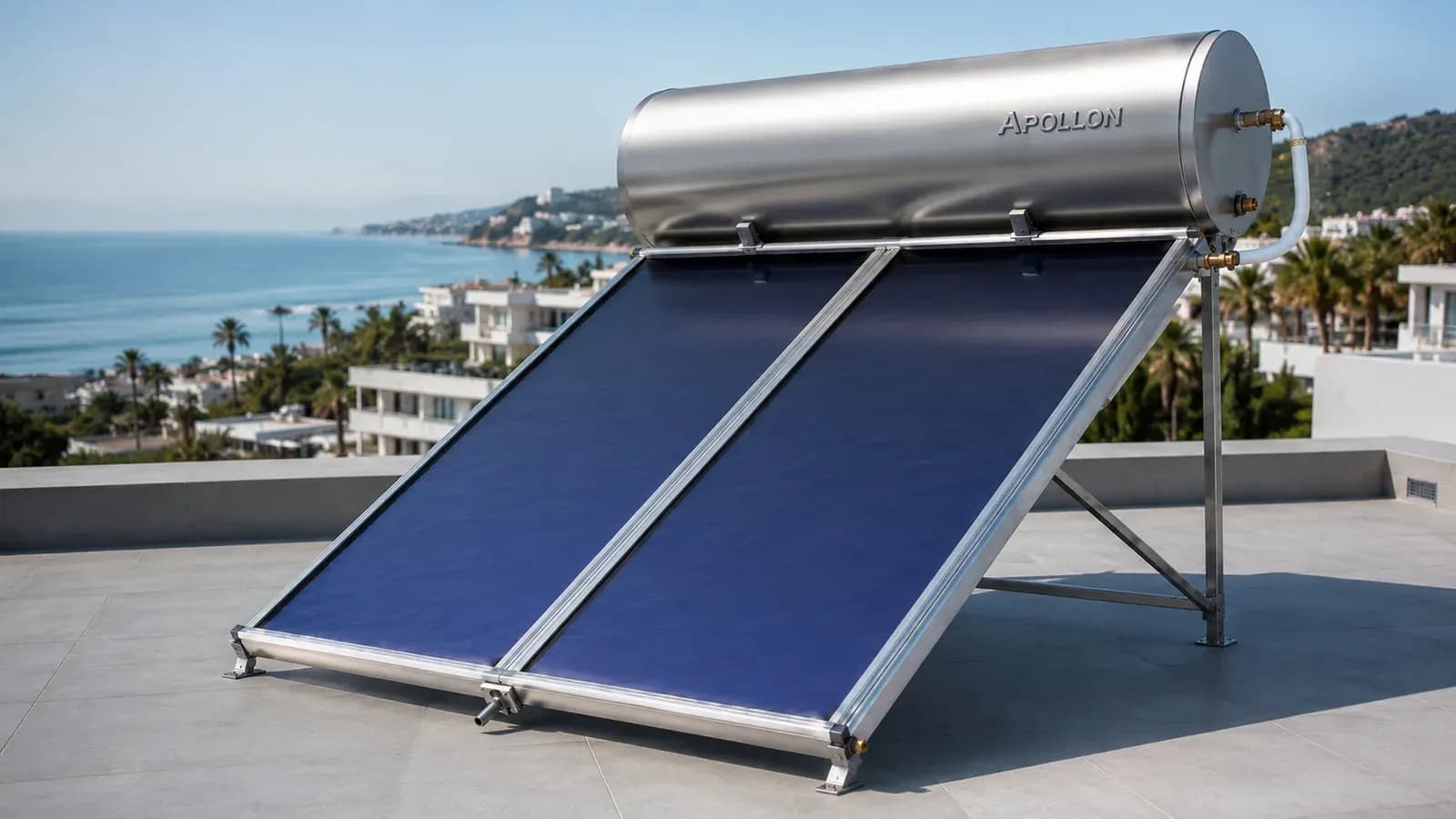
Not much. Every Nobel model, from Apollon to Aelios to Hyperion, needs the same basic upkeep pattern. The real difference shows up with forced-circulation systems, used in villas and larger buildings, since they add a pump that needs checking on the routine visit. If you're still not sure which model or capacity fits your home, that's the right place to start before installation even comes up.
Is professional installation worth the investment?
That question comes before any purchase decision. If you're still weighing whether a solar heater is worth it at all, the full answer is in Is a solar heater worth it?, and the payback and long-term savings math is laid out in How much does a solar heater actually save?. The key point: that payoff is tied directly to installation quality. A heater with excellent specs on paper, installed in the wrong spot, won't deliver the savings you expected.
When is scheduled maintenance better than waiting for a breakdown?
There's a simple but important gap between two types of customers: the ones who wait for something to break, and the ones who book scheduled maintenance. The second group saves money over time, because most faults start small — dust buildup, a connection starting to loosen — and are easy to catch in a routine check before they become an actual leak. The difference between the two service types — scheduled periodic care versus reactive emergency response — is explained in periodic maintenance and emergency maintenance.
The four factors after installation — which of them comes back as maintenance
The four things that decide the system and its price do not stop mattering on installation day. They are exactly what shapes life with the system afterwards:
- Material quality → the rhythm of attention. Scheduled maintenance happens either way. What differs is that weaker materials and assembly make neglect show up sooner, and let efficiency drift down quietly without anyone noticing.
- Specification → how hard the backup element works. Capacity below your need means the backup covers the shortfall every day. That is not a fault — it is extra running on a part you never intended to depend on.
- Consumption → your usage rhythm sets your attention rhythm. A home in heavy year-round use is not a chalet opened for a season, and the second needs different attention when it is restarted after standing idle.
- Fit with the house → the factor that surfaces latest. Where the system sits, its orientation and the shade on it decide its output every day — and they also decide how easy it is to reach for service. A hard-to-reach spot turns the simplest check into an expedition.
In other words, the decisions taken before installation are what write the bill afterwards — which is why placement is a decision in its own right.
So where do you start?
Before installation, confirm your roof is suitable and know the right capacity for your household size — that one decision saves a lot of trouble later. First step: find your right capacity, then book a free inspection so we can see your roof and settle the best spot and install plan — no obligation.
Frequently Asked Questions
Does a solar heater need a lot of maintenance?
No — just simple, periodic care: cleaning dust off the panels, and checking the piping and insulation. Not complicated, but it matters for long-term efficiency.
Does installation really affect performance?
Significantly — the right placement, orientation and connections affect performance (especially in winter) more than the model itself.
Who handles the maintenance?
Aurora provides [periodic maintenance](/en/services/periodic-maintenance) and [emergency maintenance](/en/services/emergency-maintenance) after the sale; simple upkeep like cleaning the panels the homeowner can do themselves.
What's the magnesium anode and why does it need replacing?
A rod inside the tank that corrodes itself instead of the tank walls, protecting it from scale and rust. It wears down over time, so it needs periodic inspection and replacement as part of maintenance.
Is installation different for a flat versus a villa?
The principle is the same, but a villa usually needs a bigger capacity and sometimes a forced-circulation system — the details get settled during the inspection based on your roof and needs.
Got a question about what you just read?
Talk to Aurora's team directly for a straight answer — or book a free site inspection if you're ready.