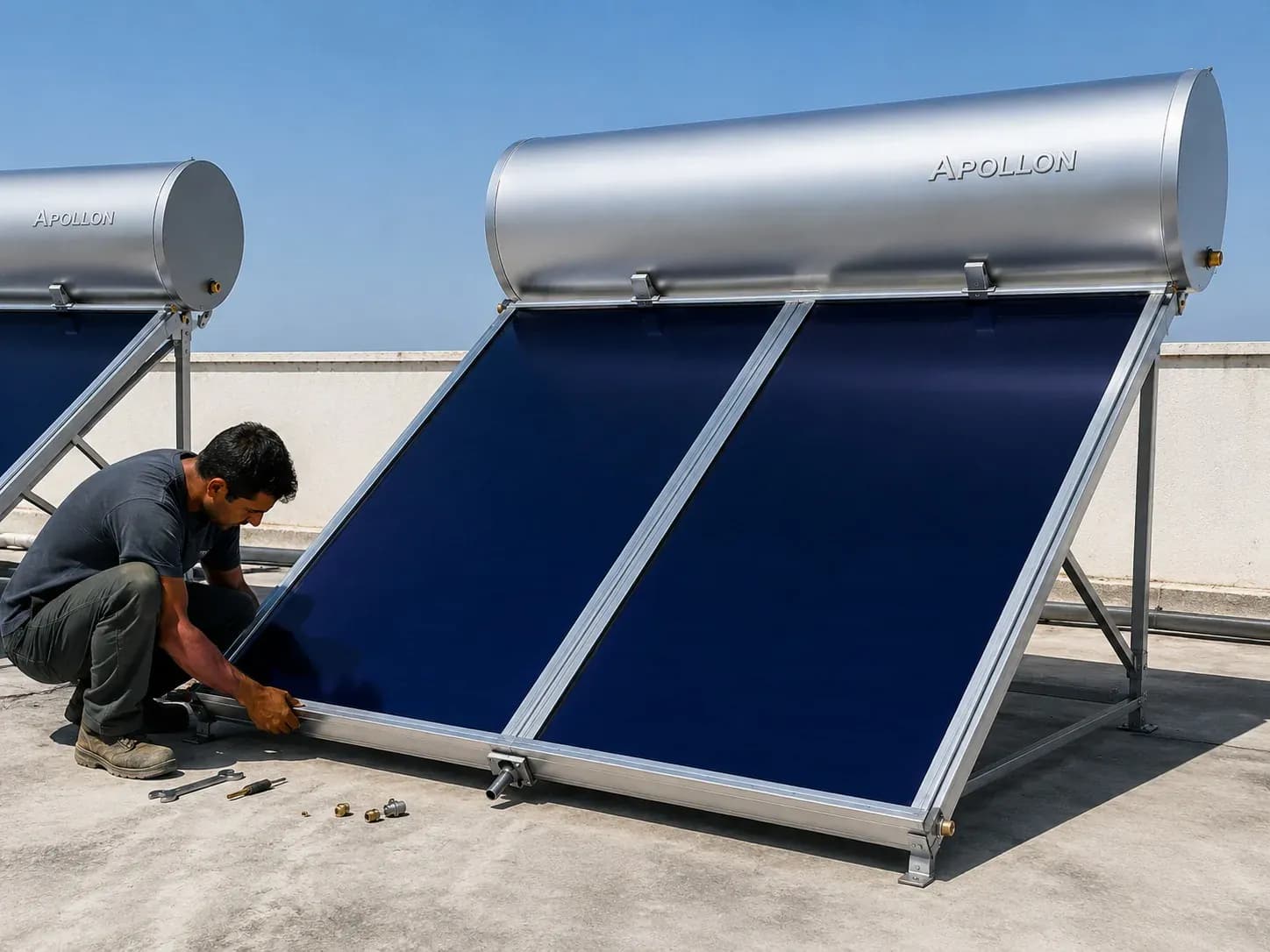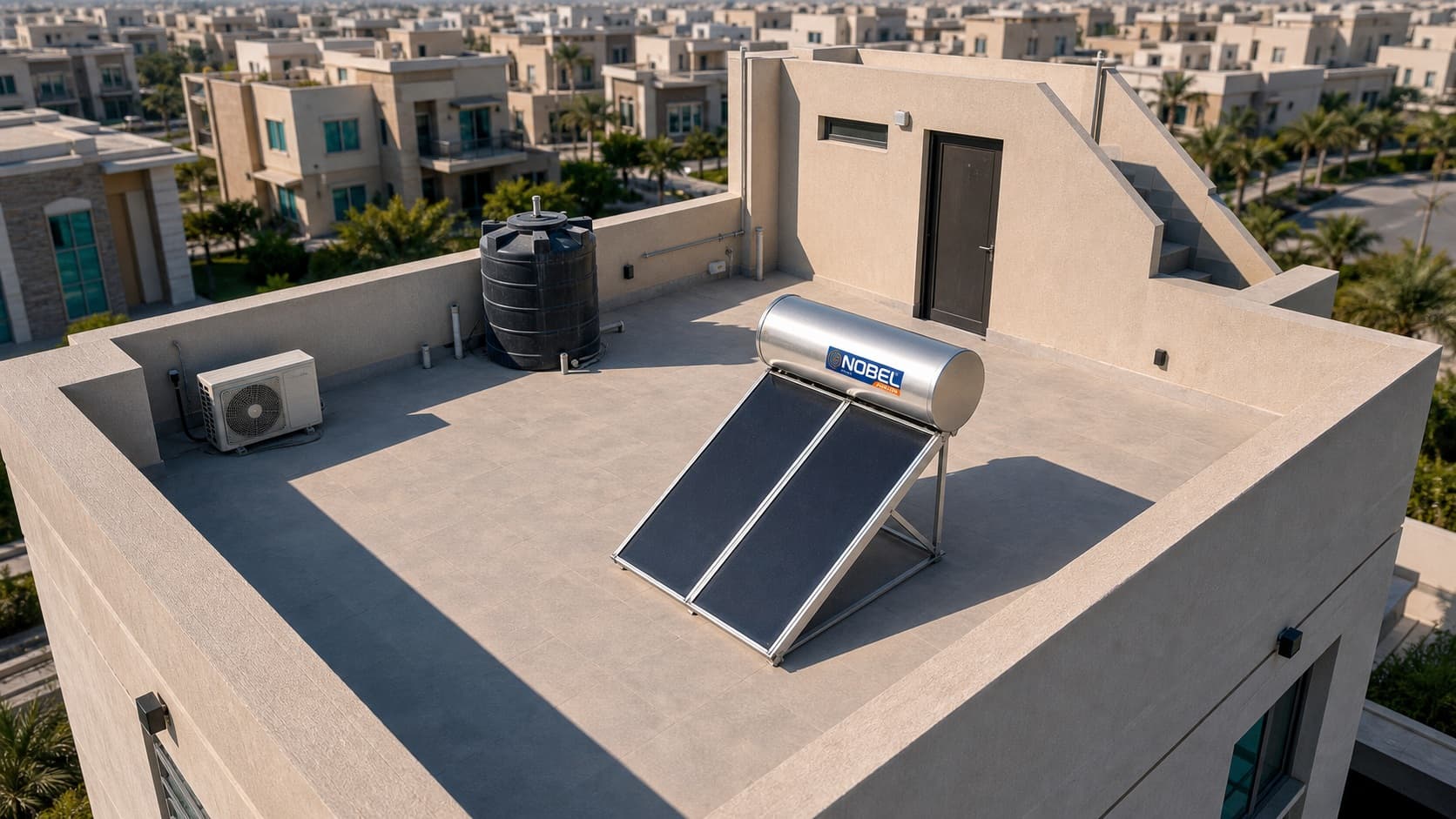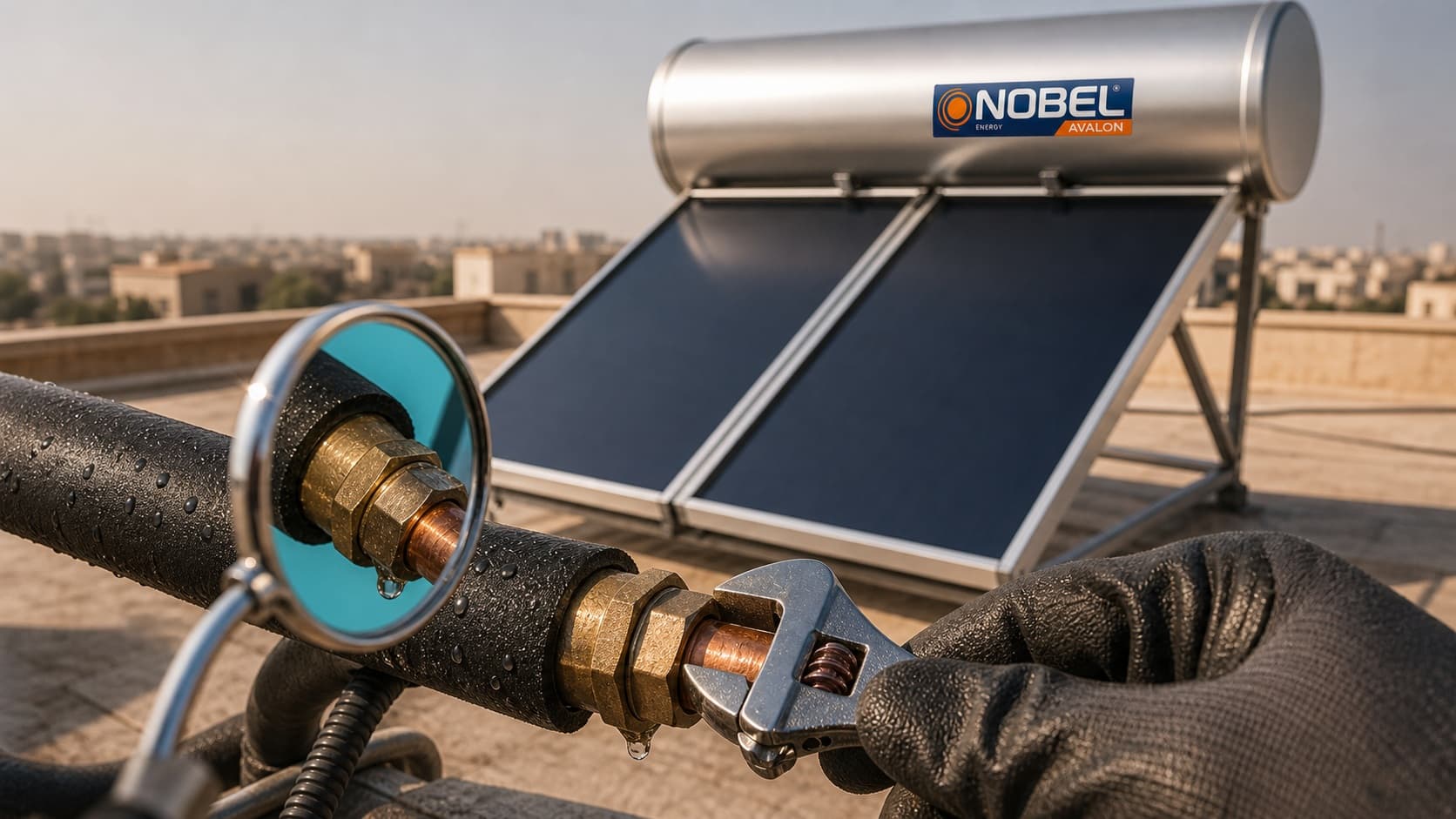

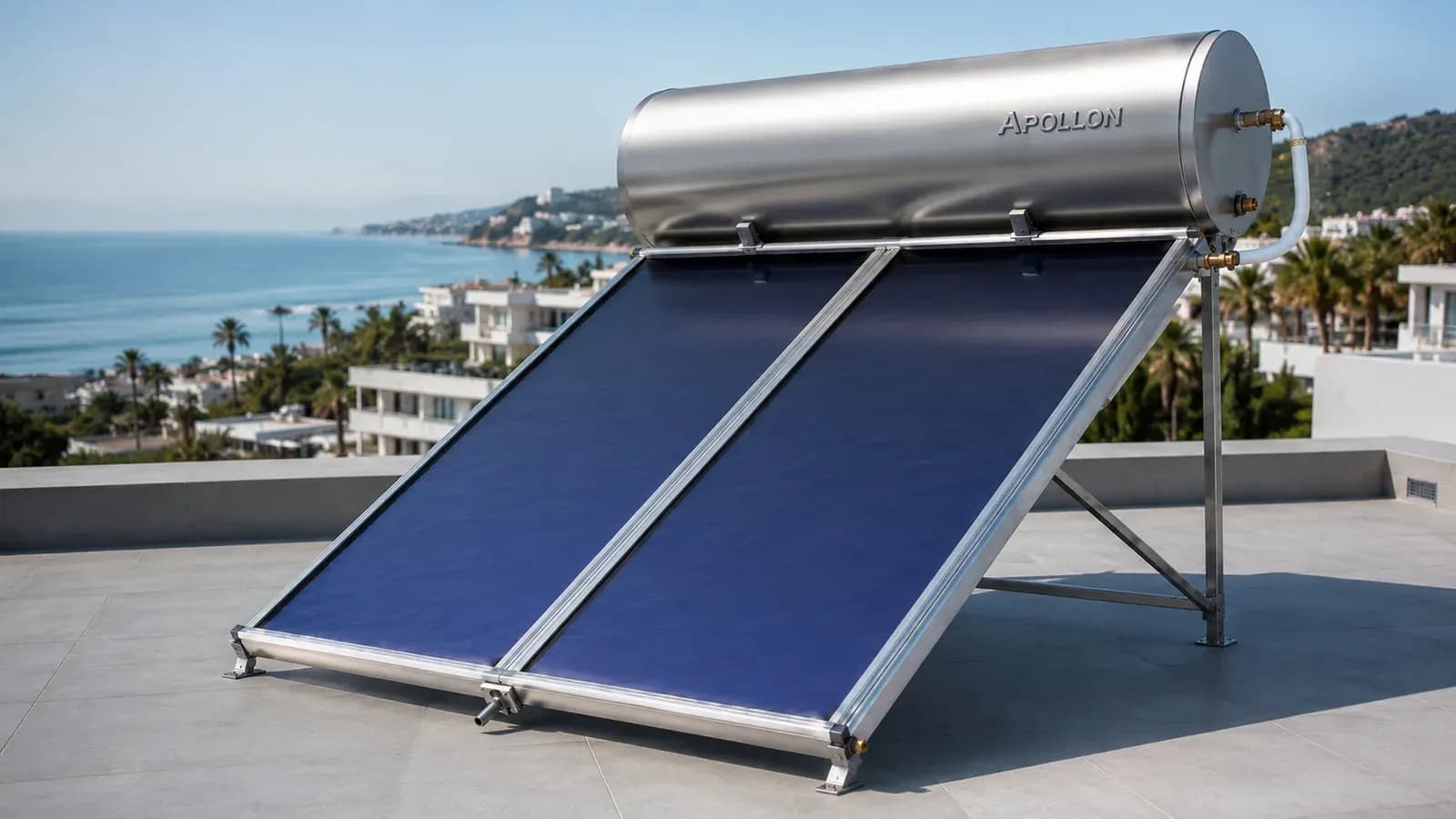
What most shortens a solar heater's life in Egypt is neither the sun nor the winter — it is the water itself. In many areas the water carries a high level of dissolved salts, and with every heating cycle some of it deposits on the internal surfaces.
And the problem is not that scale forms — that is physics and cannot be entirely prevented. The problem is that it accumulates silently when nobody deals with it, turning from a thin layer into an expensive fault.
How scale does its damage — in order
What happens is sequential and logical:
- The layer insulates. Scale is a poor conductor of heat, so it stands between the heat and the water. The result is that the heater warms more slowly and your water is less hot for the same hours of sun.
- Reliance on the backup element rises. And because the backup runs on electricity, the saving you came for quietly shrinks — no fault, just a bill creeping up.
- Scale traps heat locally. Points in the tank run hotter than they should, stressing the metal.
- And eventually it reaches the tank — the most expensive part and the hardest to replace.
The important point: the first two stages have no clear symptoms. No noise and no leak — only performance slipping slowly. Which is why periodic inspection is not a luxury here.
The protections built into the product itself
Good systems handle this in the design rather than in promises:
- Glass enamel. An internal lining that resists corrosion and reduces scale adhesion. In Nobel Apollon the enamel is double-layered, and in Hyperion it is double glass enamel cured at 860°C to DIN 4753 — and that curing temperature is what fuses the layer to the metal instead of leaving it as a coating on top.
- Magnesium anodes. A component that sacrifices itself: it corrodes instead of the tank because it is a more chemically active metal. Present in Hyperion, it is a consumable to be inspected and replaced — a spent anode means the tank is now the thing corroding.
- The closed circuit. Systems like Hyperion run propylene glycol in a sealed loop not fed from mains water — so scale inside the collector loop is greatly reduced.
- The inspection flange. Aelios has a covered opening allowing the tank to be opened for internal inspection, scale cleaning and anode replacement. Its value shows years later rather than on installation day: a system you can open and clean lasts longer than a sealed one.
And coastal areas: a second problem on top
On the coast there is an additional factor: airborne salt works on exposed components year-round, not just on the water.
Here the materials show their difference: Hyperion has a marine-grade aluminium casing resistant to corrosion plus magnesium anodes — both there for exactly that. Even so, scheduled maintenance matters more in these areas, not less. See our Red Sea projects.
And your part — three things
- Preventive maintenance. Checking scale, anode condition and cleaning the tank. It is the cheapest item in the whole setup and the one with the greatest effect on its life.
- Do not defer the anode replacement. When an inspection says it is spent, that is not a suggestion — it is a warning that the protection is gone and the tank is exposed.
- Report any change in performance. "The water is less hot" or "the backup runs more often" — those are first-stage symptoms and the cheapest moment to intervene.
A plain word about the warranty
Neglected preventive maintenance is one of the two most common causes of a voided warranty, especially in areas with water high in dissolved salts. The reason is logical: this damage is predictable and preventable, so it is not reasonable for the manufacturer to carry it.
Which means whoever saves on maintenance risks the warranty they paid for — details in the solar heater warranty.
The next step
If your system has gone a while without inspection, or you have noticed the water is less hot or the backup runs more — book maintenance and we will check scale and anode condition and tell you the system's state plainly. If you are still choosing, the free inspection takes your water quality into account and recommends the right specification, with the model differences in the comparison.
Frequently Asked Questions
How does scale affect a solar heater?
It forms an insulating layer between the heat and the water, so the heater warms more slowly and reliance on the electric backup rises — meaning the saving shrinks without you noticing. Left alone it eventually damages the tank.
What are the signs of scale?
The first stage has no clear symptoms — only performance slipping: water less hot for the same hours of sun, and the backup running more. That is why periodic inspection is what catches it.
What does a magnesium anode do?
It corrodes instead of the tank because it is a more chemically active metal — it sacrifices itself. It is a consumable that must be inspected and replaced, because a spent anode means the tank is now corroding.
I'm on the coast — is it different?
Yes, airborne salt works on exposed components year-round, not just on the water. The marine-grade aluminium casing and anodes are there for that — and scheduled maintenance matters more, not less.
Does neglecting maintenance void the warranty?
Yes, it is one of the two most common causes — especially where water is high in dissolved salts. The damage is predictable and preventable, so it is not reasonable for the manufacturer to carry it.
Why does the inspection flange matter?
It allows the tank to be opened for internal inspection, scale cleaning and anode replacement. Its value shows years later: a system you can open and clean lasts longer than a sealed one.
Got a question about what you just read?
Talk to Aurora's team directly for a straight answer — or book a free site inspection if you're ready.