
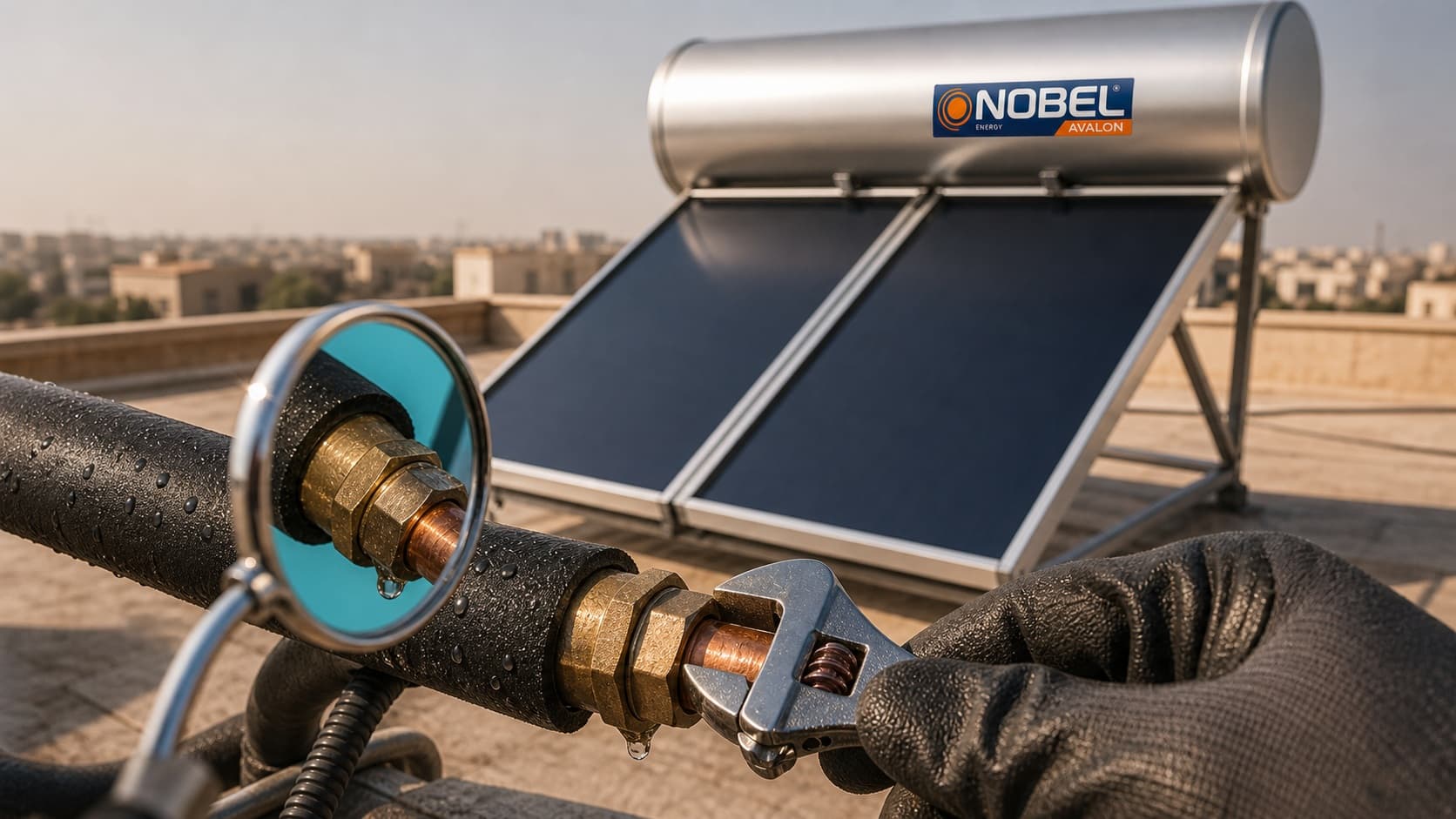
If water becomes cooler or runs out sooner, note when it happens before deciding the heater needs replacing. Overcast weather, increased demand and a visible leak lead to different checks. Symptoms help the technician choose a starting point; they do not establish the cause on their own.
Lukewarm water on particular days
Note the weather and usage times. During low-sun periods, the supplementary heater and its controls need checking. If demand has increased, capacity should be reviewed alongside the equipment’s condition.
The technician also checks shading, collector condition and pipe routes. See solar heating in winter for seasonal considerations.
Performance declining gradually
Possible causes include dirty collectors, deposits or a component problem. Visible dirt is not proof that cleaning alone will resolve it. Record the last service and any change in water, usage or shading from nearby buildings.
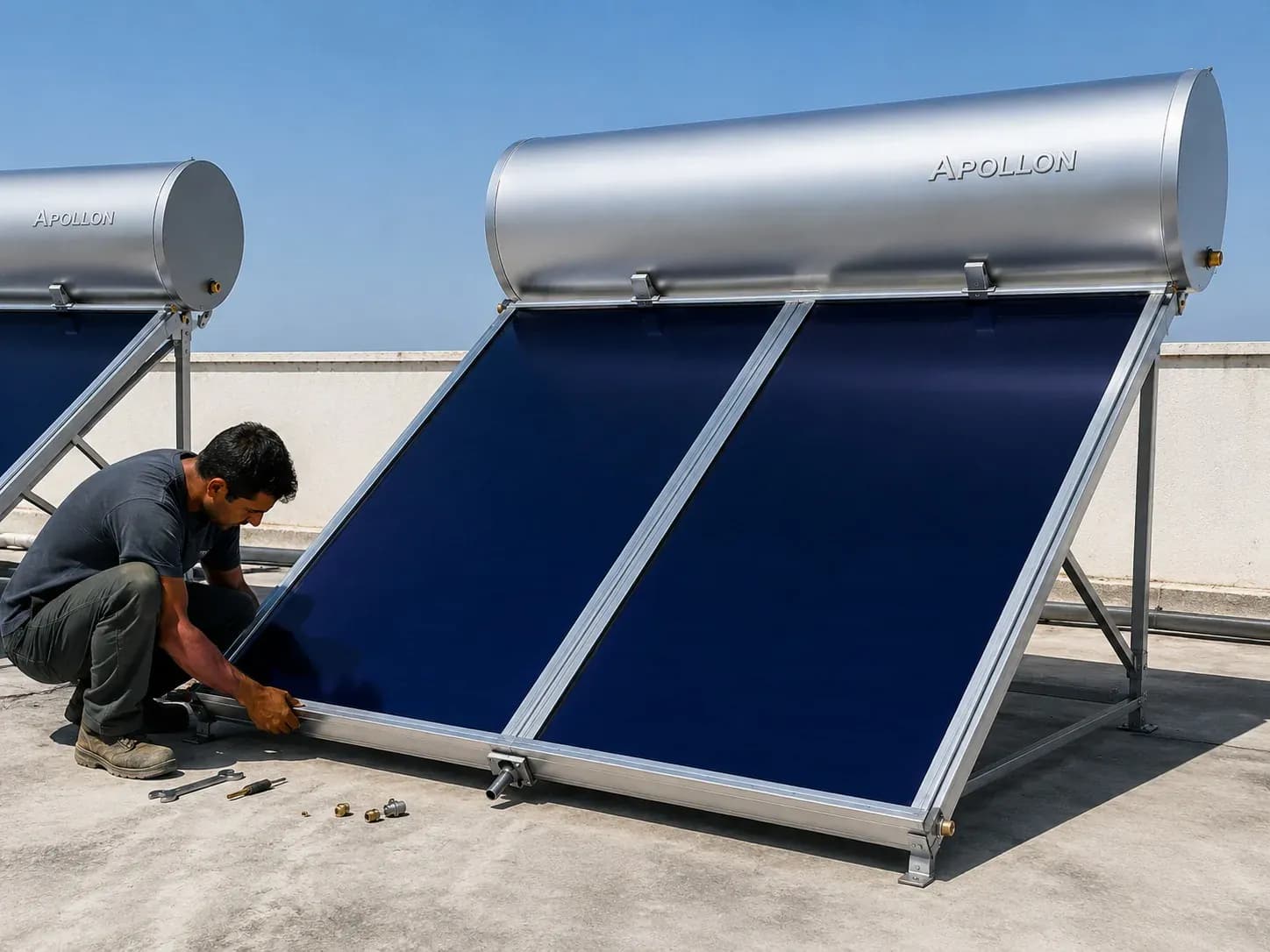
Collector cleaning should follow the appliance instructions and require safe access. If there is a fall risk or the collector’s condition and temperature are uncertain, leave the work to the service team.
Water cooling quickly during use
Checks include demand, storage temperature, insulation, supplementary heating and connections. Cooling when another bathroom is used is useful information, but does not prove the tank is too small. Mention whether the issue is new or has existed since installation.
If demand has changed, the advisor can provide an initial capacity estimate; inspection determines whether maintenance or a system change is appropriate.
A visible leak
If safe, note where it appears: a connection, beneath the tank, or a discharge line. A photo and the timing help. Do not open hot equipment, tighten hot connections or block a safety-valve outlet.
The source, pressure and components need inspection. Request maintenance and clearly report the leak rather than describing the issue only as poor heating.
An electrical supplementary-heater issue
For repeated tripping or unusual heating at connections, do not keep restarting the equipment or open its cover. A qualified technician should inspect the heater, supply and protective devices. Follow the operating instructions for the model.
What to send with a service request
- Make and model, or a safely obtained photo of the identification label.
- The symptom, timing, and whether all outlets or only one are affected.
- Last service date and any changes in usage.
- Photos of visible symptoms without dismantling equipment.
- Available warranty details; see the warranty activation page.
The team reviews the request and explains the diagnosis and repair scope after inspection. Our component guide can help you follow the explanation.
Frequently Asked Questions
Does poor hot-water supply mean the heater is too small?
Not necessarily. Demand, settings, insulation, supplementary heating and equipment condition should be checked before recommending replacement.
Can I clean the collectors myself?
Only where the model’s cleaning instructions are clear and access is safe. If there is a fall risk or the equipment’s condition is uncertain, request a service team.
Is water from a safety valve normal?
The discharge location and timing help diagnosis. Do not block the outlet or alter the valve; request inspection for persistent or unusual discharge.
What should I prepare for a service request?
The model, symptom and timing, last service date, safely obtained photos, and available warranty details.
Got a question about what you just read?
Talk to Aurora's team directly for a straight answer — or book a free site inspection if you're ready.