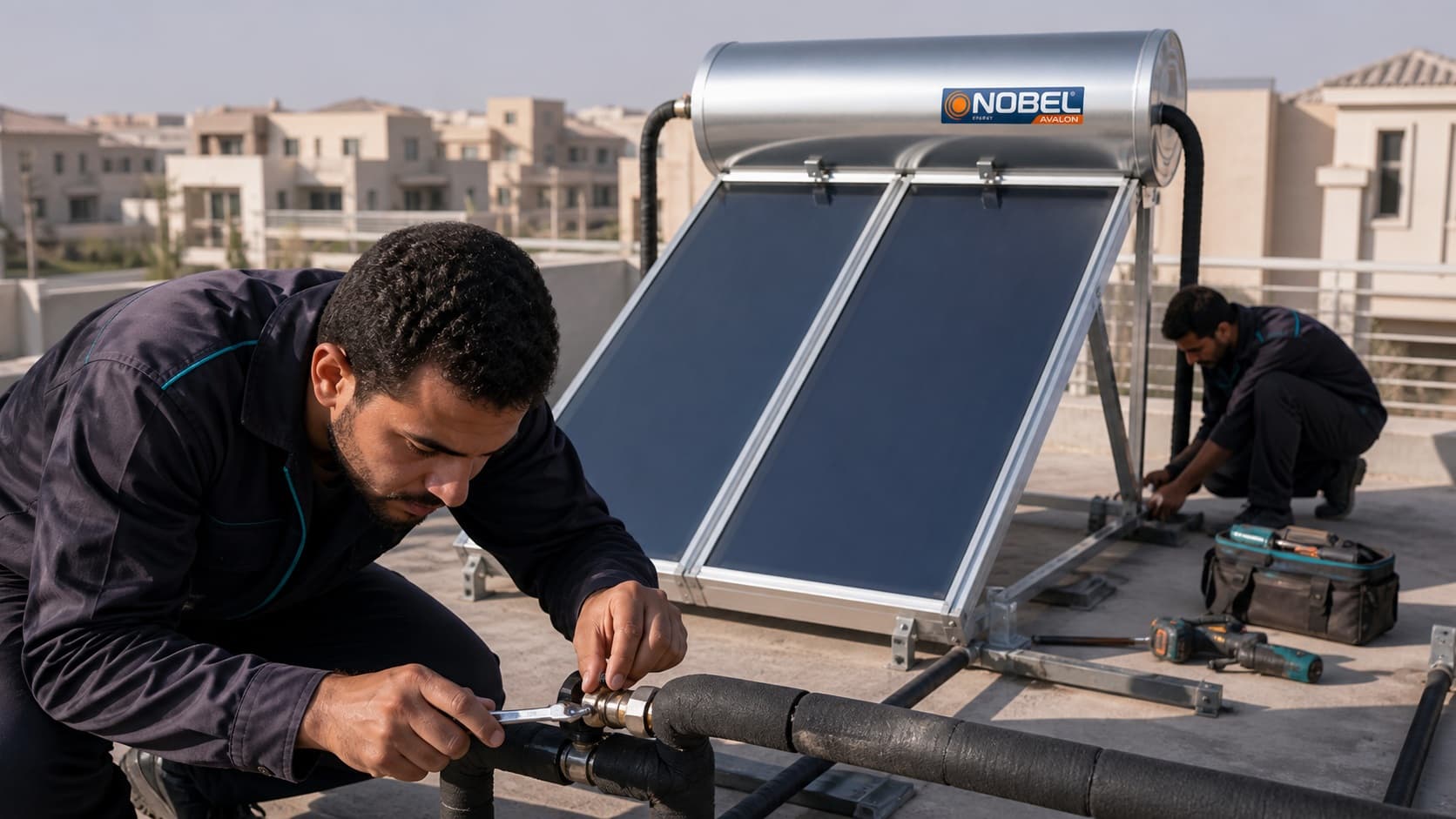
The biggest drawbacks of a solar water heater: a higher upfront cost than electric, needing a roof that gets sun, and lower output on cloudy days. These aren't exaggerated, and we're not trying to hide any of them — each one is real and has genuine limits. But each also has a practical, proven fix, and that's what we'll walk through honestly before you buy, so you know exactly what you're signing up for with no surprises after installation.
Drawback 1: Higher upfront cost
This is the most honest drawback there is. A solar heater costs more upfront than a plain electric heater, because it isn't a single appliance — it's a complete system (absorption panels, insulated tank, specialized installation). That price difference is real, and we won't downplay it — it's usually the first thing that gives anyone pause before buying.
But that difference comes back as savings on your monthly bill over the long run, because a large share of your heating runs on free sunlight instead of electricity. You pay more once so you pay less every month afterward. If you want to compare actual market prices in Egypt, there's a detailed guide on solar water heater prices in Egypt, and the free inspection shows you exactly how much comes back and when, based on your actual usage rather than a generic estimate.
Drawback 2: Needs a roof that gets sun
A solar heater needs a spot on the roof that gets sun for most of the day — not necessarily direct sun at all times, but reasonable exposure. If your home is a shaded ground floor, or the roof is crowded with air-conditioning units and other tanks, or the building is shadowed by a neighboring one, that can be a genuine challenge.
The fix: the free inspection is where we look at your exact roof and tell you honestly whether it's suitable — without selling you something that won't actually work for you. If your home is a villa or somewhere with a private roof, your odds are noticeably better — there's a real difference between an apartment and a villa in how the system is chosen and installed.
Drawback 3: Output drops in clouds
On several consecutive cloudy days, the amount of heat the panels capture from the sun drops, and natural heating slows down. This is a real limitation rooted in how the system fundamentally works — it runs on sunlight, so naturally its performance is affected when the sun is reduced.
Good models solve this with a backup electric element that switches on automatically only when needed, not continuously. This guarantees hot water year-round with the least electricity possible. We cover this in full detail in Does a solar water heater work in winter? — including the difference between light and heavy cloud cover and exactly how the backup element operates.
Drawback 4: Takes up roof space
The panels and tank need real space on the roof, and how much depends on the capacity you need. For most homes this isn't a significant problem, but if your roof is small or shared with neighbors in the same building, it needs to be accounted for from the start. Space requirements also vary by system type — some designs need more horizontal space, while others can be arranged more compactly depending on your roof's shape.
The fix: we measure the actually available space during the inspection and recommend the capacity and system that genuinely fits your space — whether that's a smaller-footprint option like economy solar heaters or a larger system if the space allows it.
Does performance change over the years?
Any solar system loses a small share of its original efficiency over time — that's normal for any equipment continuously exposed to sun and weather. How fast that happens depends heavily on material quality and how consistently periodic maintenance is done. A system built with good materials and maintained regularly stays close to its original performance for years, while a neglected system or one built with weaker materials starts losing efficiency noticeably sooner. The real issue here isn't that the drawback "exists" — it's how well it's managed.
Drawback 5: Needs simple, periodic maintenance
Like any mechanical system, a solar heater needs simple, periodic attention — a general check, and cleaning dust off the panels, which otherwise reduces heat-absorption efficiency over time. This isn't complicated or expensive, but it matters if you want the system running at peak efficiency for years.
Aurora offers periodic maintenance after installation, plus emergency maintenance if you need a fast fix. Neglected maintenance is the biggest reason people feel their solar heater "stopped working well" after a few years, when the actual cause is usually simple dust buildup. Common issues and their fixes are covered in Solar water heater faults and how to fix them.
Drawback 6: The market has imitations and bad installs
The market has cheap imitation products that fail quickly, and also unqualified technicians who install correctly-made systems badly — a wrong tilt angle or a poorly insulated tank can wreck the performance of an otherwise good system. Together, these two give solar heaters generally a bad reputation, even though neither is actually a flaw of the technology itself.
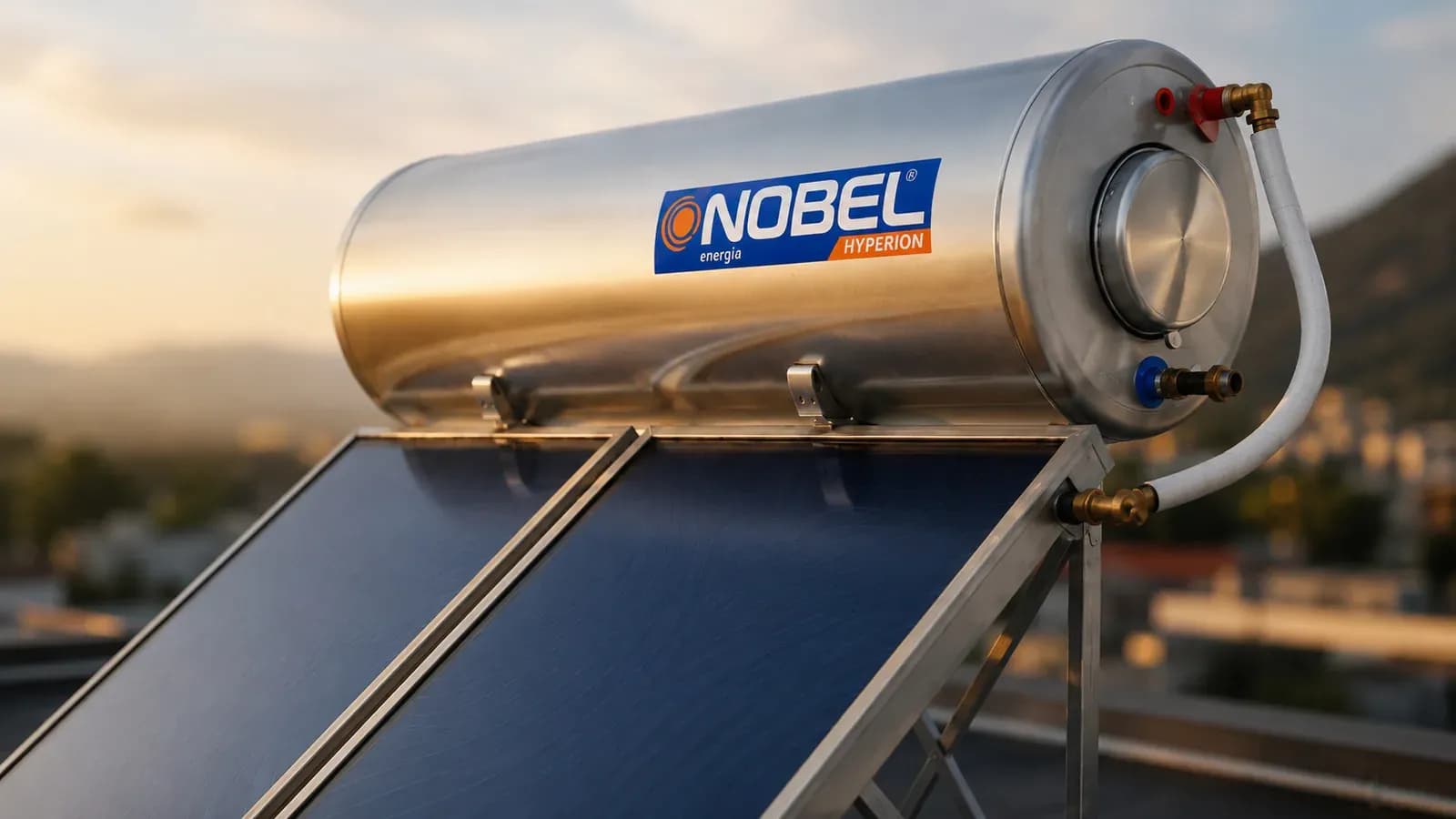
The fix: choose reliable materials and a trusted brand — Nobel Apollon and the rest of the Nobel family (Aelios, Hyperion) come with a warranty and specialized installation. Choosing the installation company matters just as much as choosing the product — there's a full guide on how to choose a trustworthy heater-installation company if you want to be sure before paying anyone.
Three of these drawbacks are not in the product — they are factors set wrong
Look back over the drawbacks and an important distinction appears: some are inherent to the technology, and some are the result of a decision made at purchase. That distinction changes what you should do about them:
- Genuinely inherent: the higher upfront cost, the need for a roof that gets sun, and the dependence on weather. These sit in the nature of the idea and no product removes them.
- "Takes up roof space" → fit with the house. Space is not a drawback; it is a constraint the inspection accounts for. A planned roof makes the space sufficient; a system placed wherever was easiest makes it a problem.
- "Needs periodic maintenance" → material quality. Maintenance itself is not a flaw — but weaker materials and assembly make neglect show up sooner.
- "The market has imitations and bad installs" → this is not a drawback of solar heaters at all. It is a drawback of who sells and installs them, and that is a subject of its own.
The practical difference: an inherent drawback is something you decide to live with or not. One that comes from a factor calculated wrong is avoided from the start — by an inspection that asks the right questions before it quotes a number.
Are these drawbacks enough reason to skip it?
The honest answer: no, if your home is suitable. Every one of the six drawbacks above has a clear, proven fix, and none of them rules out the idea entirely — they just determine whether your installation will be straightforward or needs more careful planning (limited roof space, or variable usage, for example). The real problem shows up when someone buys without an inspection, or picks the cheapest offer without asking about materials and warranty. Anyone who reads this far and asks the right questions has a much better chance of being satisfied with their decision.
Ultimately, an honest drawbacks article says something important about any product: that it's a real product with real limits, not a flawless marketing promise. And that's exactly what a solar heater is — an investment with a real cost and real conditions, but one that pays back its value when done correctly.
The honest bottom line: solar water heater drawbacks are real, but every one is expected and has a practical fix — the key is confirming your home is suitable, choosing reliable materials and a trustworthy installer, and not skipping simple periodic maintenance. Book a free inspection and we'll look at your roof and usage and tell you honestly whether solar or electric suits you better — or find your right capacity first.
Frequently Asked Questions
What are the biggest drawbacks of a solar water heater?
A higher upfront cost, needing a roof that gets sun, and lower output on cloudy days (handled by the backup element). All of them have practical fixes.
Do solar water heaters break quickly?
Imitation products do; reliable materials with correct installation last for years with simple periodic maintenance. The difference is in quality and installation, not the idea itself.
If I'm on a ground floor, can I still get solar?
It depends on having a spot that gets sun. The free inspection settles this honestly before you buy.
Does bad installation affect performance?
Yes — sometimes more than the choice of model itself. A wrong tilt angle or poorly insulated tank reduces efficiency even with a genuine product. Choosing a trustworthy installer matters a lot.
Does a solar heater need a lot of roof space?
It depends on the capacity needed. During the inspection we measure the actually available space and recommend a system that fits, even if space is limited.
Got a question about what you just read?
Talk to Aurora's team directly for a straight answer — or book a free site inspection if you're ready.