
A solar water heater does not heat at night — there is no sun to heat with. But that isn't the right question. The right question is: how long does the water heated during the day stay hot? And the answer: in a well-insulated system, until the next morning on most days of the year — because a solar heater is fundamentally a thermal storage tank that fills by day and is drawn down through the evening and morning. On days it isn't enough, the electric backup element tops it up.
This article explains that mechanism in detail: what keeps the water hot, what makes it cool early, and how to use the system so that night is not a problem. It follows on from solar heaters in winter — winter combines both: less sun by day and a longer, colder night.
The core idea: a solar heater stores, not just heats
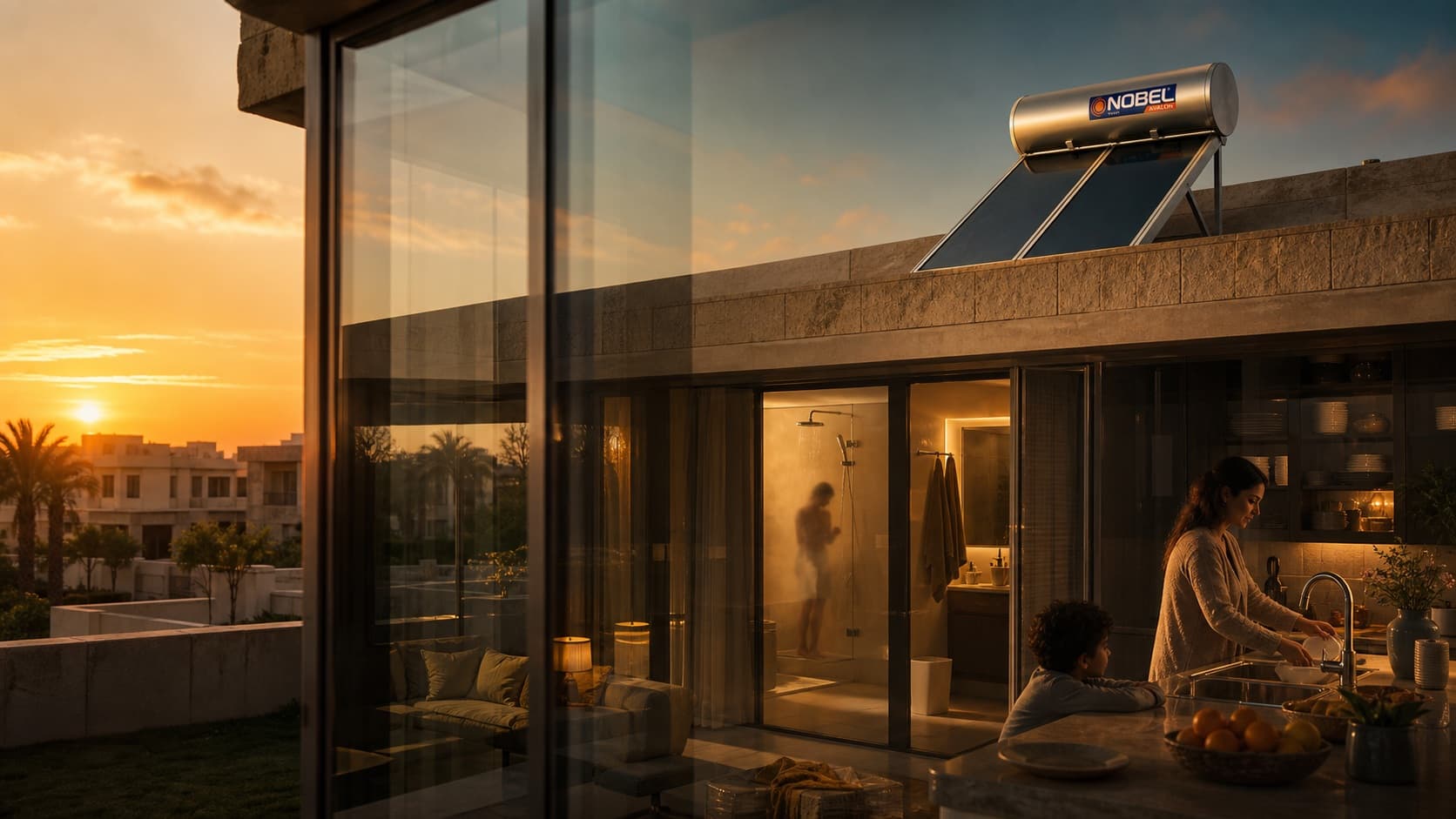
Picture it: the collectors (panels) capture sun and heat the water in the tank throughout the day. At sunset, the tank is full of hot water. From that moment until morning there is no new heating — there is consumption (every time you open the tap you draw hot water and cold enters in its place) and loss (heat slowly leaks from the tank to the air).
So whether you find hot water in the morning depends on three things: how hot the tank got during the day, how well it holds that heat, and how much you drew overnight.
Thing 1: insulation — the single biggest factor
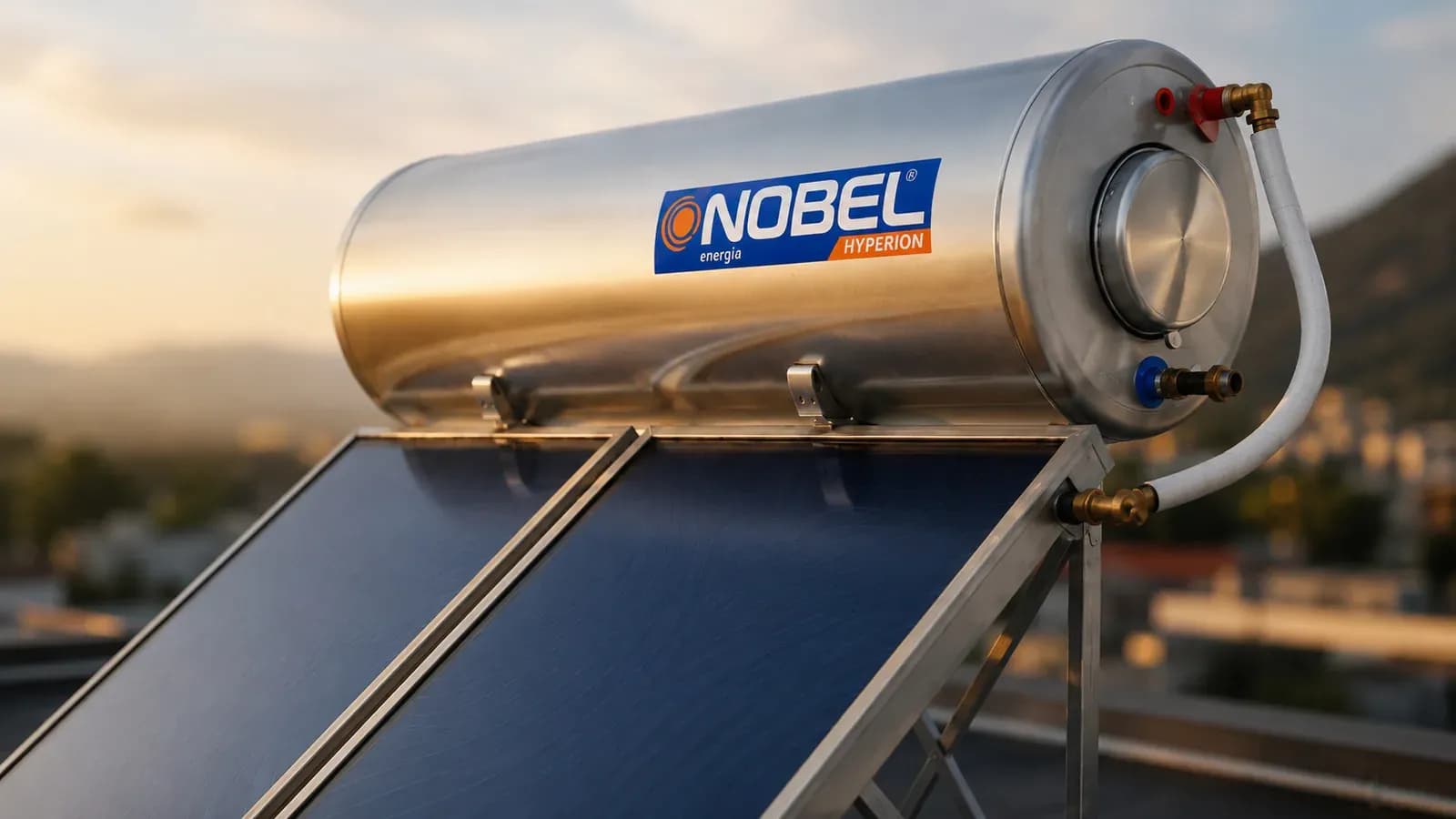
A poorly insulated tank loses heat to the air quickly, and you wake up to lukewarm water even after a sunny day. Well insulated, the loss is slow and the water lasts. That's why insulation thickness is one of the most important specification numbers — 10 cm on the Nobel Apollon — and the real difference between two systems of the same litres.
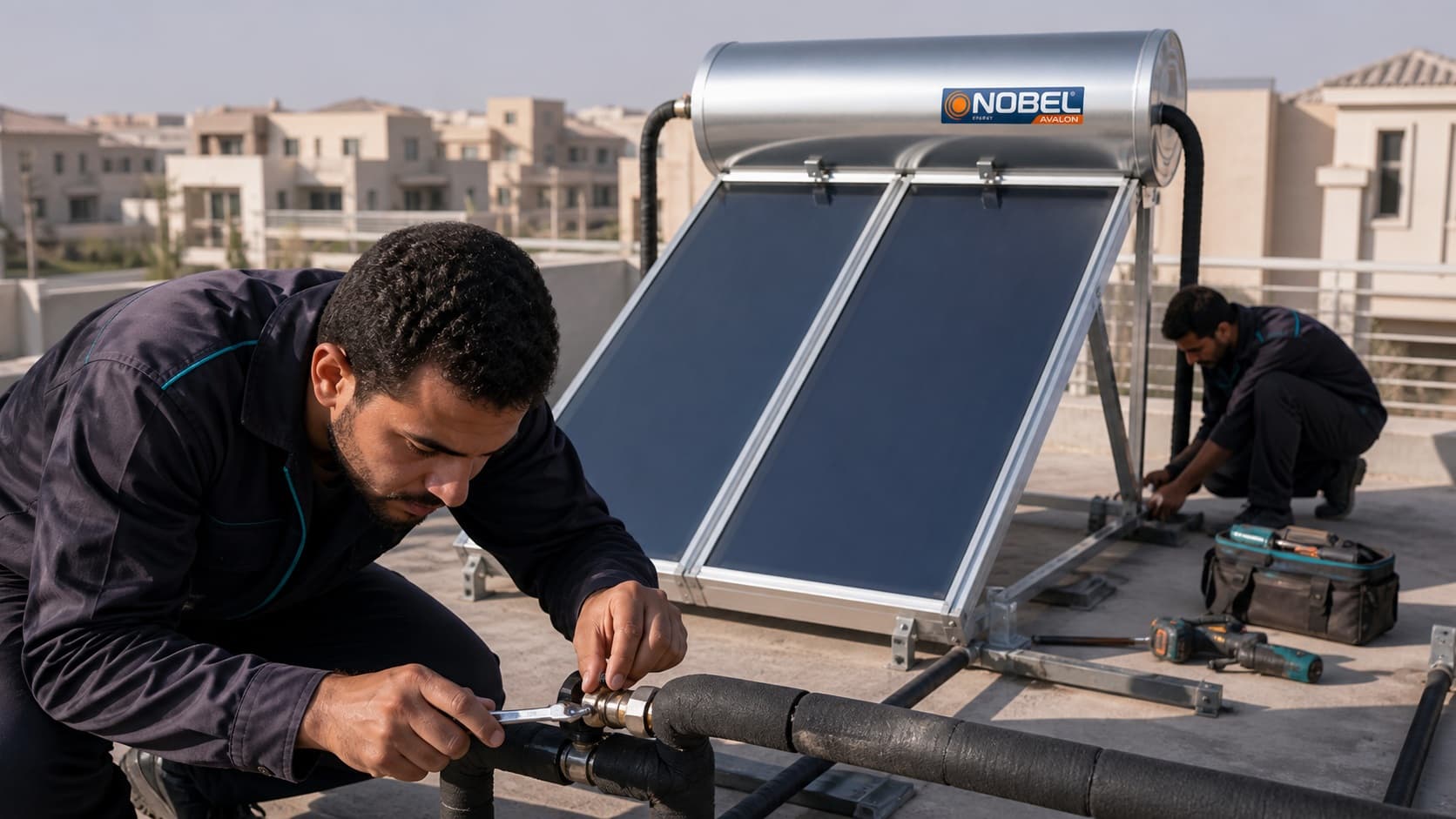
Note that insulation isn't only the tank: hot pipes on the roof, if exposed, mean the first water you draw has cooled in the pipe before the hot arrives. Pipe insulation is part of installation, covered in solar heater installation cost.
Thing 2: capacity versus your evening usage
A household where four people all shower after sunset draws far more from the tank than one that spreads showers across the day. If capacity was sized on headcount alone without the timing of use, the tank runs out before the last person — not a fault in the heater, a fault in sizing.
The rule: capacity is set by people and usage pattern. Find your right capacity asks about both.
Thing 3: the day itself — how hot did the tank get?
A clear summer day brings the tank to its highest temperature, leaving a large "balance" that lasts until morning and beyond. A short or cloudy winter day brings it less far, so the balance is smaller and runs out earlier. That is exactly why night performance changes with the season — and where the backup element comes in.
The electric backup: when does it run at night?
The backup element is a standard component of solar heaters. Its job is to raise the tank temperature when the sun isn't enough — controlled by a thermostat: if the temperature drops below a set point, it runs; if the tank is hot from the sun, it stays off.
So on summer nights it usually doesn't run at all because the balance is enough. On cold winter nights or after a cloudy day it runs a little to cover the gap — electricity you pay for, but on the gap, not on heating from cold. That is why the bill drops clearly without reaching zero; details in how much a solar heater saves.
Three habits that make night a non-issue
- Long showers in the afternoon or early evening where possible — the tank is at its fullest.
- Don't leave the backup switched on permanently. Keep it on the thermostat or a timer for early winter mornings — otherwise it heats water the sun would heat for free two hours later.
- Run the hot tap briefly if your pipes are long: the first draw is what cooled in the pipe, not the tank.
When is night a sign of a fault?
If you start waking to cold water after sunny days — and that's new — it isn't normal. Common causes: a failed backup thermostat, damaged insulation, a valve leaking hot water, or scale build-up reducing efficiency. These are diagnosed in solar heater faults and fixes, and routine maintenance prevents most of them.
The early-morning shower — the hardest hour of the day
If one moment exposes any solar system, it's six in the morning in January: the tank was drawn down overnight, the air is at its coldest, and the sun isn't up. That is exactly when people judge the heater — and judge it wrongly if the system was sized or installed badly.
What gets the early morning through is three things, all mentioned above but converging here: insulation that carries the night's balance to morning, capacity with margin above evening usage, and a timer on the backup that runs an hour before waking in winter only — heating the small gap that's missing, not the whole tank. Homes complaining of "no hot water in the morning" are usually missing one of the three, not a new heater.
The practical takeaway
- A solar heater stores at night — the water lasts until morning if insulation is good and capacity is sized to your evening usage.
- The difference between two systems of the same litres at night = insulation thickness. Ask for it in centimetres.
- The backup covers the gap in winter and cloud — it doesn't heat from cold.
Find your right capacity for your usage pattern, and book a free inspection where we check distances, insulation and the backup element on site.
Frequently Asked Questions
Does a solar heater work at night?
It doesn't heat at night as there's no sun, but it stores the water heated by day in an insulated tank, so it stays hot until morning on most days of the year. The electric backup tops up if the balance isn't enough.
Does the water stay hot until morning?
In a well-insulated system sized to your usage, yes. Three things decide it: insulation, capacity versus evening usage, and how hot the tank got during the day.
Why does water cool early in some systems?
Usually weak tank insulation or exposed roof pipes, or a capacity smaller than the evening draw. Two systems with the same litres can differ a lot at night because of insulation thickness.
Does the backup element run every night?
No. It runs on a thermostat when the temperature drops below a set point. In summer it usually doesn't run; in winter or after a cloudy day it covers the gap only.
Should I leave the backup on all the time?
Better not. Keep it on the thermostat or a timer for early winter mornings, so it doesn't heat water the sun would heat for free hours later.
I wake to cold water despite sunny days — is that normal?
If it's new, no. It could be the thermostat, damaged insulation, a leaking valve, or scale build-up. These are maintenance cases that are easy to diagnose.
Got a question about what you just read?
Talk to Aurora's team directly for a straight answer — or book a free site inspection if you're ready.