
If you are looking for one number for the cost of heating a villa, the honest answer is that it does not exist — and the reason is not evasion: central heating is a smart heating system sized around your home, not a product off the shelf. Two villas of identical area come out at two different costs, and the difference lies in tangible things you can understand.
This article sets out what moves the figure, so you can read any offer and compare it properly.
The five factors that set the cost
1. Capacity — how much your home actually needs. For heating that means the required output, set by the heated area, number of floors, ceiling heights and how many spaces are open-plan. Not every square metre in a villa is heated, so it is the heated area that counts, not the plot.
2. Consumption — how much you actually run the heating. A home running it two months a year at a moderate setting is not one running it four months at a high setting. This drives the monthly running cost and which design is cheaper long-term.
3. Purchase timing — the season you buy in, and costs are not fixed year-round. If your decision is not urgent, that is worth asking about.
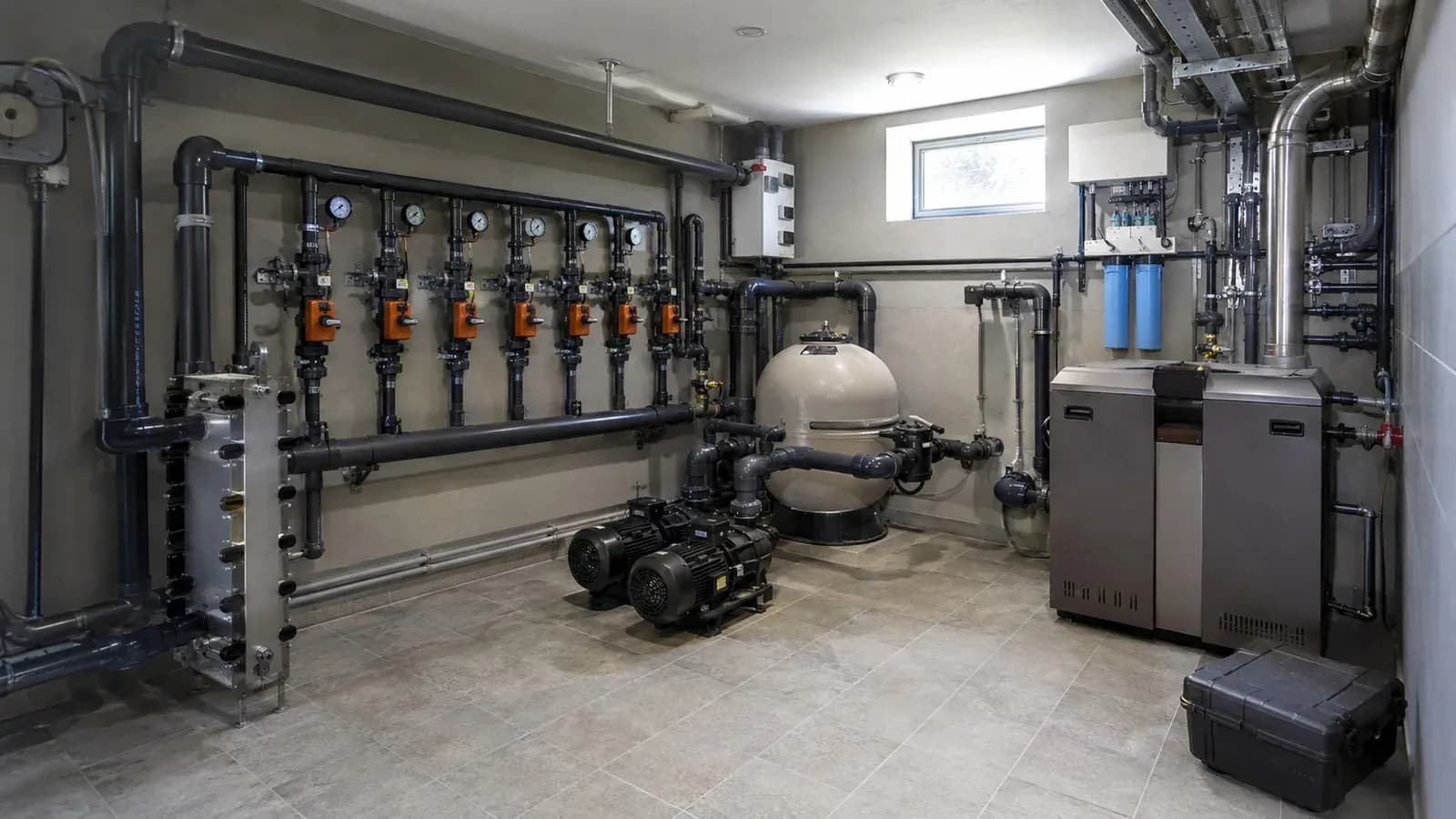
4. Accessories — and this is where two offers differ most: the pump, the controller and safety valves, plus distribution pipework, manifolds, valves and insulation. These items vary more than the boiler itself.
5. Optional extras — additional controls, finer zoning, particular arrangements for placement or appearance.
And in heating specifically: three things move the figure hard
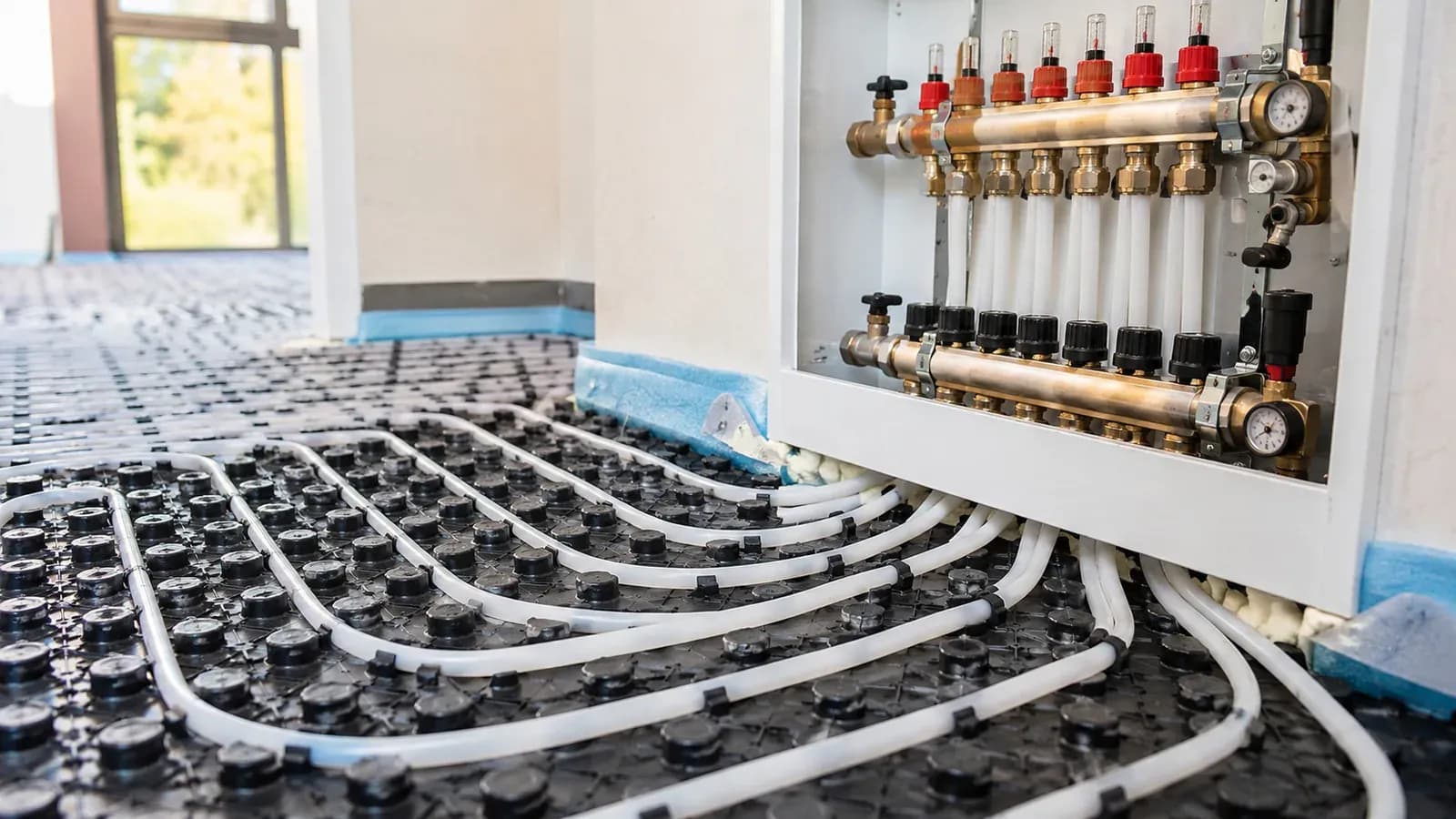
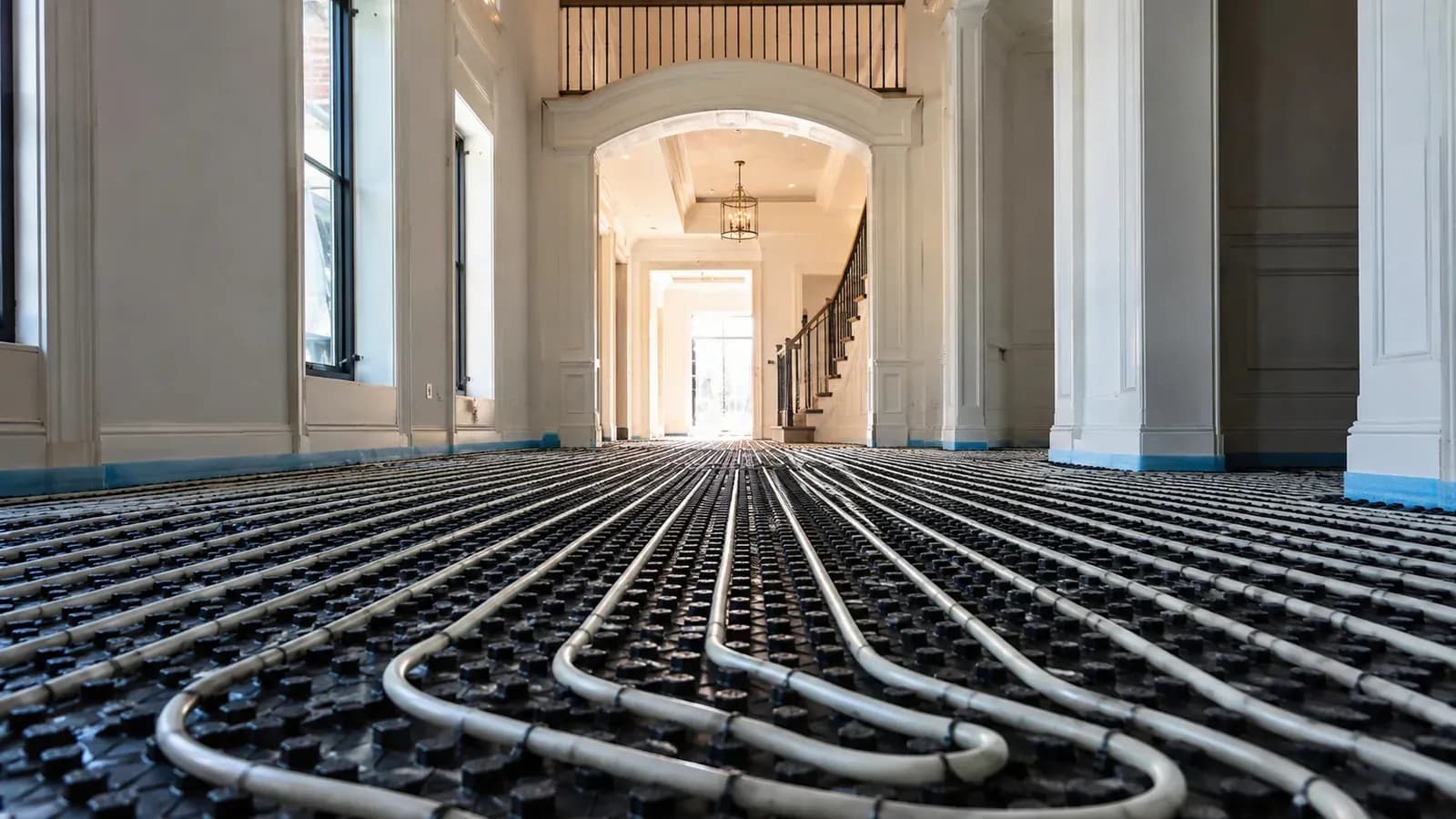
The distribution method. Underfloor or radiators — underfloor is far more pipework and must be laid before tiling; radiators are visible units on a simpler pipe route. This decision changes the cost more than any other single item.
The finishing stage. A unit still being finished means pipework in natural routes with no breaking out and no making good. A finished unit means intervention and reinstatement. Detail in central heating in a finished flat.
Insulation. This is the item nobody puts in the calculation, and it counts twice: once in the required output — a well-insulated home needs less — and once in the running bill every month for the life of the system. Single glazing, large glass areas and exposed roofs all raise the heat load.
Why do two offers for the same villa differ?
In most cases the difference is not the boiler — it is:
- What is inside the figure: are pipework, manifolds, valves and insulation included, or "calculated later"?
- The heated area: one offer covering the whole villa, another only the floors in use.
- The distribution method: underfloor, radiators, or both.
- Component quality: pipes, valves and manifolds differ genuinely in service life.
Ask plainly: what is inside this figure and what is outside it? If the answer is unclear, the two numbers are not comparable at all.
The cost after installation
Day-one price is not the true cost. Three items complete the picture:
- Gas consumption — tied to insulation, correctly sized output, and how you run it. A system larger than you need cycles on and off; one that is too small runs flat out — both consume more.
- **Preventive maintenance** — a small annual item that prevents large faults and keeps the warranty valid.
- Spare parts over time — valves and consumable components.
The fair comparison: installation + five years of running + five years of maintenance. On that measure, cheapest on day one is not always cheapest.
Why we don't publish a number
Not a marketing game. Villas differ in area, floors, insulation, finish and how they are used, and any published number would be wrong for most readers. What we can say clearly: quality first, price second — and the accurate figure comes from a survey that measures your home.
The next step
Book a free engineering survey — we measure heated area, floors, insulation and finishing stage, and produce the design, the output and the cost with a breakdown of what is in it. If you are still comparing systems, the smart advisor gives an initial recommendation, and you can see our heating solutions.
Frequently Asked Questions
How much does central heating for a villa cost?
There is no single number — the system is sized to the home. Cost is set by capacity, consumption, purchase timing, accessories and optional extras, and in heating specifically by distribution method, finishing stage and insulation.
What is the largest item in heating cost?
The distribution method — underfloor is far more pipework than radiators, and that decision changes the cost more than any other item.
Why do two offers for the same villa differ?
Usually not because of the boiler, but because of what is inside the figure (pipework, manifolds, valves, insulation), the heated area, the distribution method and component quality.
Does insulation affect the cost?
Yes, twice: a well-insulated home needs less output (lower installation cost) and consumes less every month for the life of the system.
Does the finishing stage change the price?
Substantially. Still being finished means pipework in natural routes with no breaking out; already finished means intervention and reinstatement.
Why don't you publish prices?
Because villas differ in area, floors, insulation and finish, so any published number would be wrong for most readers. We publish the full pricing logic instead of a figure that misleads.
Got a question about what you just read?
Talk to Aurora's team directly for a straight answer — or book a free site inspection if you're ready.