
Choosing between underfloor heating and radiators is not a matter of taste, and the first thing that settles it is the finishing stage: if the property is still being finished, both doors are open. If it is already finished, radiators are usually the practical answer — because underfloor means pipework beneath the tiles.
But that is the first question, not the last. If both are open to you, there are five real differences you will live with daily — and this article is about them.
Difference one: response speed
Radiators heat fast. You turn one on and feel the change quickly, and turn it off and the heat drops quickly too. That is ideal for intermittent use: a bedroom warmed shortly before sleep, or a lounge used only in the evening.
Underfloor heating is slow in both directions. It takes longer to arrive and stays warm longer after you switch it off — because it heats the mass of the floor rather than the air. That makes it excellent for continuous use: a home occupied all day, run at a steady temperature and forgotten.
The practical rule: empty most of the day ⇒ radiators. Occupied all day ⇒ underfloor. Underfloor in a home lived in four hours a day is heating a floor, not warming people.
Difference two: the shape of the warmth itself
A radiator heats the air around it, and that warm air rises, cools and falls — a cycle that leaves the ceiling warmer than the floor and moves air and dust with it. It also creates warmer spots near the unit and cooler ones away from it.
Underfloor heating spreads warmth from below, evenly across the whole area, so there are no cold spots and no cold feet on tile. The sensation is gentler and calmer, with less air movement.
That difference shows most in large spaces with high ceilings: a radiator in a tall lounge heats the air up above, while underfloor warms the zone you are actually in.
Difference three: space and interiors
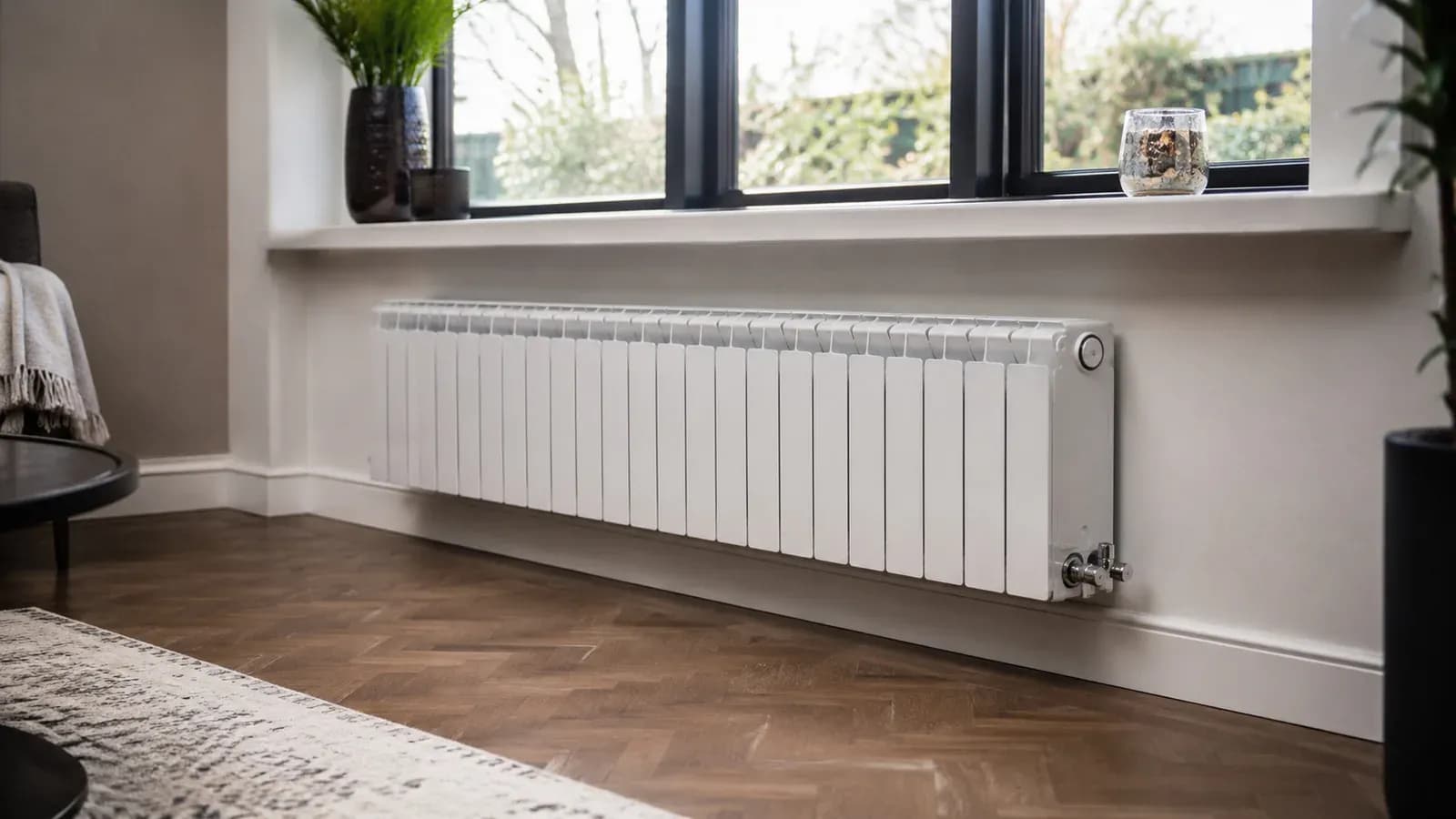
A radiator is a visible unit taking a piece of wall, usually under a window. It has to be accounted for in the interior, and it must not be covered by heavy curtains or blocked by a sofa — that strangles its output.
Underfloor is entirely hidden: no visible units and no constraints on furniture placement. That is a genuine consideration in villas and units where the interior is carefully planned.
Difference four: the floor finish matters
This one gets forgotten. Underfloor heating works through the floor, so the material above the pipes affects its performance:
- Ceramic, marble and porcelain conduct heat well — the best finishes for underfloor.
- Parquet and wood conduct less, and some types have temperature limits so they are not damaged.
- Carpet and heavy rugs insulate — a large rug over underfloor heating reduces the warmth in that area.
Radiators are entirely indifferent to floor type. So if your floors are wood or you use a lot of rugs, that counts for radiators.
Difference five: service and access
A radiator is fully exposed: any connection, valve or unit can be reached, removed and replaced without touching the floor.
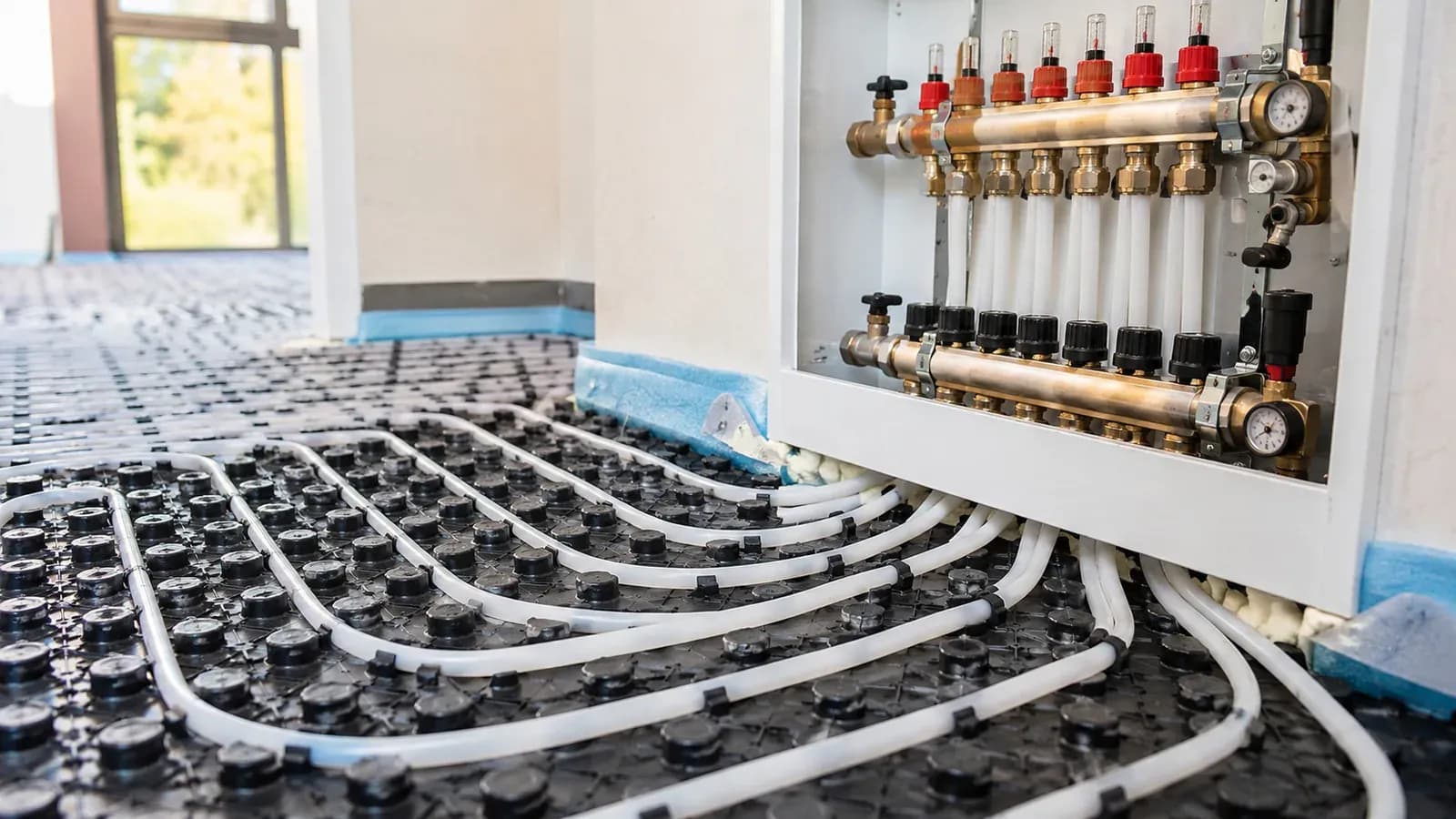
Underfloor is pipework beneath the tiles. Properly executed systems last a long time and rarely give trouble, but if a pipe problem does occur, access is far harder. That is why execution quality and pressure testing before the screed are not a detail in underfloor — they are the most important step in the whole job.
And who says you must pick one?
In villas we often do both in the same home, and that is usually the smartest answer:
- Underfloor in the open areas used all day — lounge, reception, living room.
- Radiators in rooms used intermittently that want fast heat — bedrooms, for instance.
- **Towel radiators** in bathrooms, warming the room and drying towels at once.
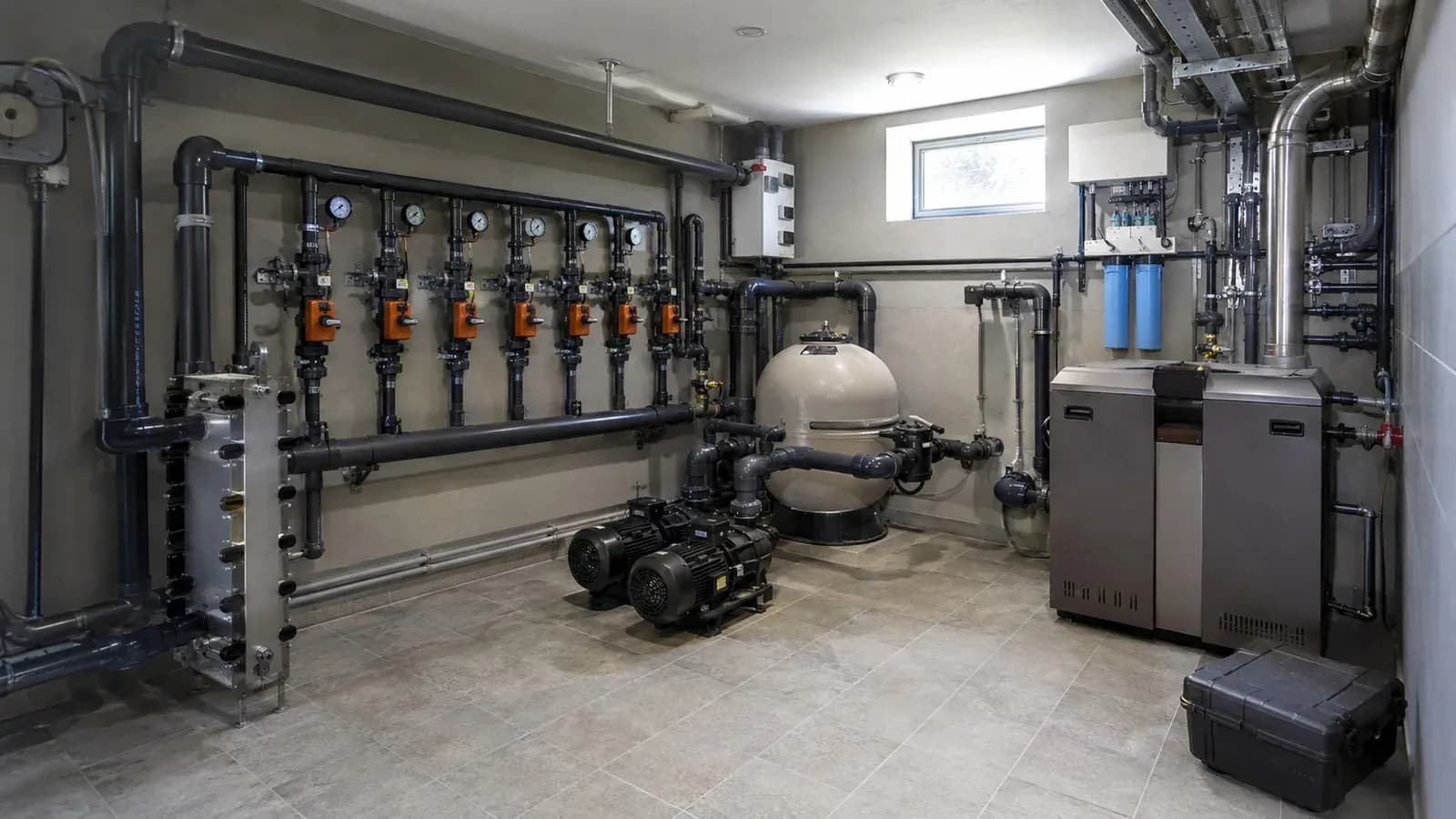
One system, one boiler; only the distribution differs from space to space. That gives you the best of both instead of one solution imposed on the whole house.
Room-by-room control — the practical difference
Both systems let you control each space separately, but differently: radiators via a valve on each unit, underfloor via zones split at the manifold.
The practical difference is that underfloor zoning is fixed at installation and is not easily changed later — so if a room is used differently from the rest of the house, say so at the survey from the start.
The practical takeaway
- Already finished ⇒ radiators in most cases — detail in central heating in a finished flat.
- Still finishing + occupied all day + ceramic or marble floors ⇒ underfloor.
- Empty most of the day, wooden floors, or lots of rugs ⇒ radiators.
- A villa with differently used areas ⇒ both together.
What actually settles it is your spaces, how you use them, and the finishing stage — and the free inspection sees all three on site. To understand the system as a whole first, read how central heating works, and you can view our heating solutions side by side.
Frequently Asked Questions
Underfloor or radiators — which is better?
Neither is universally better. Underfloor gives hidden, evenly spread warmth and suits homes occupied all day and properties still being finished; radiators heat faster and suit intermittent use and already-finished units.
Does underfloor take longer to warm up?
Yes, because it heats the mass of the floor rather than the air — and it stays warm longer after switching off. That is why it suits continuous rather than intermittent running.
Does floor type matter with underfloor heating?
Yes. Ceramic, marble and porcelain conduct heat well; wood conducts less and has temperature limits; carpet and heavy rugs insulate and reduce the warmth.
Can I have both in the same home?
Yes, and in villas it is often the smartest option: underfloor in open areas used all day, radiators in intermittently used rooms, and towel radiators in bathrooms — all on one system and one boiler.
Which is easier to service?
Radiators, because every component is visible and reachable. Underfloor pipework sits beneath the tiles and rarely gives trouble, but access is harder — which is why pressure testing before the screed is its most important step.
Does underfloor need a boiler like radiators?
Yes, both are fed from the same central source. The difference is how heat is distributed inside the home, not where it comes from.
Got a question about what you just read?
Talk to Aurora's team directly for a straight answer — or book a free site inspection if you're ready.