
Pool heating has no single figure, and we will not quote one without seeing your pool. The reason is that cost here moves with more variables than any other system — two pools of identical size can come out completely differently depending on the cover, the season and the location.
This article shows you those factors, so you know what to ask and also how to reduce the cost before you buy.
First: water surface area — not volume
This is the key point and it surprises people. A pool loses its heat mainly from the surface, through evaporation and radiation — not through the sides.
So a wide, shallow pool loses more than a narrow, deep one holding the same water, because its surface area is larger. That is why the first thing measured at a survey is water surface area, not cubic metres.
What moves the cost
- Your target temperature. Every extra degree costs — and the gap between comfortable and "very warm" shows in the bill every month.
- Season length. Two months is not six months is not year-round. This changes the return calculation entirely.
- Covered or open. A cover cuts evaporation losses, and evaporation is the largest loss.
- Wind and location. A pool exposed to wind loses more than one sheltered by a wall or planting. That matters particularly on the North Coast.
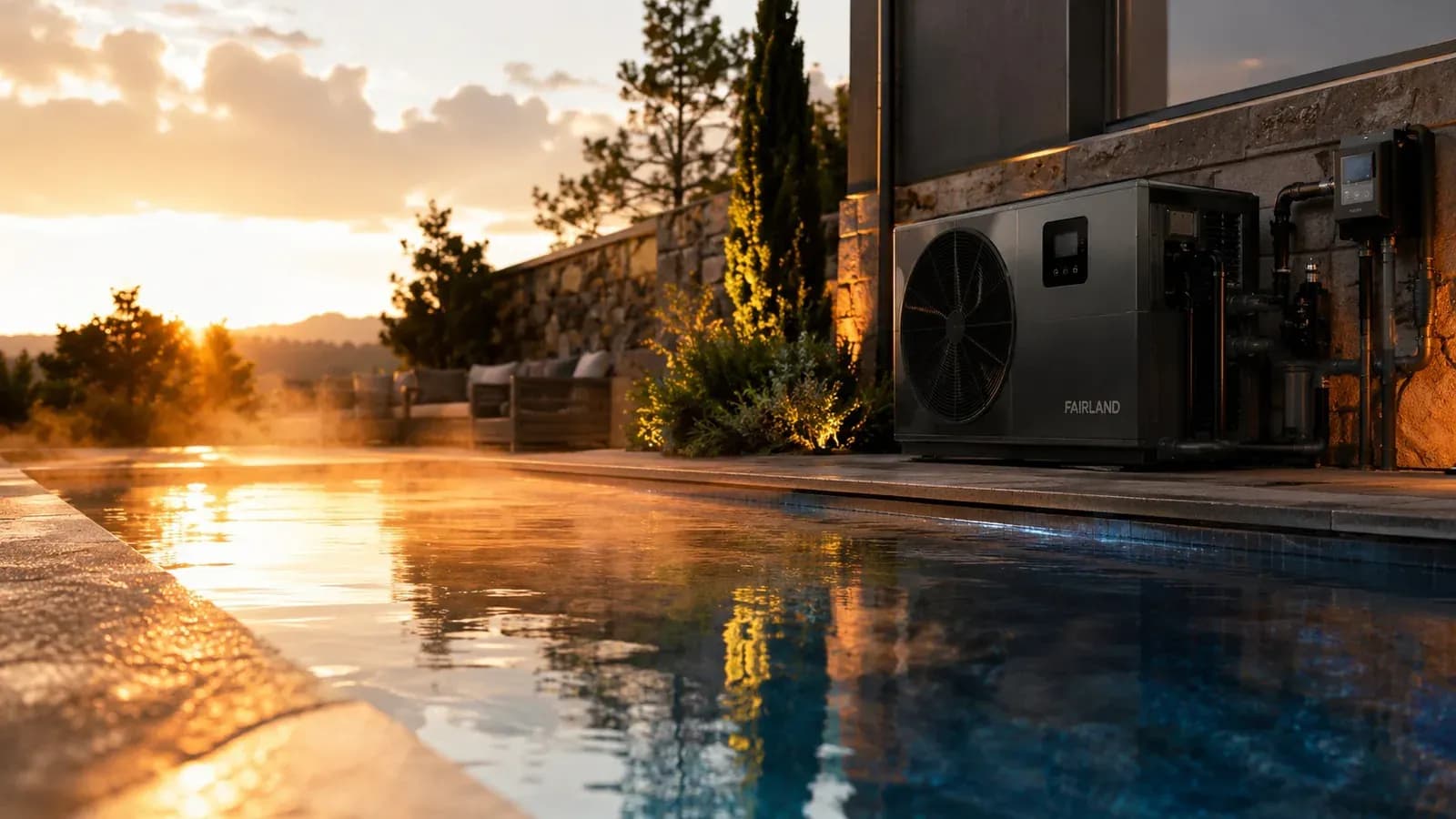
- System type. A heat pump is cheaper to run than an exchanger — the full comparison is in heat pump, exchanger or boiler.
- The available energy source and its cost to you.
And the same pricing logic applies here
As with every heating system we supply, cost is set by five factors: capacity (required output, derived from surface area and target temperature) · consumption (how many hours it actually runs) · purchase timing (the season you buy in — costs are not fixed year-round) · accessories (pump, controller, valves and connections) · optional extras.
That is why we do not publish a number: any published figure would be wrong for most readers, because their pools differ.
The two cheapest ways to reduce cost
First: the cover. It is the cheapest improvement you can make to any pool-heating system, and its effect is direct — it cuts evaporation losses so the system runs fewer hours for the same result. If your budget is limited, buy the cover before considering a larger system.
Second: correctly sized output. A system larger than you need is money spent for nothing. One that is too small runs flat out and never gets there. Both cost more than the correctly sized system — which is why the survey measures before recommending, and does not sell "bigger for safety".
A common question: what does it cost per month?
We will not quote a number without seeing your pool — and that is not evasion. The figure moves with water volume, your target temperature, whether the pool is covered, and running hours.
What we do at the survey is calculate it on your figures, so you know what to expect before buying. That serves you far better than a general number on a website.
And the real return is not a line in the bill
One last point worth making: the return from pool heating is not "how much I saved" — it is the number of days a year you actually use the pool.
A pool used two months that becomes a pool used six — that is the difference you feel. And in hotels and resorts it converts into a direct operating figure: a longer season, more guests, better reviews.
The next step
Book a survey — we measure water surface area, depth, target temperature, cover status and location, then produce the right output and the expected running cost before any commitment. You can view our pool-heating solutions.
Frequently Asked Questions
What does pool heating cost per month?
There is no single number — it moves with water volume, target temperature, whether the pool is covered, and running hours. At the survey we calculate it on your figures so you know what to expect before buying.
What is the biggest cost factor?
Water **surface** area, not volume — a pool loses heat mainly from the surface through evaporation and radiation. A wide, shallow pool loses more than a narrow, deep one holding the same water.
Does a cover really save money?
Yes, noticeably. It cuts evaporation losses, the largest source of loss, so any system runs fewer hours for the same result. It is the cheapest improvement available.
Which system is cheapest to run?
The heat pump generally, because it moves heat from the air rather than generating it. A titanium exchanger costs more to run but is faster and steadier in cold.
Why don't you publish prices?
Because pools differ in surface area, depth, cover, season and location, so any published figure would be wrong for most readers. We publish the pricing logic instead.
Is a larger system safer?
No. A system larger than you need is money spent for nothing; too small runs flat out and never gets there. Correctly sized is cheapest both to buy and to run.
Got a question about what you just read?
Talk to Aurora's team directly for a straight answer — or book a free site inspection if you're ready.