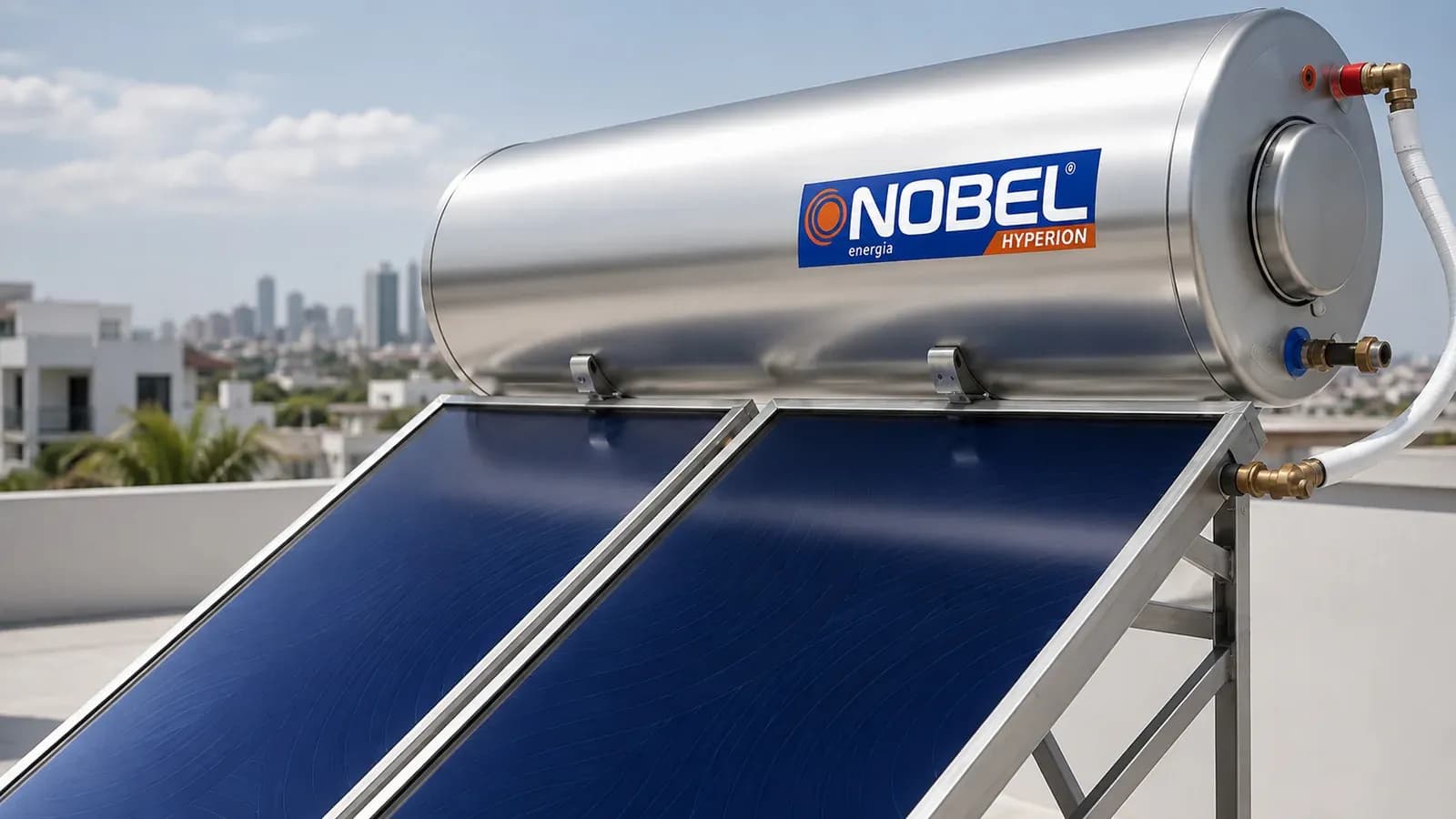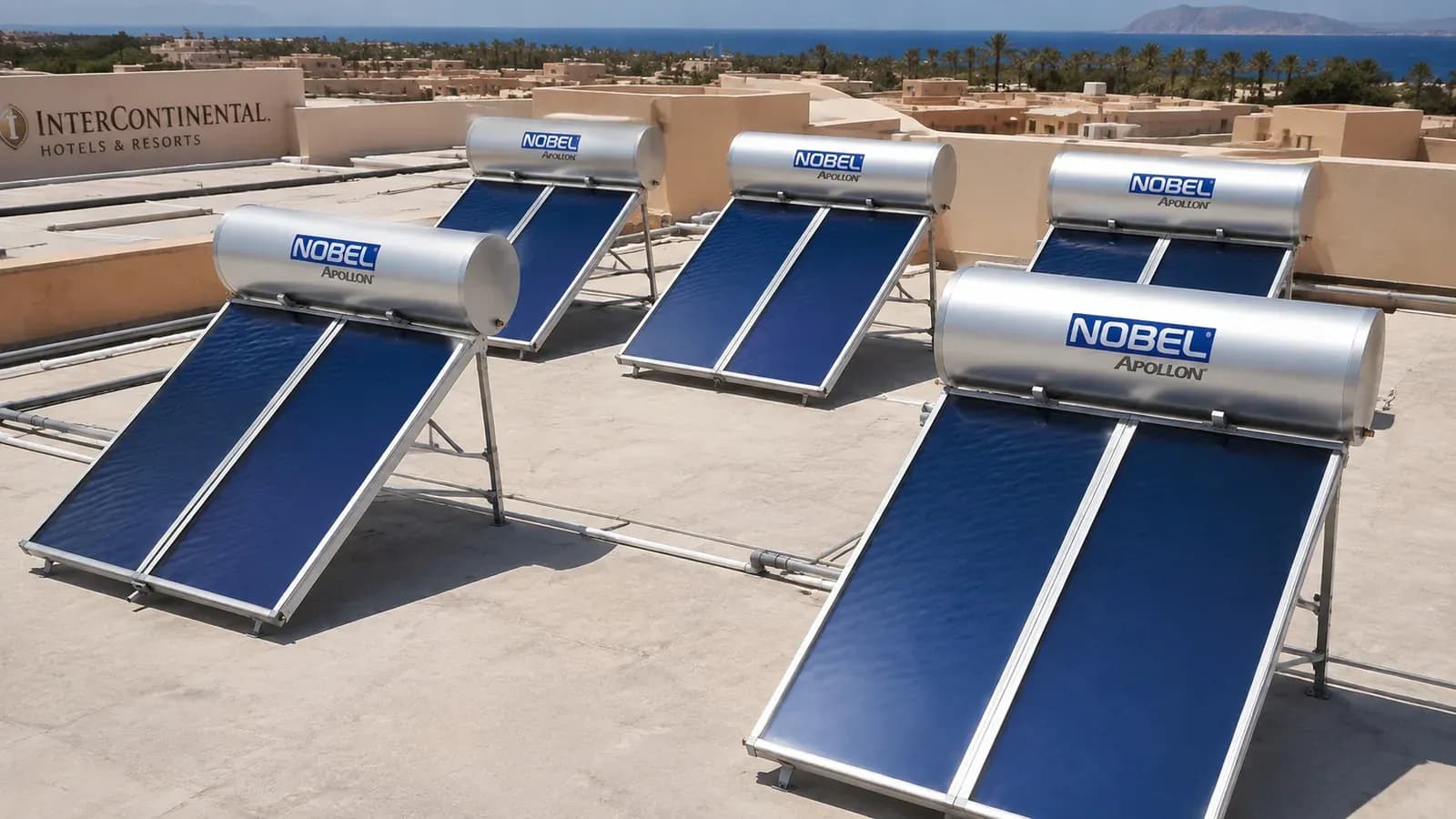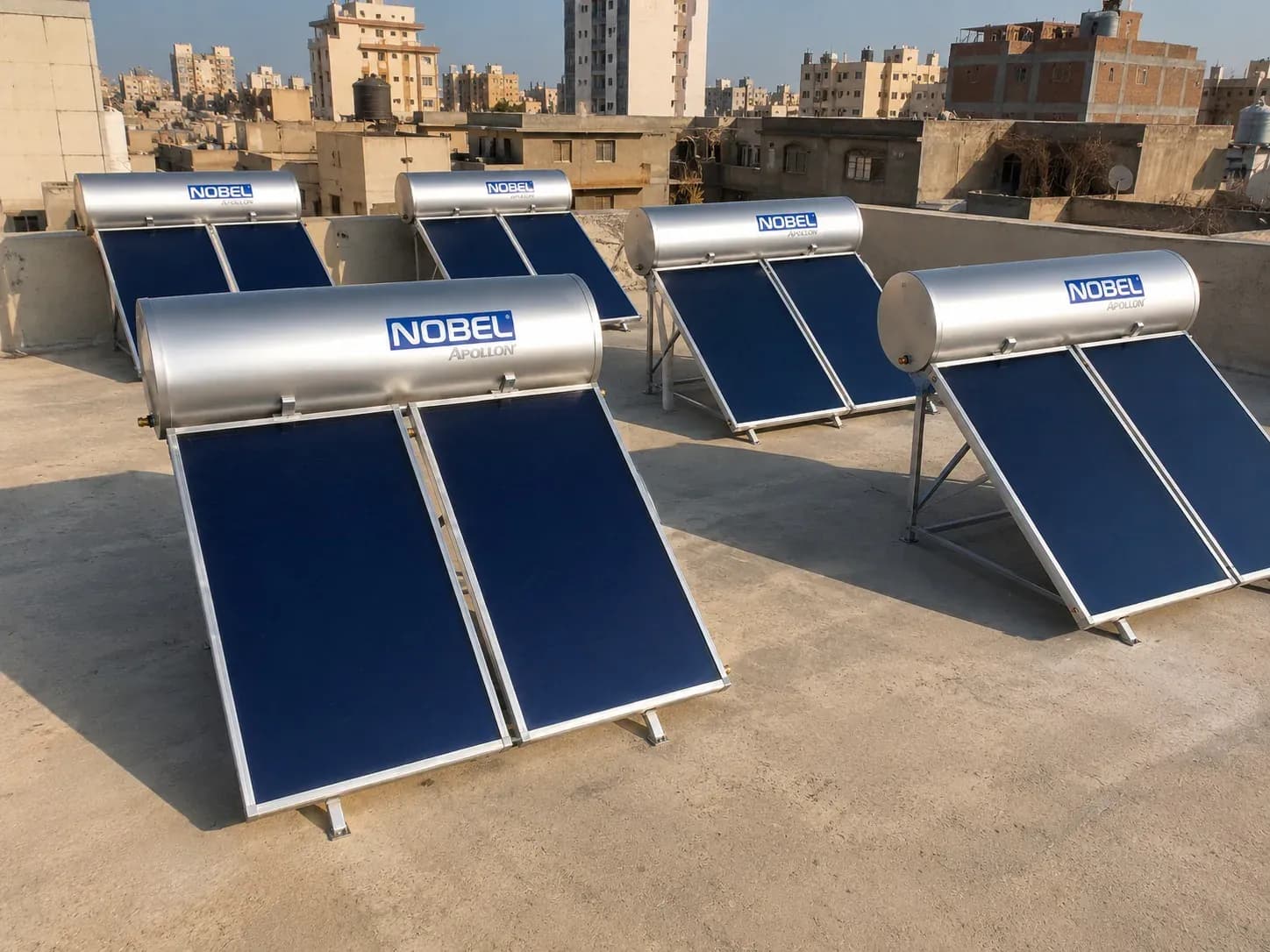

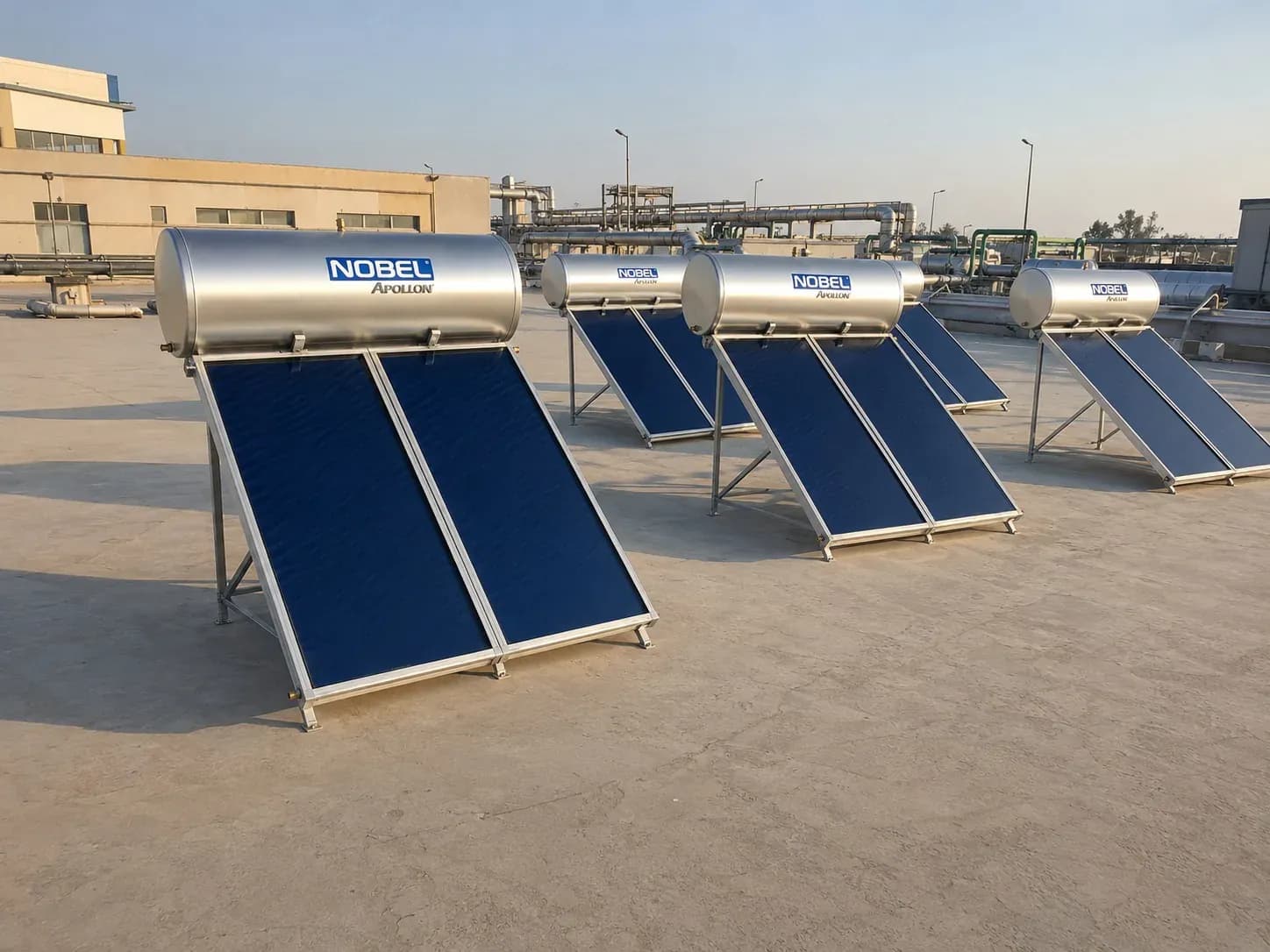
In a standard solar heater, water moves by itself through the density difference between hot and cold — and for that to work, the tank must sit above the collector on the roof.
But there are many cases where the roof will not allow that. In a forced-circulation system, a pump moves the water instead of gravity — so the tank can go in a basement or plant room, leaving the roof for collectors only.
When this is not a luxury — the real cases
- The roof cannot carry a tank's weight. A calculated structural load, an older building, or a lightweight roof.
- The compound's regulations forbid visible roof installations, or impose rules on how the elevation looks. This has become the most common case in newer compounds.
- The distance between roof and draw-off points is large — a building with many floors, so pipe losses become significant.
- The required capacity exceeds any single unit — projects and multi-unit buildings.
- The sunlit area is broken up on the roof, so collectors need spreading across more than one spot.
In these cases forced circulation is not a choice between two options — it is the only layout that works.
How it works
A controller continuously compares collector temperature with tank temperature. Once the difference is large enough — meaning the collector has genuinely warmed — it starts the pump and moves the heat to the tank. When the difference narrows, it stops.
That logic gives finer control than thermosiphon, and allows collectors to be spread across more than one area of the roof — useful when the sunlit area is not a single piece.
Approved capacities and materials
The system is available in capacities from 160 up to 3,000 litres — covering everything from a large villa to a facility.
Tanks come in two materials: 316L stainless steel, or galvanized steel enamel-coated at 860°C. The choice depends on your water quality, system size and project budget — and if your water is high in dissolved salts that is a decisive item, not a detail, covered in solar heaters and hard water.
What goes into the plant room?
The tank, the pump, the controller, safety valves and an expansion vessel. That is a group needing service access — not a tight corner.
And the first thing we measure at the survey is exactly that space, because it determines whether the design is viable at all. If the space falls short, we say so before supply rather than during installation when it is too late to change course.
When it is not the right choice
Plainly: if your roof allows a tank above the collector and your demand is ordinary, a thermosiphon system is simpler and cheaper — with no moving parts at all. The Nobel models cover that case.
Forced circulation adds a pump, a controller and a longer loop, which is extra cost and extra points to watch. It earns its place only when it is the one layout that works — and that is what we say at the survey even when it points to a cheaper system.
And maintenance?
It has moving parts (the pump) and a controller, meaning more points to watch than a thermosiphon system. In practice that is handled by scheduled maintenance on a plan.
And there is a compensating advantage: a tank in a plant room is easier to reach and service than one on a roof — you get to it without ladders, sun or constraints.
The next step
Request an engineering survey — we measure consumption, peak hours, pipe routes and the space available for a plant room, then produce the design and the right capacity with no off-the-shelf sizing. System details are on the forced-circulation systems page, and if you are still comparing, start from the smart advisor.
Frequently Asked Questions
What is a forced-circulation system?
In a standard heater water moves by itself through density difference, so the tank must sit above the collector. In forced circulation a pump moves the water, so the tank can go in a basement or plant room while the roof carries collectors only.
When do I need it?
When the roof cannot carry a tank's weight, the compound forbids it, the distance to draw-off points is large, or the required capacity exceeds any single unit. In those cases it is the only layout that works.
What capacities are available?
From 160 up to 3,000 litres, with capacity and design set by an engineering survey based on actual consumption and peak hours — there is no off-the-shelf size.
What are the tanks made of?
316L stainless steel, or galvanized steel enamel-coated at 860°C. The choice depends on water quality, system size and project budget.
Is it more expensive than a standard system?
It carries extra components — a pump, controller and longer loop — so upfront cost is higher. In return it solves cases where a thermosiphon system would not work at all, so the fair comparison is what else would actually work at your site.
Is it harder to maintain?
It has moving parts and a controller, so more points to watch, handled by scheduled maintenance. In exchange, a tank in a plant room is easier to reach than one on a roof.
Got a question about what you just read?
Talk to Aurora's team directly for a straight answer — or book a free site inspection if you're ready.