
The fundamental difference between the two is how they stop heat escaping. A flat plate uses insulation and glass over a heat-absorbing surface. An evacuated tube uses vacuum itself — a tube within a tube with the air drawn out between them, and vacuum is an excellent insulator because there is no air to carry heat away.
The practical result: the evacuated tube holds heat better in cold weather, and the flat plate is simpler, sturdier and more resistant to harsh conditions. That is where the real comparison starts — not from "which is newer".
And before going further: Aurora supplies and services both. We stock spare parts, sensors and control panels for vacuum systems just as we do for flat plates, and we have completed projects using both. So this article is not defending a type we sell against a type we don't.
The flat plate — how it works
A flat box containing an absorber surface — a metal sheet with a coating that absorbs sunlight and limits re-radiation — with glass above it and insulation below and around it. Sunlight passes the glass and strikes the absorber, and the heat transfers to water in the pipes bonded to it.
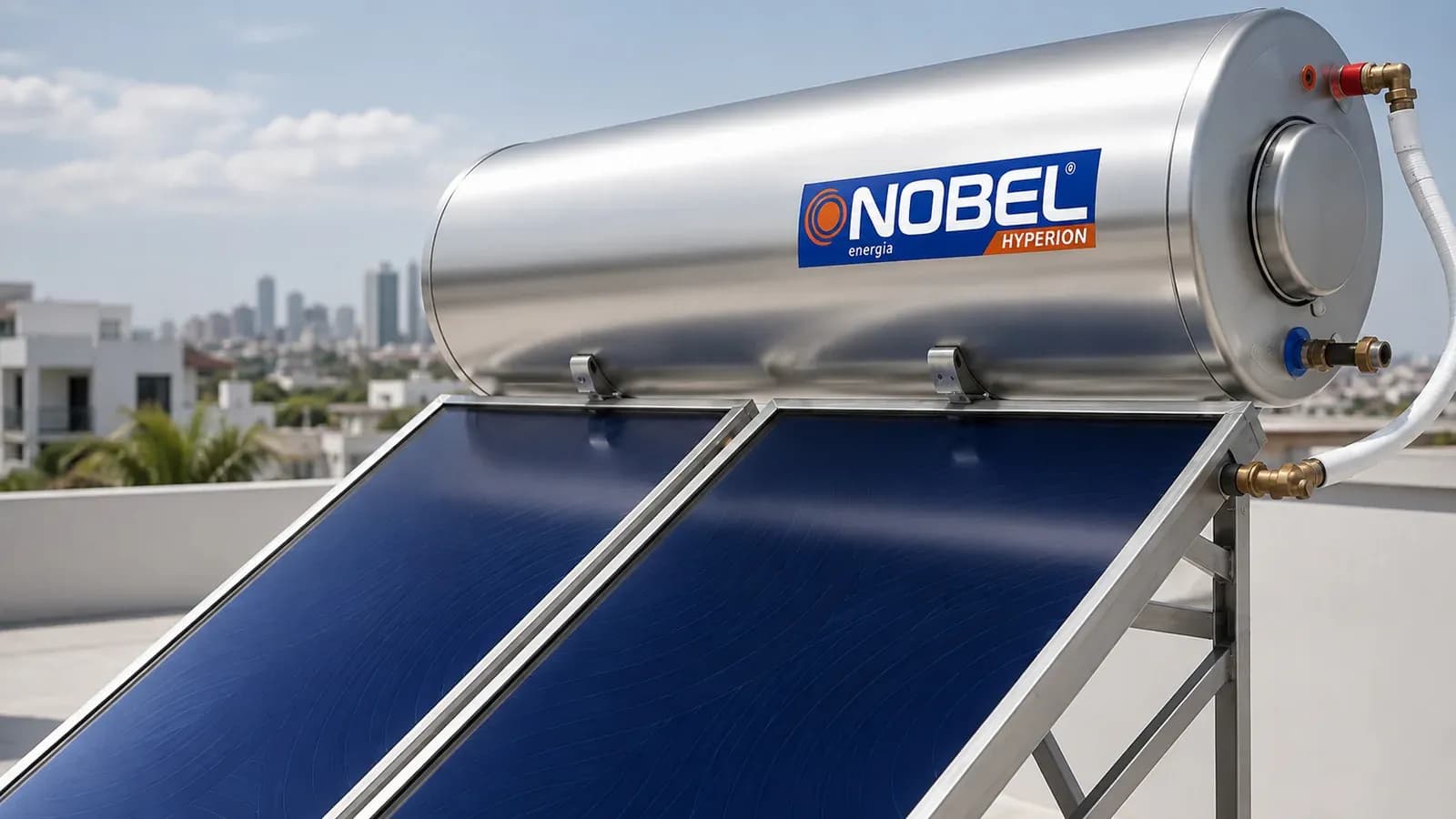
Flat-plate quality comes down to tangible things you can ask about: the type of absorbing coating, the type of glass, the insulation thickness, and the casing material. In Nobel Hyperion, for instance: a laser-welded selective absorber, tempered Low-Iron glass (low-iron glass transmits more light), a marine-grade aluminium casing resistant to corrosion, and 60 mm rock-wool insulation — plus Solar Keymark certification, a European performance standard tested in an independent laboratory rather than in the manufacturer's own plant.
The evacuated tube — how it works
A set of glass tubes, each one a tube inside a tube with the air between them drawn out. That vacuum almost entirely prevents heat loss by convection and conduction — which is why the tube heats well even when the air is cold or the sun is low.
There is a second, geometric advantage with real effect: the tubes are round, so they receive sunlight at a favourable angle through the day without needing to move — whereas a flat plate delivers its peak output when the sun is roughly perpendicular to it.
Why the comparison changes in Egypt specifically
This is the point most articles copied from foreign sources miss.
The evacuated tube's core advantage is resisting cold. The comparisons showing it far ahead were made in cold, overcast climates — northern Europe, Canada, northern China — where the gap between air temperature and required water temperature is very large for most of the year.
Egypt's climate is different: high solar irradiance year-round and a relatively mild winter. Under those conditions, the vacuum's superior insulation loses much of its practical value, because heat loss is lower to begin with. And in exchange, the evacuated tube's drawbacks — which carry little weight in a cold climate — become visible:
- Fragility. The tubes are glass. A single broken tube means replacing it, and breakage is plausible with dust storms or something falling on the roof.
- Overheating in high summer. Excellent insulation becomes a drawback when the system goes unused and the sun is strong — heat gets trapped. Well-designed systems handle this, but it is a factor to account for in the design rather than ignore.
- Dust. The rounded tube surfaces and the gaps between them collect dust differently from a flat surface, and cleaning takes longer.
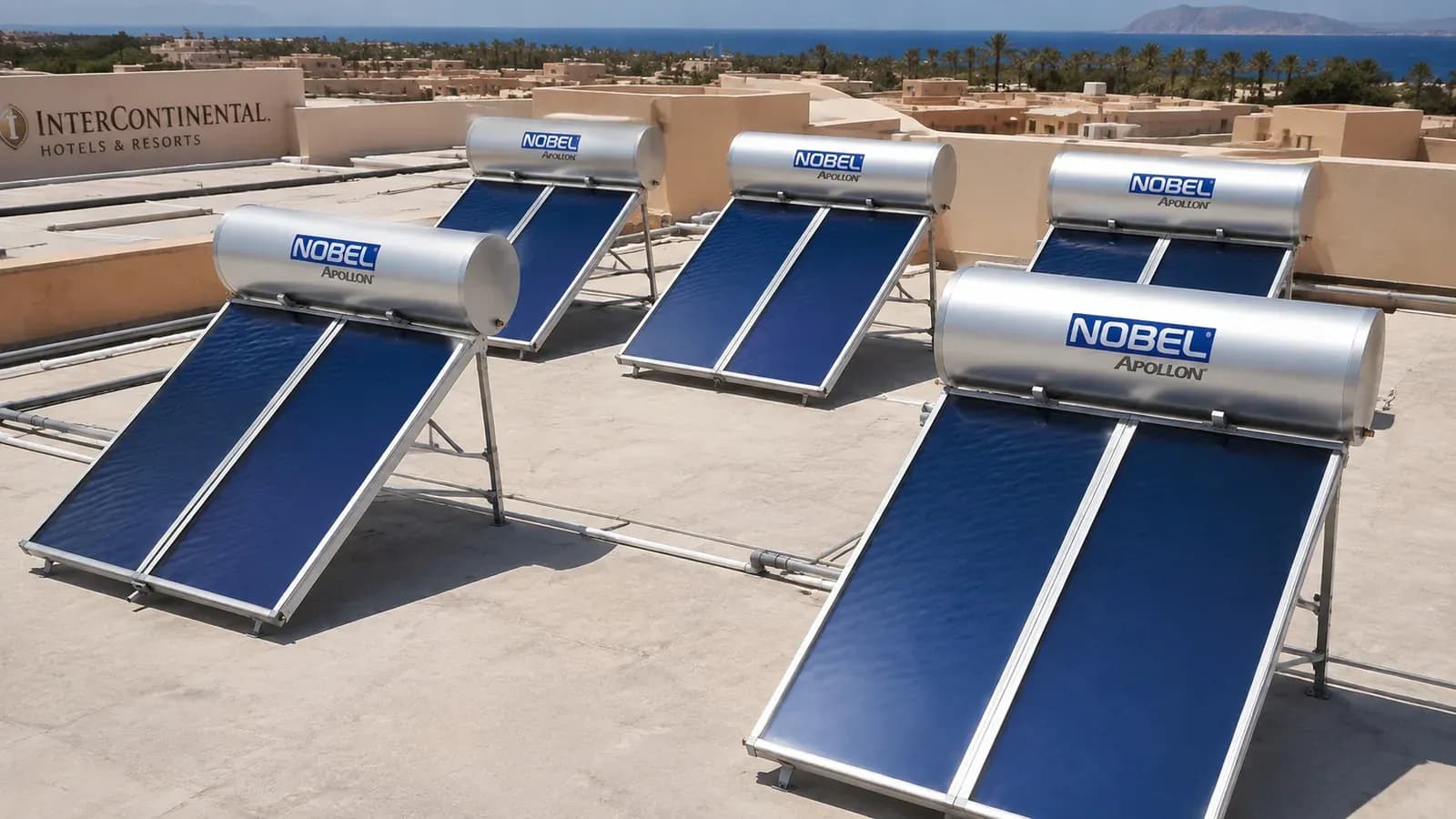
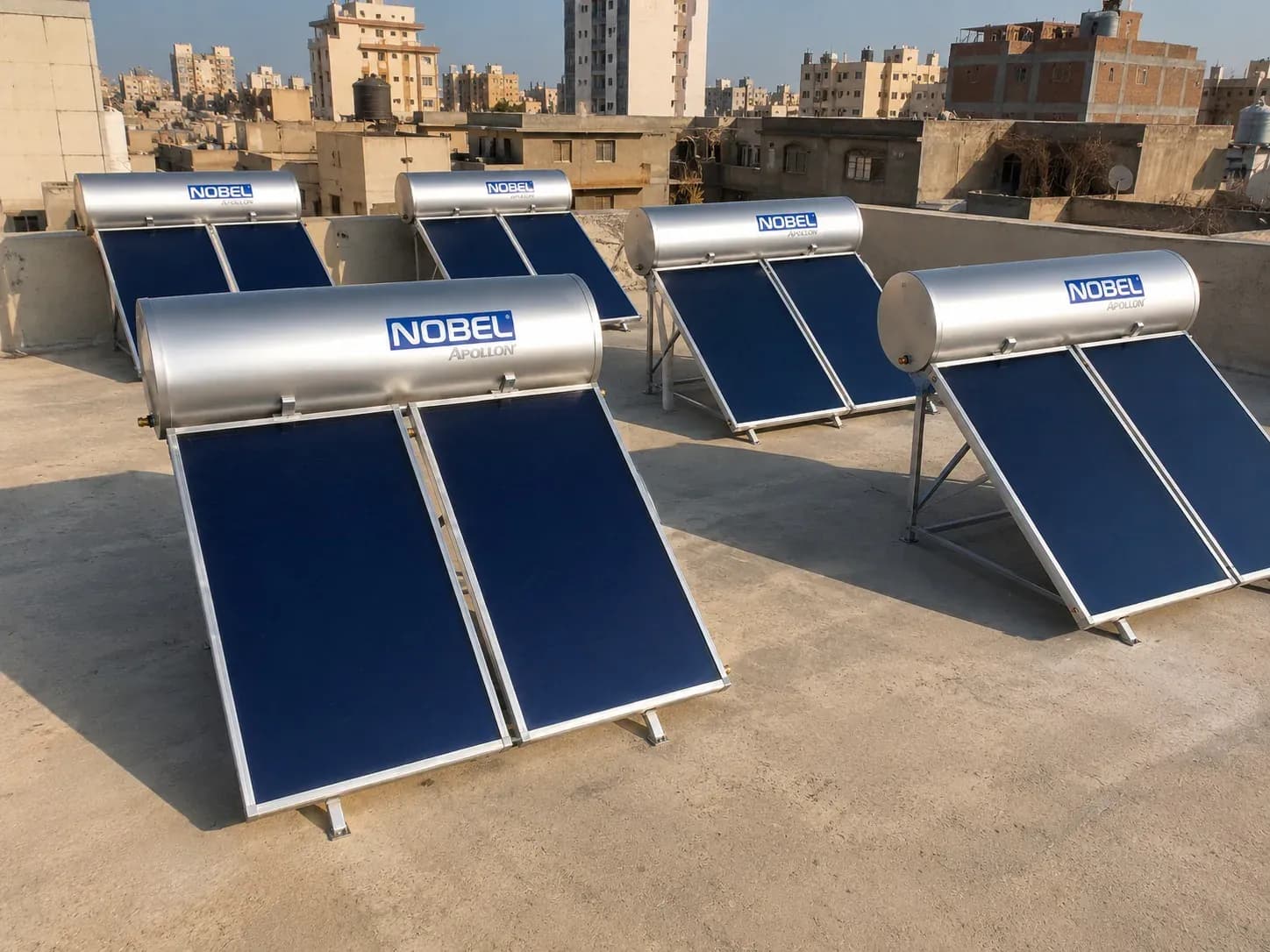
The flat plate, by contrast, is one solid unit, more resistant to dust and wind, and simpler to service. That is the engineering reason every Nobel model we carry is a flat plate — not because flat plates are universally better, but because they suit the conditions they operate in here.
When an evacuated tube is the right choice
To be fair, there are cases where it genuinely wins:
- Limited roof area — tubes can deliver higher output per square metre under certain conditions, so where area is the binding constraint that counts in their favour.
- High-altitude or desert areas with very cold nights — here the vacuum's advantage shows.
- Water needed at a higher temperature than ordinary domestic use, as in some industrial applications.
- An existing system already built on evacuated tubes that you want repaired or extended rather than replaced — which we do, and we hold the spare parts, sensors and control panels for it.
The thing that matters more than the type itself
In full honesty: in most Egyptian homes, the difference between a correct and an incorrect installation is larger than the difference between the two types.
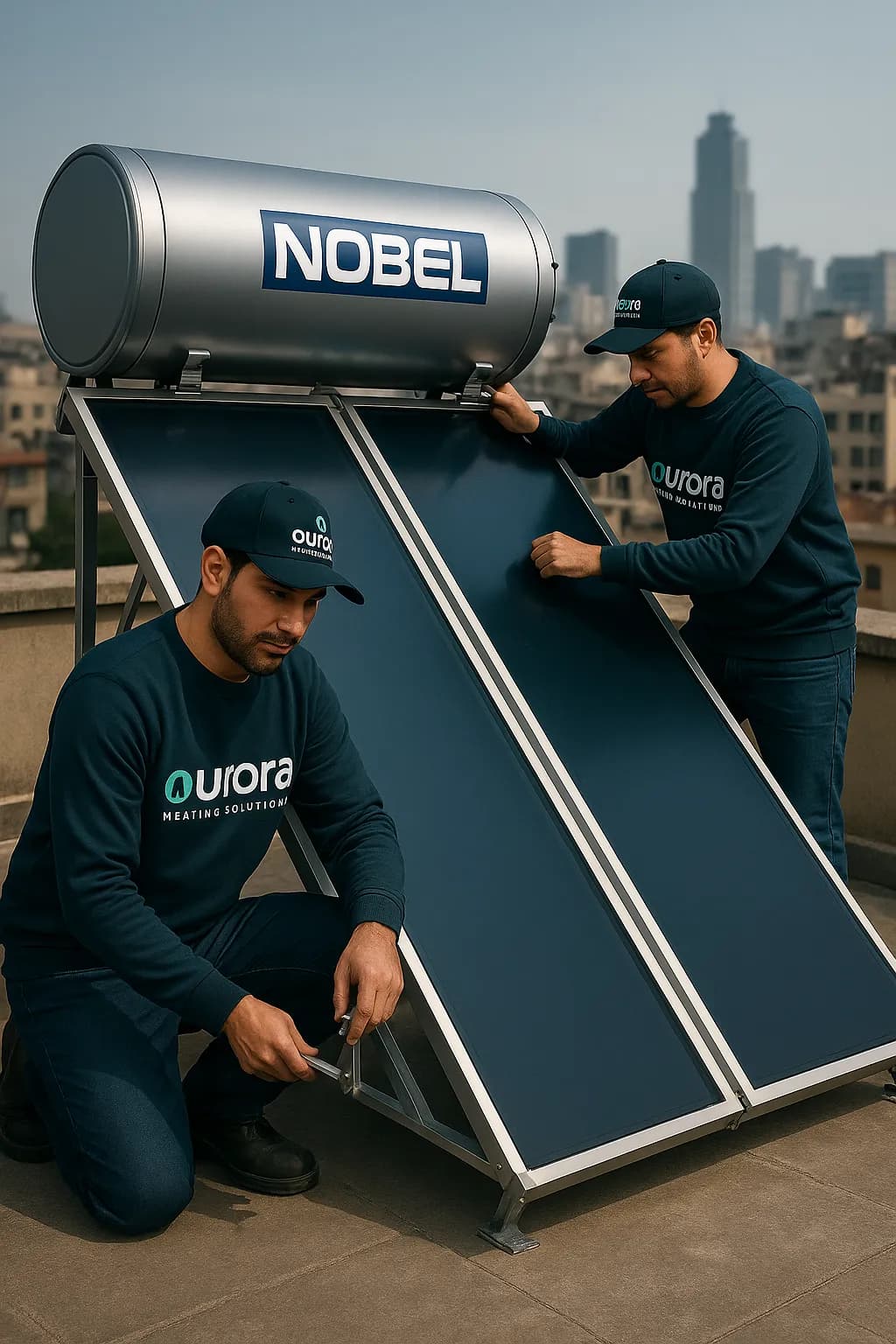
An excellent system mounted at the wrong tilt, or in a spot that falls into shade an hour into the day, or with uninsulated pipework, will perform worse than a simpler system installed correctly. That is not marketing — it is the most common cause of "the heater isn't heating" complaints we see on visits, with the detail in solar heater faults and fixes and the best place to install a solar heater.
So if you are comparing two offers of different types, the questions that will matter more are: who installs it · what exactly the warranty covers · and whether there is after-sales service.
The practical takeaway
Both types heat water from the sun, and the difference between them is how they retain that heat. In Egypt's climate a flat plate delivers excellent performance with greater durability and simpler maintenance — which is why it is the basis of our catalogue. The evacuated tube has its cases, and we service it when it is the better fit or when you already have one.
What settles the choice is not the type alone: your roof area and orientation, your consumption, and the capacity that covers you. Get an initial capacity from the advisor in a minute, and the free inspection settles type and placement on site. If you are still at the product comparison stage, compare the Nobel models side by side.
Frequently Asked Questions
What is the difference between evacuated-tube and flat-plate solar heaters?
The difference is how they prevent heat loss. A flat plate relies on insulation and glass; an evacuated tube relies on the vacuum between two tubes — and vacuum is the stronger insulator, so it retains heat better in cold weather.
Which type is better in Egypt?
The comparisons showing evacuated tubes far ahead were made in cold, overcast climates. Egypt has high irradiance and a mild winter, so the vacuum's advantage loses practical value while the flat plate's durability and easier maintenance stand out.
Do evacuated tubes break?
They are glass, so breakage is plausible with dust storms or something falling on the roof — and any broken tube has to be replaced. A flat plate is one solid unit and more resistant to those conditions.
Does Aurora supply evacuated-tube systems?
We service both types — we stock spare parts, sensors and control panels for vacuum systems, and we have completed projects using both. The Nobel models we rely on for homes are flat plates.
Which type is easier to maintain?
The flat plate generally — one flat surface is easier to clean, and there are no individual tubes that may need replacing. Rounded tubes and the gaps between them collect dust and take longer to clean.
Does the type affect the saving on my bill?
Far less than installation quality and correct capacity do. A system mounted at the wrong tilt or in a shaded spot will underperform regardless of its type.
Got a question about what you just read?
Talk to Aurora's team directly for a straight answer — or book a free site inspection if you're ready.