

A solar water heater is worth it if your home has a roof that gets sun and your household uses a moderate-to-large amount of hot water — because it heats most of what you need for free from the sun instead of adding to your electricity bill every month. If there's no suitable roof, or your usage is very low (a studio for one person, say), a plain electric heater may genuinely suit you better financially. This guide walks through both cases honestly, with no exaggerated upside and no hidden downside, so you can decide correctly from the start.
How does a solar heater work, and why does it save money?
The idea is simple: heat-absorbing panels on the roof collect the sun's energy and warm your water, which is stored in an insulated tank that keeps it hot for hours. Standard (natural-circulation) systems rely on hot water rising on its own, while forced-circulation systems use a small pump to move water between the panels and the tank — usually the better choice for villas and buildings where the tank isn't sitting directly above the panels.
Either way, the main heat source is free — the sun — and electricity only steps in when it's actually needed, through a backup electric element that runs on cloudy days. You don't stop using electricity entirely; you drastically cut how much of it goes toward heating water specifically. That shift is what turns into real savings on your monthly bill.
So how much does it actually save?
There's no single fixed number — it depends on your real hot-water usage (household size, number of bathrooms, when you use it) and what you pay for electricity. The larger your household's hot-water use, the more obvious the difference on your bill, because what used to run on electricity now runs on the sun for free. We break down that calculation in detail in How much does a solar water heater save?, and if you want to compare upfront pricing before deciding, there's a full guide on solar water heater prices in Egypt.
We deliberately don't quote one savings figure that fits every home — that's exactly what the free inspection settles, because it accounts for your actual usage instead of a generic estimate.
When is it worth it, and when isn't it?
Let's be honest — a solar heater isn't the right fit for every home:
- Worth it if: you have a roof or spot that gets sun most of the day, and your hot-water use is medium-to-high (a family, more than one bathroom, regular daily use). This describes most villas and upper-floor apartments.
- Electric may fit better if: there's genuinely no suitable sunny roof (a shaded ground-floor flat, or a shared building with a crowded roof), or usage is very low and individual (a single-person studio, for example).
Solar's upfront cost is higher than electric's, but it comes back as savings over the long run. If you want the exact payback period for your home, that's precisely what the free inspection calculates once we've seen your roof and actual usage. And if you're not fully convinced yet and want every potential challenge laid out before deciding, read solar water heater drawbacks — the honest version — we don't hide anything.
Solar vs electric vs gas — an honest comparison
Solar heater · Electric · Gas
Heat source · Sun (free) + electric backup · Fully electric · Gas
Monthly bill · Lowest over time · Higher (daily heating) · Medium, depends on gas price
Upfront cost · Higher · Lowest · Medium
Needs roof/sun · Yes · No · No
Winter performance · Good, with a backup element · Steady · Steady
Maintenance · Simple periodic checks (panel cleaning) · Almost none · Periodic gas-line check
The honest bottom line: if you have sun and decent usage, solar wins over the long run. If there's no roof, electric is simpler. For a deeper comparison of solar versus electric across different scenarios, see Solar or electric?, and for winter performance specifically, Does a solar water heater work in winter?
Does "worth it" change depending on the system I choose?
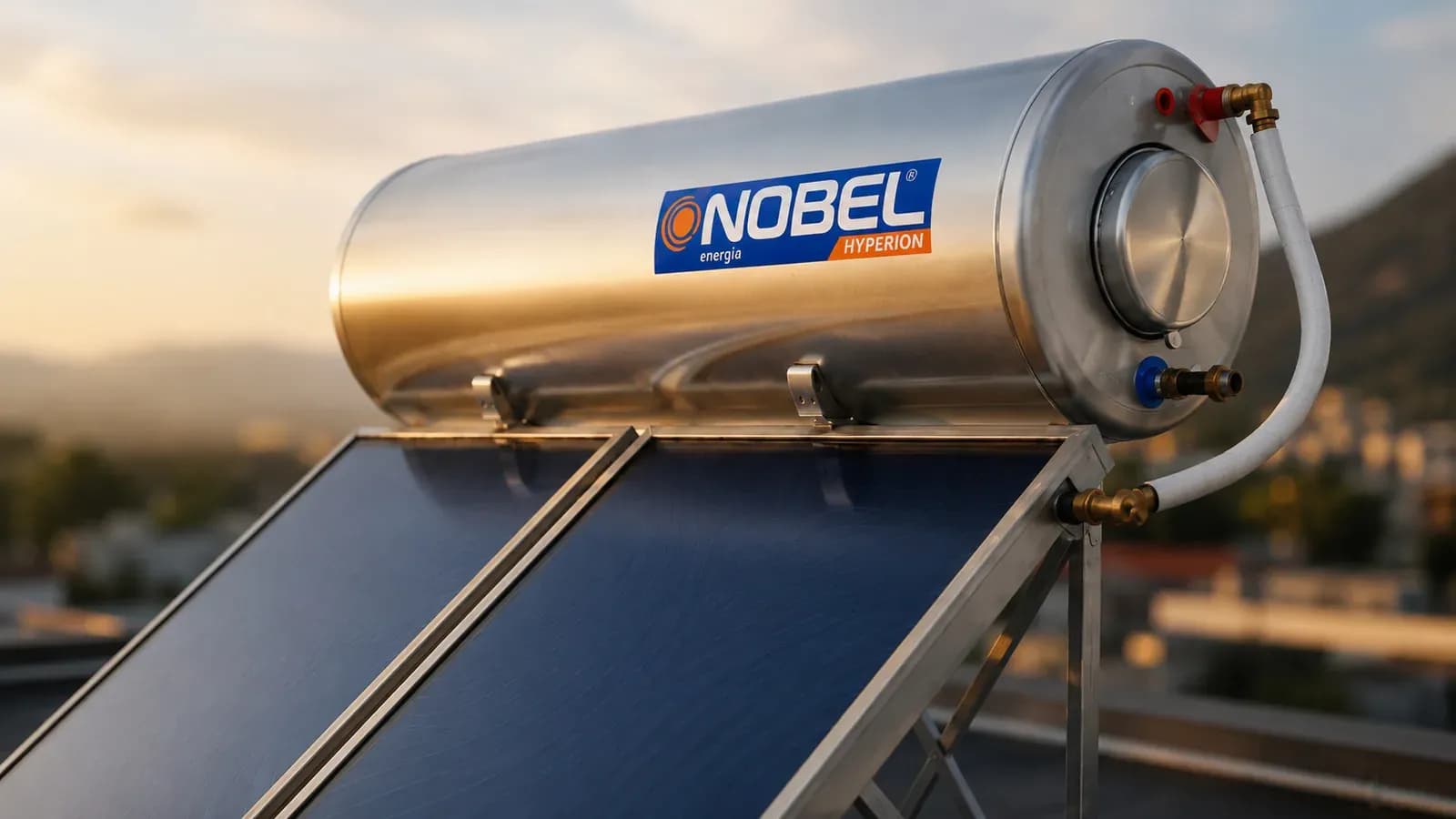
Yes. "Worth it" isn't a single fixed verdict — there are levels to it. Economy solar heaters give you the same core principle (free heating from the sun) at a lower upfront cost and simpler specs, a sensible choice for a home with medium usage and a tighter budget. The higher tier — the Nobel family (Apollon, Aelios, Hyperion) — suits homes with larger usage or that need more reliable winter performance. And if you have a villa or building with very large hot-water demand (multiple residential units, for example), there are broader solutions like central water heating that cover more than a single household heater can. The point: "worth it" is decided by the size of your home and your usage, not by one specific model.
Does maintenance factor into the decision?
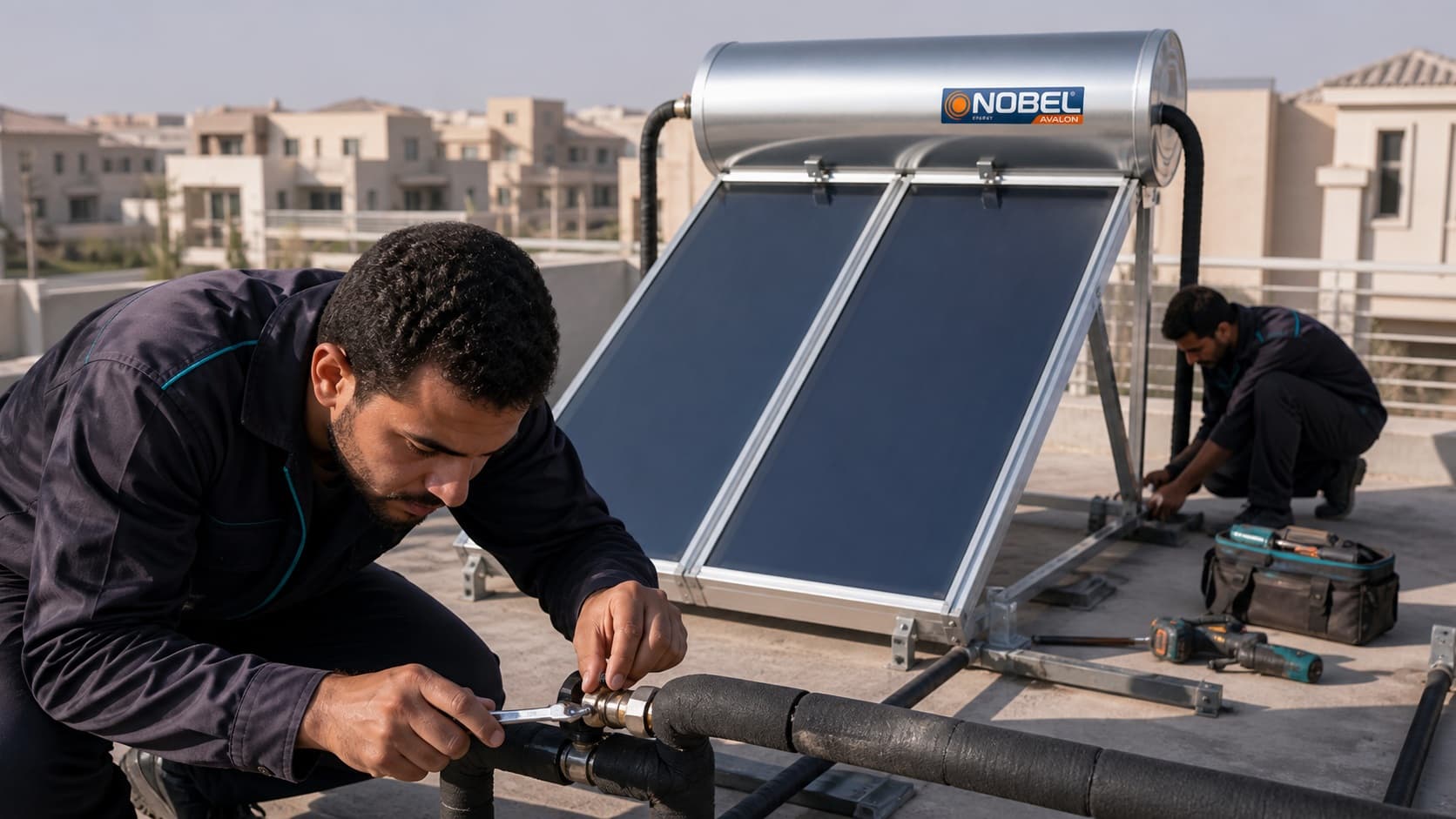
A solar heater needs simple, periodic attention — a general check and cleaning dust off the panels, which otherwise reduces heat absorption, especially in areas with heavier haze or dust. This isn't complicated or expensive, and Aurora offers periodic maintenance right after installation. Investing in a correct installation from the start, with reliable materials and a team that knows the job, significantly cuts how often you'll need any emergency intervention — and that's part of the "is it worth it" calculation many people forget when they focus only on the purchase price.
Put differently: the real decision isn't just "should I buy a solar heater" — it's also "who should I buy it from." A cheap system with a careless installation can noticeably cut into your expected savings, while a good system correctly installed keeps running efficiently for years with minimal intervention. That's why the free inspection isn't a token marketing step — it's what actually determines whether the investment pays off.
So what does the decision come down to?
If you want the whole calculation in one sentence: a solar heater is worth it in proportion to how much hot water your household uses daily and how suitable your roof is for sun exposure — and worth it less the lower your usage or the less sun your location gets. The large majority of Egyptian homes — upper-floor apartments, villas, households with more than one or two people — fall into the "worth it" zone, but the final confirmation is always local and needs an on-site inspection, not a remote guess.
"Worth it" is not a property of the product — it is the output of four things
"Is a solar water heater worth it?" has no single answer, because worth is not a feature of the device. It is a result, produced by four things — the same four that set the price:
- Consumption is the first deciding factor. A household that uses a lot of hot water feels the difference far faster than a light one. The very same unit can be worth it for one home and not for its neighbour — and the difference is not in the unit.
- Specification turns worth into reality, or cancels it. Capacity below what you need means the backup element runs every day; you paid for a solar system and you are still paying the bill. A wrong calculation does not reduce the return — it erases it.
- Fit with the house decides whether it is possible at all. No suitable roof, or shade across half the day, and the question changes from "is it worth it?" to "will it work?" That is the first thing an inspection looks at.
- Material quality decides how long the worth lasts. Monthly savings start out similar across tiers; what differs is how steady they stay after several years.
So the honest answer: worth is calculated against your home, not against the product — which is exactly what the free inspection does.
How do I find the right capacity and choice for my home?
The right capacity, in litres, depends on household size, number of bathrooms, and simultaneous use — not a fixed number for every home. Instead of guessing or buying a bigger tank "to be safe," answer a few simple questions about your home and get a starting capacity right away. If you want to understand the full logic behind the choice before using the tool, there's a detailed guide in How to choose the right solar water heater.
Find your right capacity (/en/advisor) ← or Book a free inspection and we'll look at your roof and usage and tell you honestly whether solar is right for you.
Frequently Asked Questions
Is a solar water heater worth it in Egypt?
Yes, if your home has a sunny roof and decent hot-water use — it heats from the sun for free and cuts your bill. Without a suitable roof, electric may be simpler.
How much does a solar heater save?
It depends on your usage and electricity rate; the more you use, the clearer the saving. The exact figure is worked out during the free inspection for your home.
What's the difference between a solar and an electric heater?
Solar heats from the sun (free) and saves money long-term, but costs more upfront and needs a roof; electric is cheaper upfront but runs on electricity the whole time.
Does a solar heater need a lot of maintenance?
It needs simple, periodic attention — checking and cleaning dust off the panels every so often. It's not complicated, and Aurora offers periodic maintenance after installation.
How long does it take to pay back the cost?
It varies with your usage and purchase price — it's calculated precisely during the free inspection at your home.
Got a question about what you just read?
Talk to Aurora's team directly for a straight answer — or book a free site inspection if you're ready.