
The word "imported" on its own is no guarantee of quality, and "local" on its own is no flaw. There are imported heaters with thin-sheet tanks and weak insulation, and there are well-made local products. What actually matters are five things you can ask about by name — the tank's inner lining, insulation thickness, the collector and its glass, independent certification, and who will serve you after the sale — and country of origin is useful information when it tells you something about those five.
This article covers the five, and says honestly when origin matters and when it's marketing. It follows on from best solar water heater in Egypt, which sets out all the selection criteria — here we focus on the origin question specifically.
Why does this question come up at all?
Because the Egyptian market sells three categories under the same name "solar heater": European systems from a known factory with certification, imports from cheap sources with no clear manufacturer, and local assembly of very variable quality. They look similar from outside; the difference is inside the tank, in the certificates, and in what happens two years later. So people reach for "imported or local" as a shortcut — and the shortcut misleads in both directions.
Thing 1: the tank's inner lining
The tank lives with the water 24 hours a day, and water in many parts of Egypt is hard and salty. A tank not protected on the inside corrodes silently and shows up years later as a leak or discoloured water.
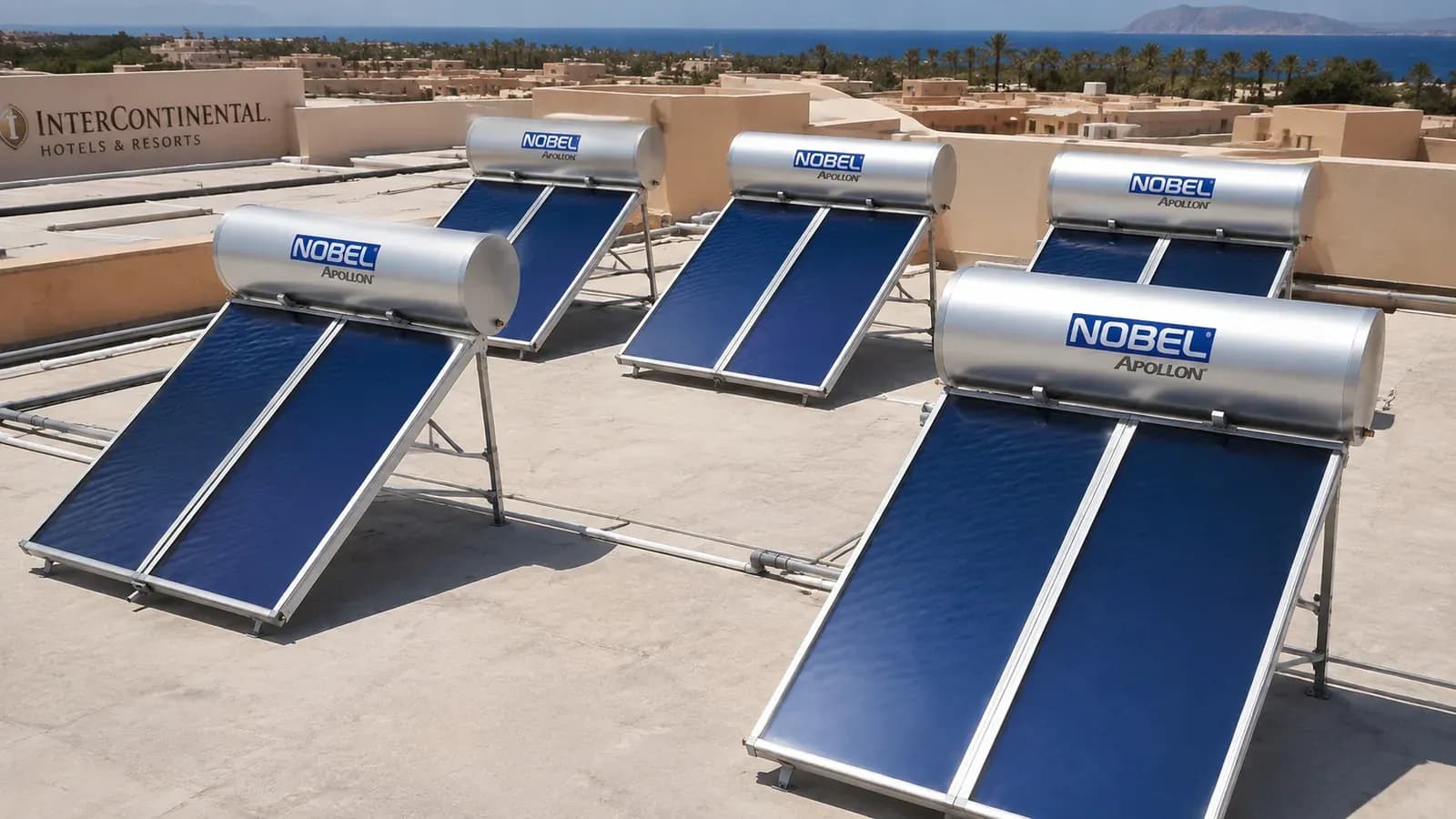
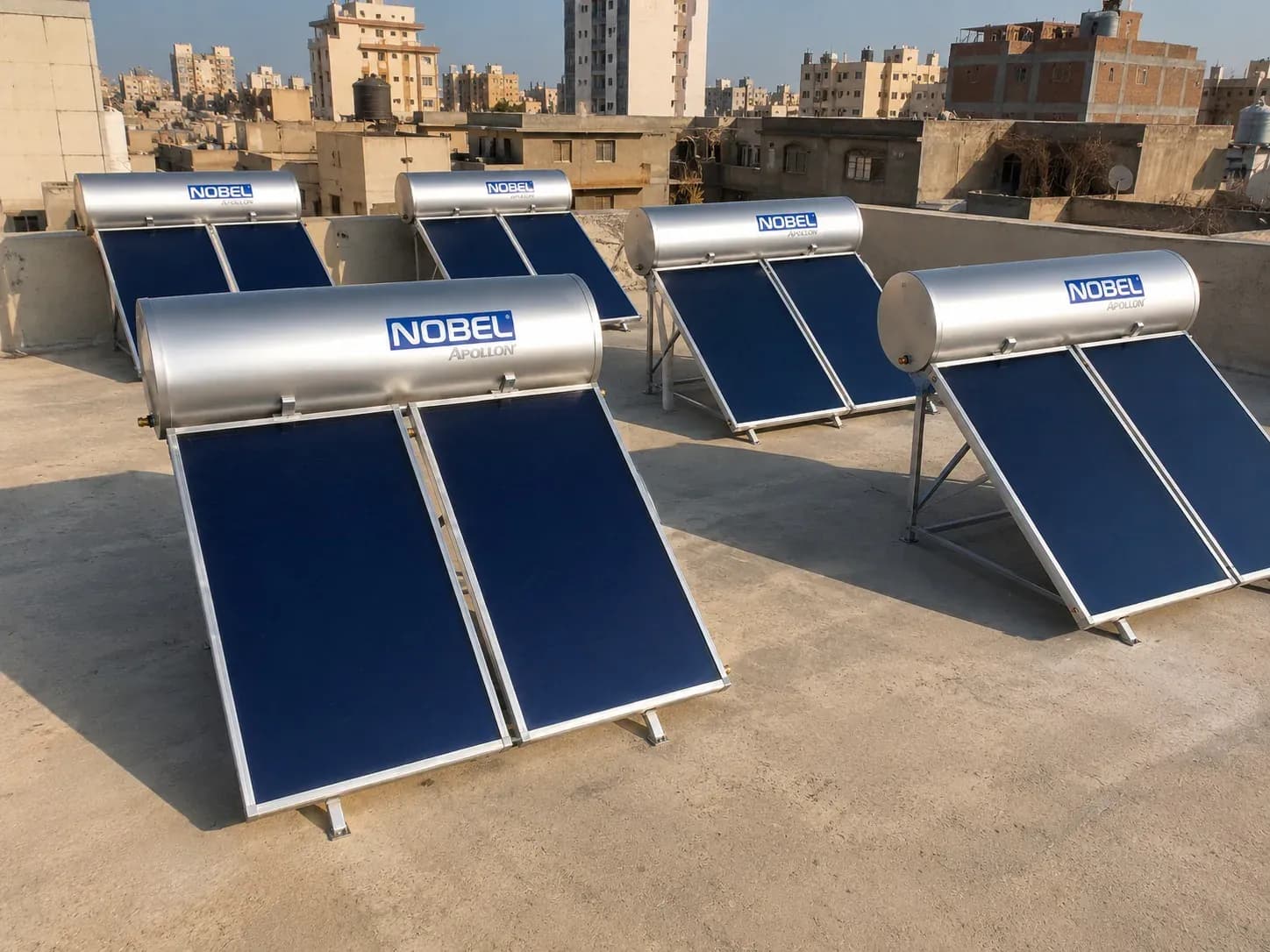
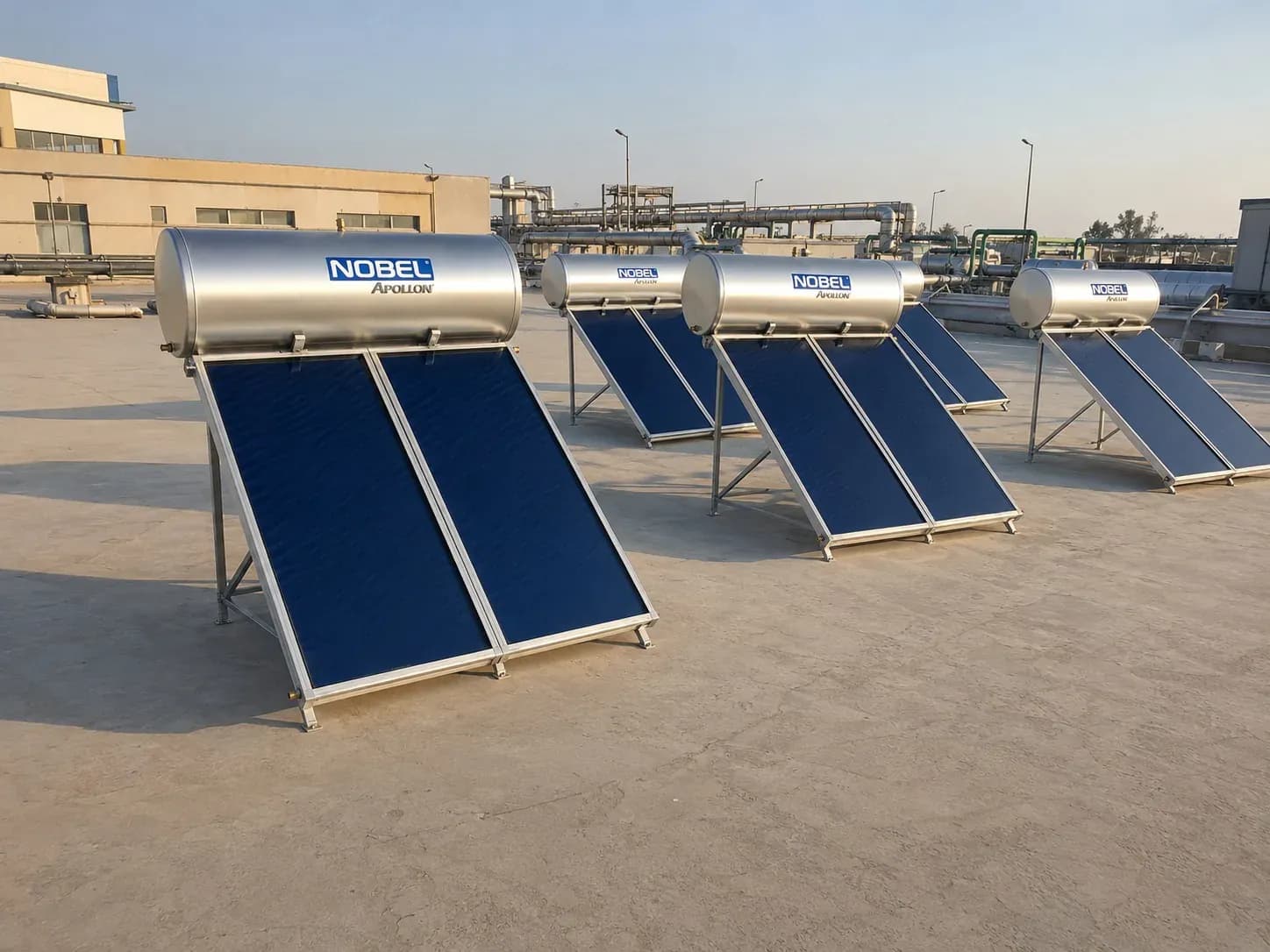
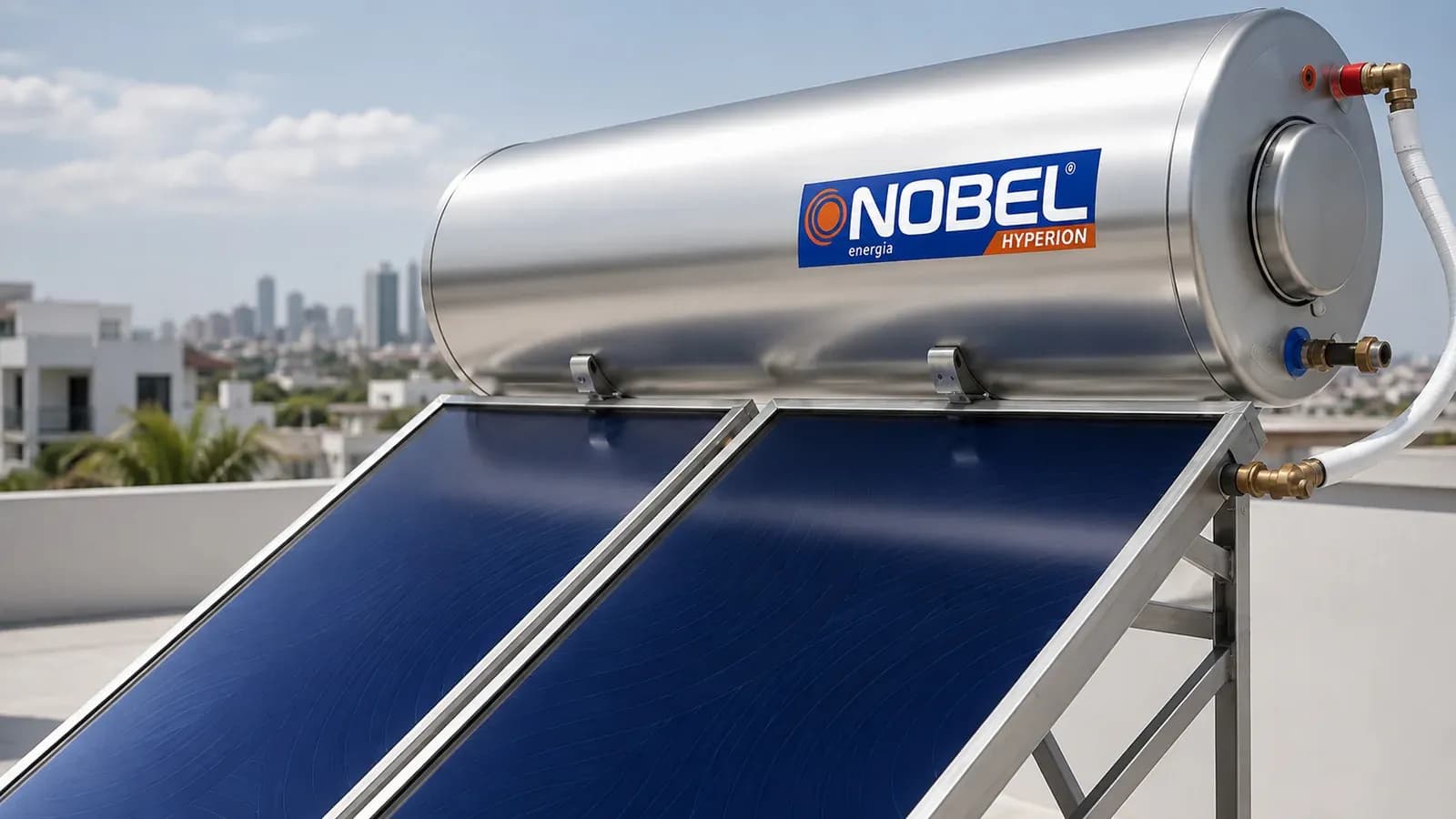
The right protection is a vitreous enamel lining baked onto the steel at high temperature, plus a magnesium anode that corrodes instead of the tank. The tank we rely on for homes (Nobel Apollon) has a double-layer enamel lining — a specification on paper, not a salesman's word. Ask any company: "what protects the tank inside?" If the answer is "stainless" or "treated" with no detail, ask for the datasheet.
Thing 2: insulation thickness
The sun heats the water by day; insulation keeps it hot until morning. Weak insulation = water cools overnight = the backup element runs more = a bill. Insulation is measured in centimetres and written in the specification; on the Apollon it is 10 cm. If the specification doesn't state the number, that alone is a signal.
Thing 3: the collector and its glass
The collector (panel) is what sits exposed to sun, dust and heat for years. The difference between a good and a weak collector doesn't show on day one — it shows in year three as efficiency quietly drops. Ask about: glass type (low-iron is better), absorber type (selective coating vs ordinary paint), and welding method. Collector types themselves (flat plate vs evacuated tube) are a separate topic, covered in evacuated tubes or flat plates.
Thing 4: independent certification — where origin starts to matter
This is the point that turns "imported" from a marketing word into information. A product from a known European factory is usually tested by an independent body — most notably Solar Keymark — and that certificate isn't decorative; it is actual performance and durability testing to a common standard. A product without such a certificate, imported or local, leaves you with only the seller's word.
The Nobel heaters we install are Greek, Solar Keymark certified, and built with European (German and French) materials. Not because "European is better" as a rule — because the certificate lets you verify for yourself instead of trusting.
Thing 5: who serves you after the sale — where origin can hurt
This is where the equation flips. The best import in the world without a real agent in Egypt = a problem two years later. When you need a spare part or a warranty claim, who do you call? The company that imported one shipment and moved on?
That is what makes the agent more important than the origin: Aurora is Nobel's exclusive agent in Egypt, so the warranty (5 years on the tank, 10 on the collectors — replacement, not repair), parts and servicing come from one source with a name and an address. If you're comparing another imported product, ask: who is the agent, since when, and are parts stocked or ordered?
So when is local the right choice?
Honestly: with a limited budget and simple usage, some local or economy products do the job — provided you apply the same five questions and get written answers. Our economy range exists for exactly that case — economy solar heaters — and we say it plainly: expect different performance and lifespan from the European range, and that difference is what you're paying.
The mistake isn't choosing local — it's choosing "imported" or "local" instead of asking the questions.
A third category people forget: "locally assembled from imported parts"
The market has a third type sold as "imported" that is actually local assembly: a tank from one source, a collector from another, a local mount — and a name on top. Not necessarily bad, but it breaks the key strength of the European range: one factory responsible for the whole system, tested as a single unit. When tank and collector come from different factories, any certificate covers a part, not the system, and the warranty is spread across parties.
The question that exposes this category in a second: "Are the tank and collector from the same factory, and what is its name?" If the answer wanders, you're looking at assembly — judge it as local with the five questions, not as an import.
The practical takeaway
- Judge the five: tank, insulation, collector, certificate, agent. Not nationality.
- Origin genuinely matters for one thing: independent certification — a certified European product you can verify yourself.
- An import without an agent is riskier than a local product with one — a warranty is paper if nobody honours it.
Find your right capacity for your home, then book a free inspection — you'll get the specification in writing across those five points so you can compare at leisure.
Frequently Asked Questions
Is an imported solar heater better than a local one?
Not as a rule. Imports can be excellent or poor, and so can local products. Judge the tank lining, insulation, collector, independent certificate and agent — not the country of origin.
What does country of origin actually affect?
Mainly independent certification. A product from a known European factory is usually tested by a body like Solar Keymark, which lets you verify rather than trust the seller.
Where are Nobel heaters made?
Greece — Solar Keymark certified, built with German and French materials. Aurora is the exclusive agent in Egypt.
What should I worry about with imports?
The absence of an agent. The best product in the world with nobody in Egypt to honour the warranty or stock parts becomes a problem two years later. Ask who the agent is and since when.
Is a local or economy heater acceptable?
With a limited budget and simple usage, yes — provided you apply the same questions, get written answers, and expect different performance and lifespan from the European range.
How do I confirm a heater is genuine, not a copy?
Through the manufacturer's certificate, the authorised agent, and warranty activation in your name. Telling genuine from copy is covered in detail in "how to tell a good solar heater from a bad one".
Got a question about what you just read?
Talk to Aurora's team directly for a straight answer — or book a free site inspection if you're ready.