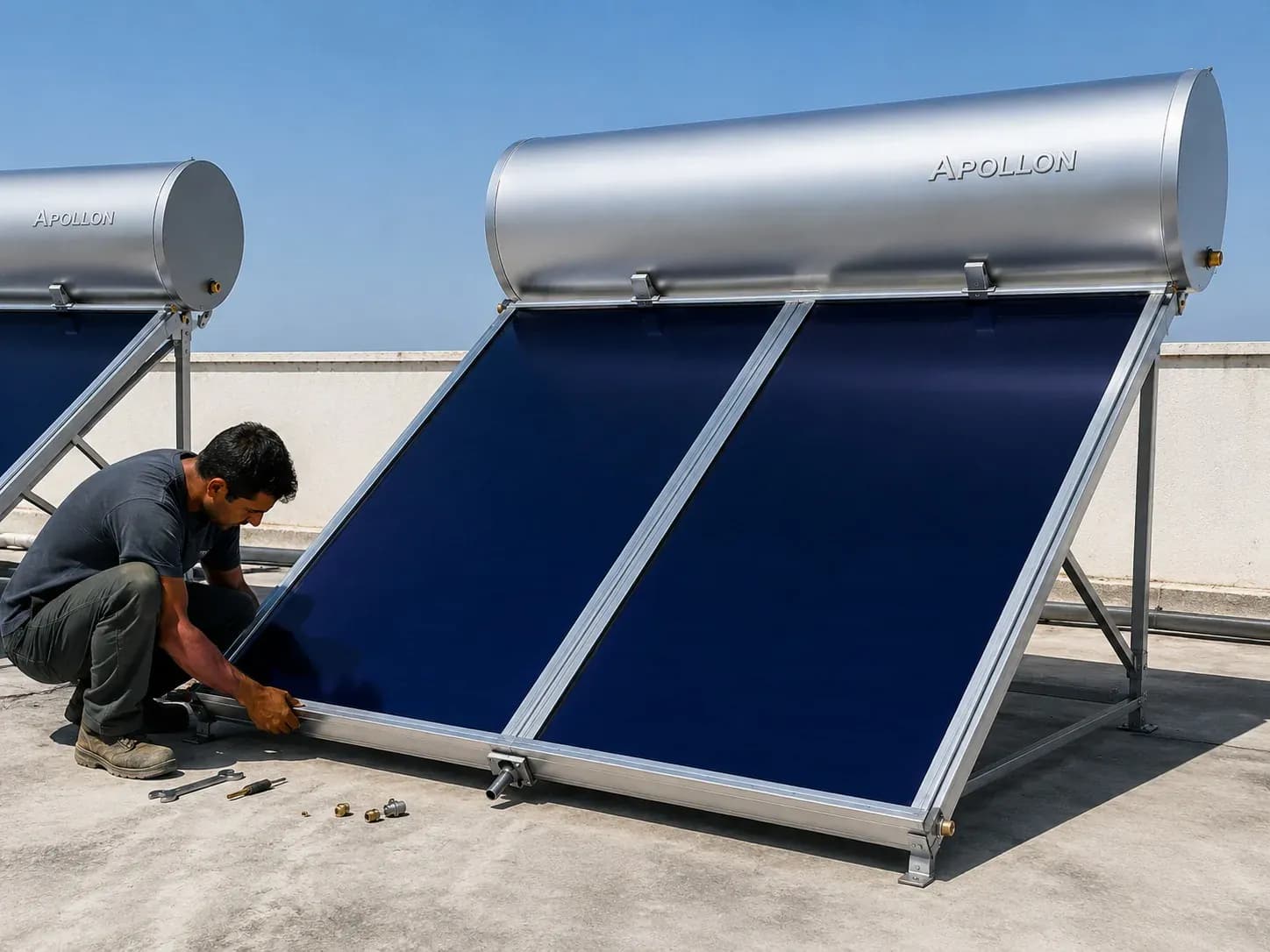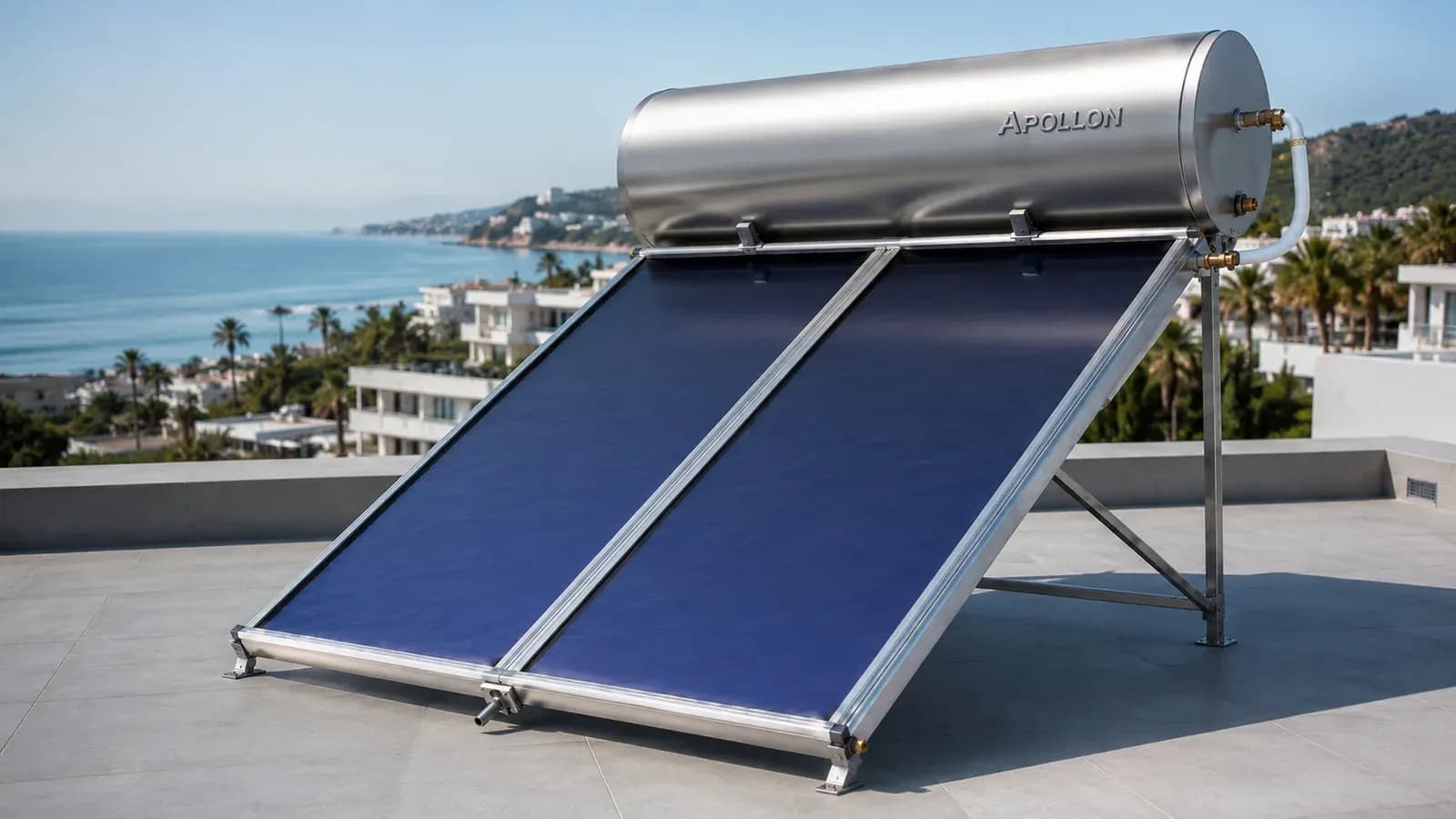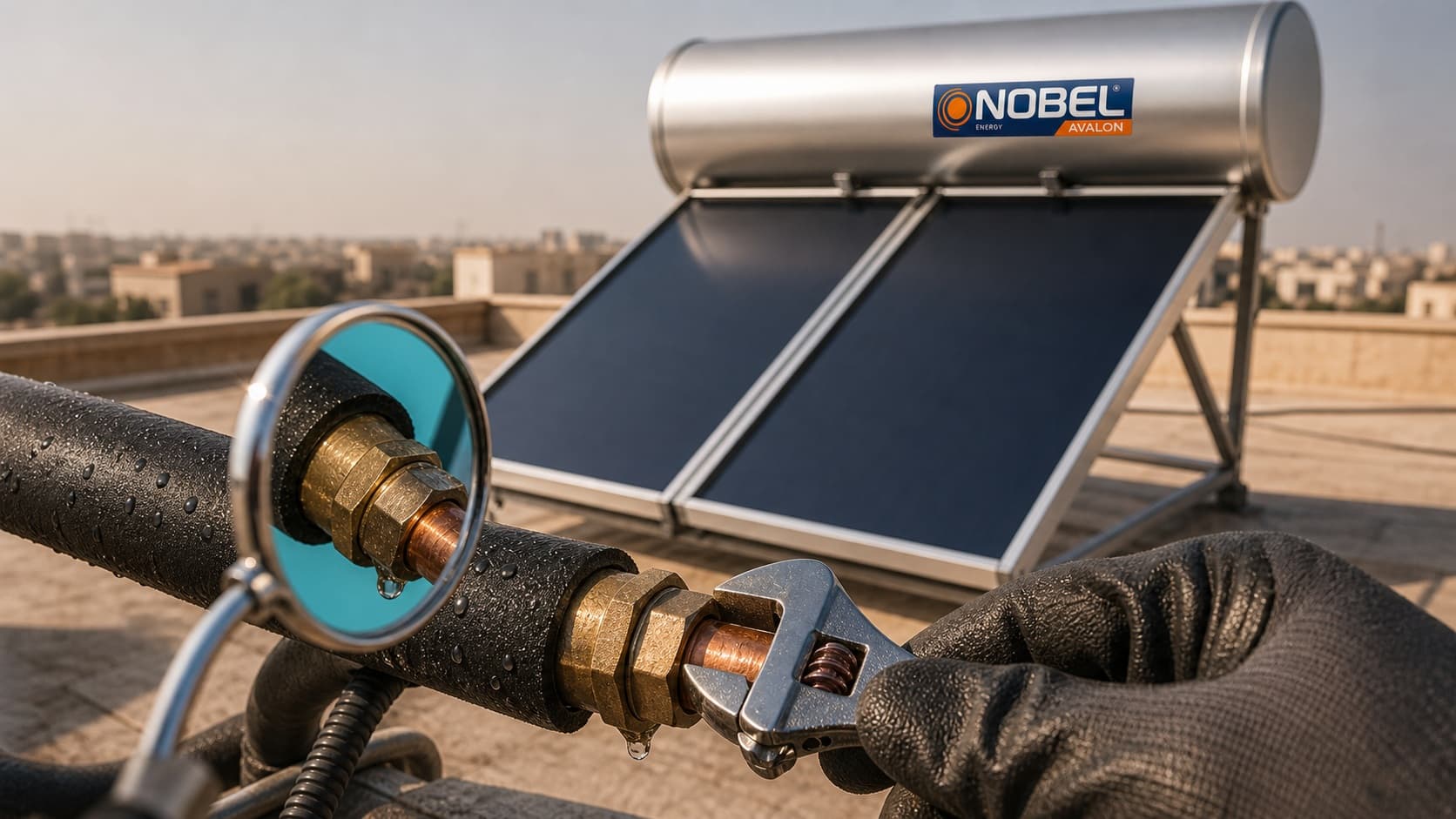

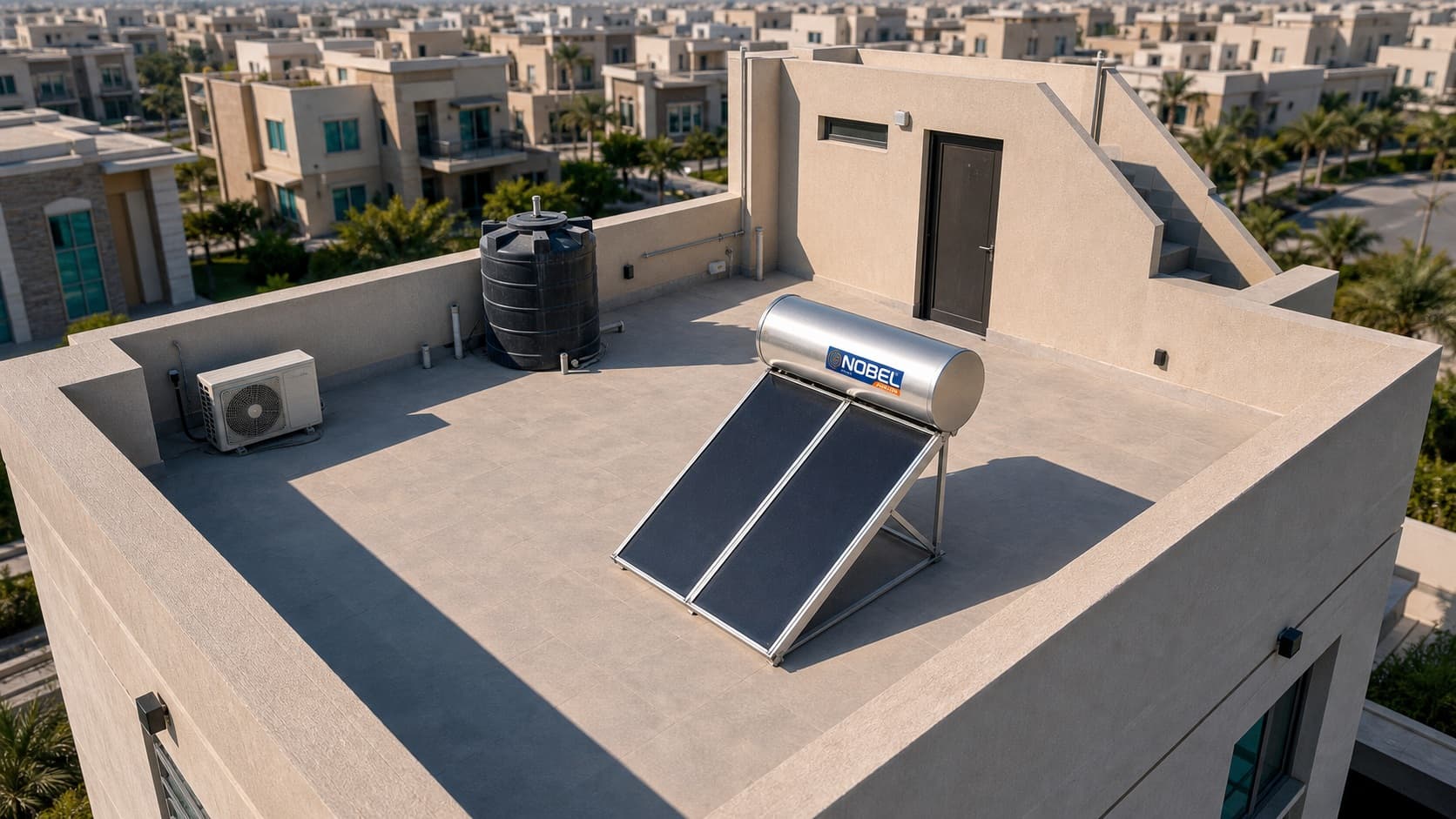
The best place to install a solar water heater is the spot that gets the longest possible sun during the day and stays clear of any shade — from neighboring buildings, water tanks, trees — at the right tilt and orientation for your location. This decision affects performance more than any other factor in the whole system, and the gap shows up most clearly in winter, when the sun's angle is lower and every degree of exposure counts. A technician with real field experience reads your roof in person before deciding on a spot, which is exactly what happens during the free inspection.
Why does placement matter more than the model itself?
The exact same model, at the exact same capacity, can perform very differently depending on where it sits on your roof. A heater in an ideal spot runs at full efficiency even on lower-sun days; one in a partly shaded spot makes the backup element work harder than it should — meaning higher electricity use and a shorter lifespan for the backup element itself over time. The catch is that a lot of people focus entirely on model and capacity when choosing (details on that in How to choose the right solar heater) and overlook that the installation spot is just as decisive a decision.
What an ideal spot looks like
- Longest sun exposure: an open spot with no shade for most of the day, not just around noon.
- Clear of shade: shade from a neighboring building, a water tank, or even a large tree noticeably cuts performance — and the tricky part is that shade can change over time (a new building goes up next door, for instance), so a technician needs to account for that during the inspection, not just what's visible on the day.
- Tilt and orientation: set based on your geographic location for the best sun absorption across the whole year, not just one season.
- Reasonable proximity to usage points: the closer the tank is to where hot water is actually used, the less heat is lost in the piping.
- A base that can carry the weight: the roof needs to safely support the full system weight, especially for larger setups like the forced-circulation systems used in villas.
Is there one ideal orientation for all of Egypt?
No — the ideal tilt angle and orientation vary by your location's latitude, so an ideal spot in Cairo isn't necessarily the same angle as an ideal spot elsewhere. That's why generic calculations from the internet, or a neighbor's own experience, aren't reliable enough — the measurement has to be done on your specific roof, in your specific location. It's part of why any serious installation company insists on an actual on-site inspection before any commitment, rather than giving you a fixed number or direction remotely.
Does placement differ between a flat and a villa?
In flats, options are usually limited by the size of the shared or private roof space, so the focus is on making the best use of the available area while staying clear of shade from surrounding buildings. In villas, there's usually more space, but the challenge becomes picking the best orientation among several possible options, and sometimes needing a forced-circulation system if the distance between the tank and usage points is large. The exact difference comes down to your specific home — a wider comparison is in Solar heater for a flat or a villa?.
So how do I find the best spot for my roof?
There's no substitute for a technician seeing your roof in person — measuring actual shade at different times of day, calculating orientation precisely, and assessing the space and the base. That reading is a core part of any inspection, and afterward you know exactly the best possible spot for your specific roof, not general advice. The steps that follow once the spot is set — from base prep through to commissioning — are covered in Solar heater install time and steps.
Once the spot is set, what keeps performance up?
Choosing the right spot is the first step, but performance only stays at that level if follow-up continues — periodic panel cleaning and a simple check of the piping and connections. The full picture of installation and maintenance together is in Installing and maintaining a solar water heater, and if performance weakens after a while, the common causes and fixes are in Solar heater faults and how to fix them.
Placement is not an execution detail — it is a full factor
Among the four factors that decide the system and its price there is one called fit with the house, and placement is its core. That is what makes placement something other than a last step after choosing a model:
- Placement changes the return on materials. An excellent system shaded for half the day produces less than a simpler one in the open. Placement can cancel out the very difference you paid for.
- Placement changes the specification required. A narrow or divided roof can make the right answer more than one small unit instead of a single large one — a decision taken at the inspection, not after the purchase.
- Placement negotiates with the house itself. The look of the façade, compound rules, and the views of co-owners on a shared roof are all real constraints. They have nothing to do with performance, but they have to be accounted for.
- And placement decides what maintenance looks like. Easy access keeps routine upkeep simple; difficult access turns it into an expedition — and maintenance is a full subject of its own.
So choosing a spot is not "where do we put it?" — it is "how do we get the most out of what you paid for?"
A common mistake: choosing the spot for convenience, not performance
A lot of weak installations happen because the spot was picked for being the easiest to work with — closest to the stairs, or free of structural obstacles — rather than because it's the best spot for sun. The result is a heater that works, just not at its full efficiency. The gap can be hidden in summer (strong enough sun to cover for a less-than-ideal spot), but it shows up clearly in winter when every degree of exposure counts. That's why evaluating a spot can't be a quick visual call — it needs an actual on-site measurement.
Before you settle on a spot, first know the right capacity for your home, then book a free inspection and we'll determine the best spot and installation plan — with full honesty if your roof has a particular challenge.
Find your right capacity first, then book a free inspection and we'll see your roof and choose the best spot for performance.
Frequently Asked Questions
Where's the best place to install a solar heater?
The spot that gets the longest sun and stays clear of shade, at the right tilt and orientation. The inspection determines it precisely for your specific roof.
Does shade really matter that much?
Significantly — shade from a building or a tank noticeably cuts output and makes the backup element work harder than it should.
What if my roof is small or partly shaded?
The inspection tells you honestly whether it's suitable and what the best solution is — without selling you something that won't actually work.
Is placement different for a flat versus a villa?
Same principle (longest sun, clear of shade), but a villa often has more space and sometimes needs a forced-circulation system, while a flat is limited by the available roof space.
Can I move the heater's spot later if new shade appears?
Technically possible in some cases, but it needs a technician's assessment — it's always better to get the spot right the first time during the inspection.
Got a question about what you just read?
Talk to Aurora's team directly for a straight answer — or book a free site inspection if you're ready.