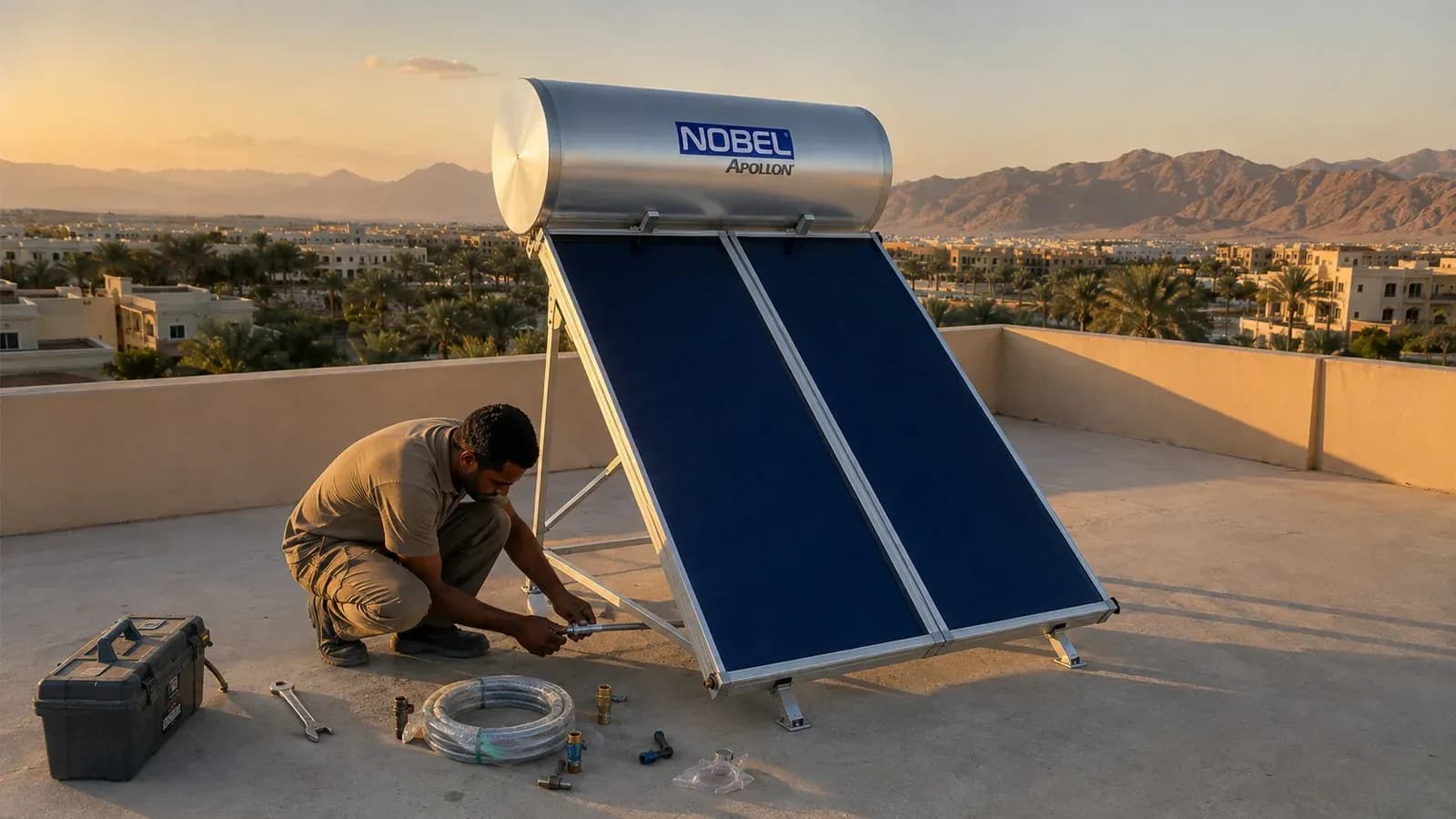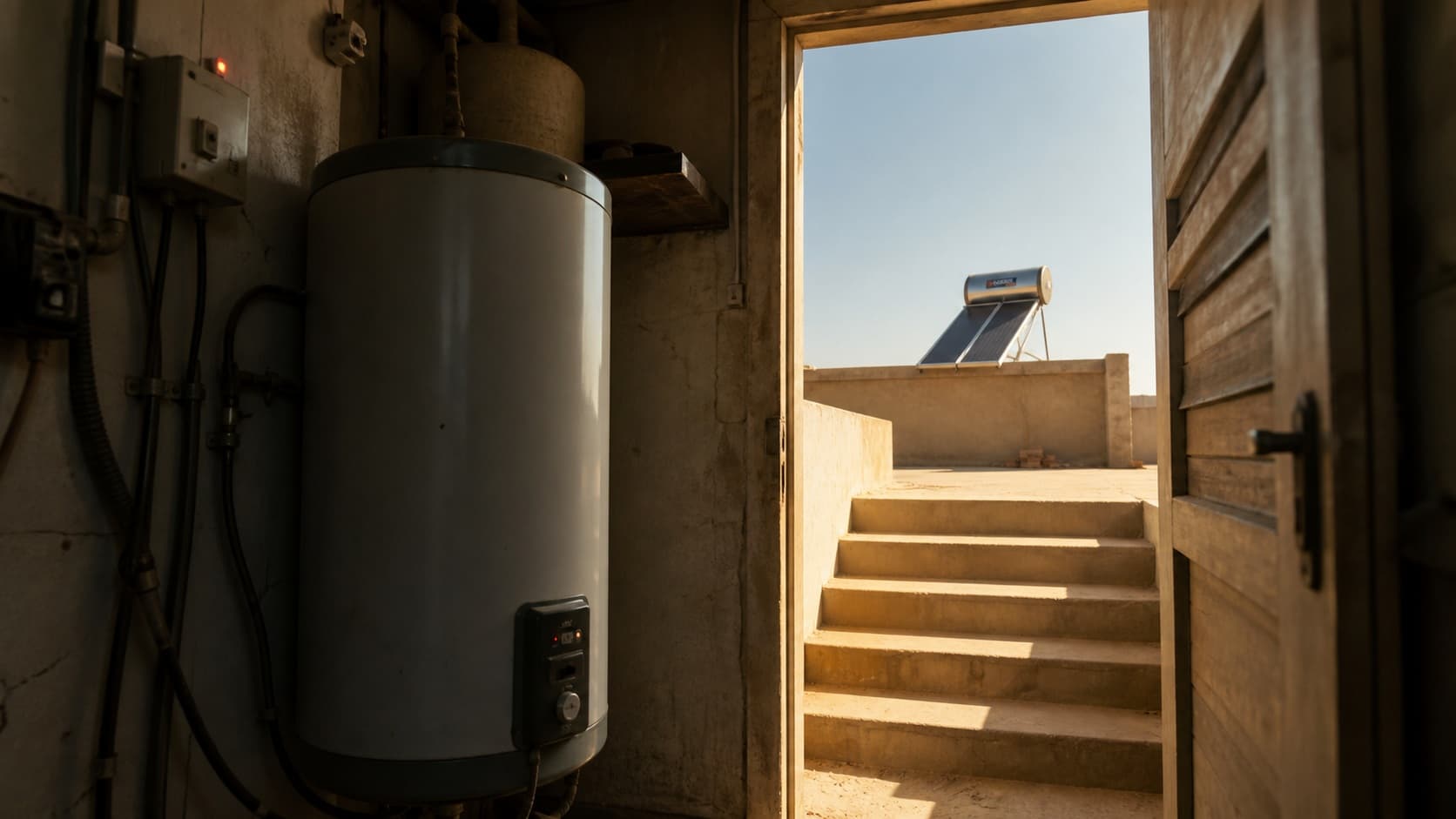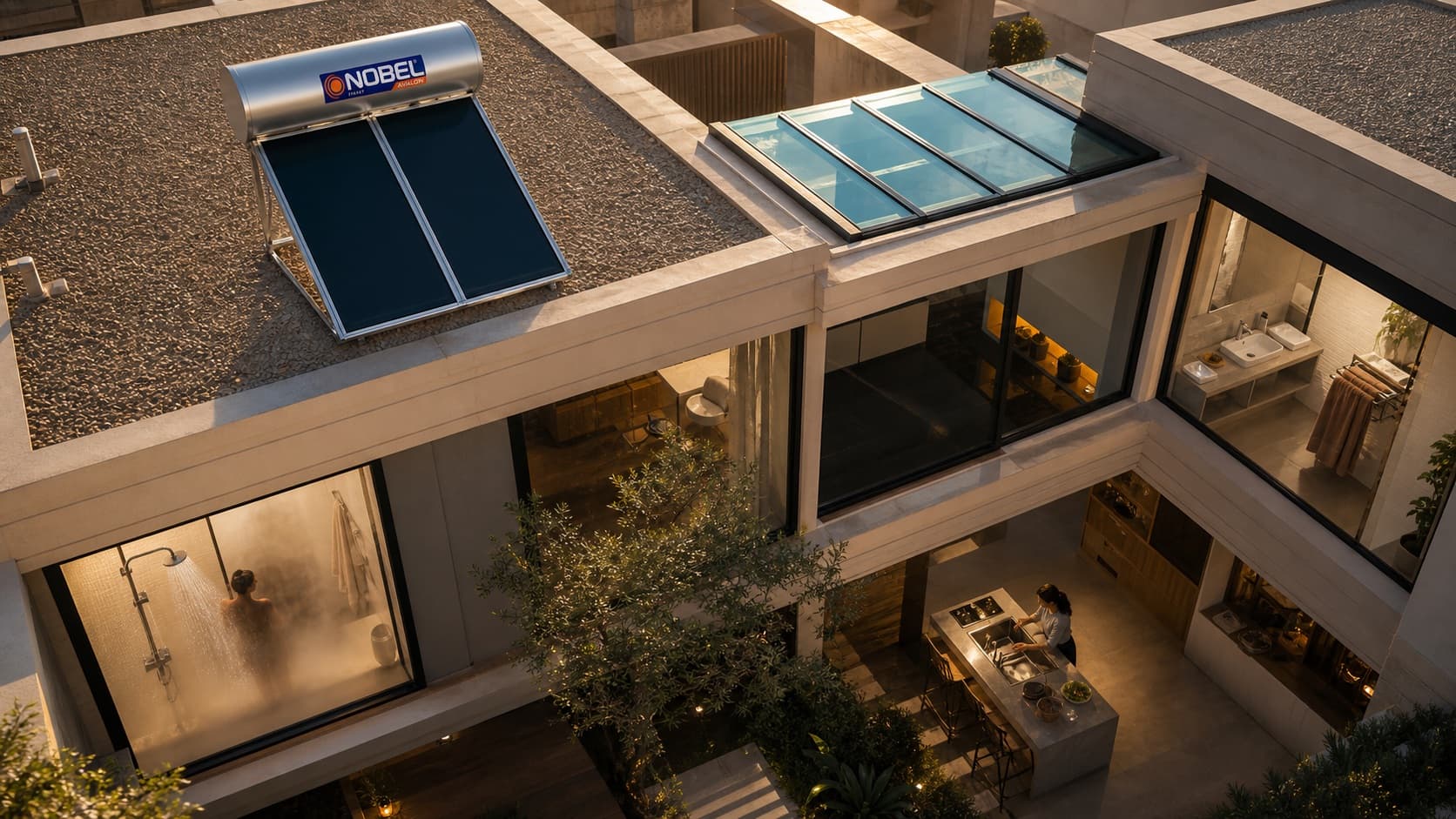

There is no single answer to "solar or gas" — and we can say that honestly because we install both. Solar wins when you have a roof that sees the sun and want the lowest possible running cost. Gas wins when there is no roof, or you want hot water without limits or waiting, or you need heating from the same source. And in many homes the best answer isn't "or" — it's both together, which most comparisons never mention.
This article compares the two across six dimensions by situation, not by product. It follows on from solar or electric water heater — electric is the most common comparison, but anyone with natural gas asks this one specifically.
First: what does "gas" mean exactly? There are two kinds
Before comparing, we need to distinguish, because people mix them up:
- Instant gas water heater: a small wall unit that heats water as it passes through — no tank. Suited to a flat with one or two bathrooms. Available from us at 16 and 20 L/min (instant gas heaters).
- Gas boiler: a larger system that heats the whole home's water and can also run heating (radiators or underfloor) from the same source. For villas and larger homes (gas boilers).
The difference is covered in gas boiler or instant heater. Here we compare solar with gas in general, and specify the type where it matters.
Dimension 1: running cost
Solar wins — clearly. The energy heating the water comes from the sun; natural gas, however cheaper than electricity, is still a monthly bill that moves with gas pricing. Solar pays for electricity only on days the backup element tops up.
That difference compounds over the system's life. We won't quote a number — it depends on your usage and area — but the direction is the same in every case.
Dimension 2: up-front cost
Instant gas wins. A small unit and simple installation if the gas line exists. Solar is a complete system (tank + collectors + mount + roof piping), so higher up front. A central boiler is higher than both, being a whole-home system.
The equation: solar pays more once to pay less every month — worth it if you'll live in the home for years. For a temporary home or a one-year lease, the sums change. That calculation is in how much a solar heater saves.
Dimension 3: "unlimited" hot water?
Gas wins. An instant heater and a boiler heat water as it flows — as long as there's gas there's hot water, no tank to run out. Solar works from a tank: if six people shower back to back on a winter night, the tank can run out and the backup takes time to recover.
The solar fix: correct sizing to your headcount and usage pattern — which is what the calculator does. A tank that runs out is usually a tank that was sized wrong, not a flaw in the idea.
Dimension 4: roof and location
This decides most cases. Solar needs a roof that sees the sun most of the day, and a pipe route from roof to home. If you're on a middle floor with no roof access, or the roof is shaded, solar is either difficult or won't perform. An instant gas heater hangs on a kitchen or bathroom wall — provided proper ventilation and a gas line.
So the first question before any comparison: do you have a roof or not? Details in how much roof space a solar heater needs.
Dimension 5: safety and maintenance
Both are safe when installed correctly. Gas needs ventilation, a sound flue route and installation to spec — mistakes here are unforgiving. Covered candidly in is a gas boiler safe. Solar carries inherently lower risk (water and sun) and simple maintenance: anode and valve checks and cleaning.
Dimension 6: heating
The boiler wins — solar isn't in the race. If you need central heating for a villa, a boiler gives hot water and heating from one heart. A domestic solar heater does water only. Here the decision isn't "solar or gas" — it's boiler for heating + solar for water (next section).
No natural gas in your area? Cylinders change the sums
Everything above assumes natural gas from the network. Many areas — the coast, new compounds before connection, villages — have no network, and the alternative is LPG cylinders. That flips two dimensions: running cost rises because cylinders cost more than the network and are delivered by hand, and continuity becomes your responsibility — the cylinder runs out mid-shower. In that case solar's side of the scale gets heavier if a roof exists, and the logical alternative without a roof is a heat pump, not cylinders.
The answer nobody gives: both together
In villas and larger homes, the best design we see is usually hybrid: the solar heater heats the water with the sun most of the year, and the boiler tops up in winter and runs the heating. The result: lower running cost than gas alone, guaranteed hot water in any weather, and heating from the same system.
Forced-circulation central solar is designed for this case from the start — forced circulation system — and the inspection determines whether a hybrid is worth it in your home or one of them is enough.
The practical takeaway by situation
- Flat with roof access, two bathrooms: solar — lowest running cost, backup for winter.
- Flat without roof or on a middle floor: instant gas — with ventilation and a gas line.
- Villa needing heating: a boiler for heating, and solar for water if the roof allows — hybrid.
- Unsure about the roof: the inspection settles it in one visit.
Find your right capacity if solar is an option, and book a free inspection — we'll tell you which suits your home, even if it's gas.
Frequently Asked Questions
Solar or gas water heater — which is cheaper?
To run, solar is cheaper because the energy is from the sun while gas is a monthly bill. Up front, an instant gas heater is cheaper. Solar pays more once to pay less every month.
When is gas better than solar?
When there's no usable roof or it's shaded, when you also need central heating, or when you want unlimited hot water for many people at once. Provided proper ventilation and a gas line.
Can I use both together?
Yes, and it's the best design in many villas: solar for water most of the year, with the boiler topping up in winter and running the heating. Lower running cost and guaranteed hot water.
Solar runs out and gas doesn't — right?
Gas heats water as it flows so it doesn't run out. Solar uses a tank, so if sized to your headcount and usage pattern it doesn't run out in normal use. A tank that runs out was usually sized wrong.
Is gas safe?
Yes, when installed correctly with ventilation and a sound flue route. Poor installation is the source of problems, not the unit. Solar carries inherently lower risk.
You sell both — so what will you recommend?
Whatever suits your home. We offer solar heaters, gas boilers and instant gas heaters, and have no stake in one over another. The inspection decides based on the roof, consumption and whether heating is needed.
Got a question about what you just read?
Talk to Aurora's team directly for a straight answer — or book a free site inspection if you're ready.