

"Five-year warranty" is an incomplete statement, and not something you can compare two offers with. A real warranty is defined by three things, not one: which part it covers (the tank? the collectors? the backup element?), repair or replacement, and who is responsible — the manufacturer or the company that installed it. Two offers both stating "5 years" can be completely different across those three points.
This article sets out the questions to ask before you pay, so you can read any warranty — whether you buy from us or from someone else.
The first distinction: manufacturer warranty and installation warranty are two separate things
Every solar heater installation carries two separate warranties, and most of the confusion comes from people treating them as one:
- The manufacturer warranty covers the product itself — tank and collectors — under the manufacturing company's terms.
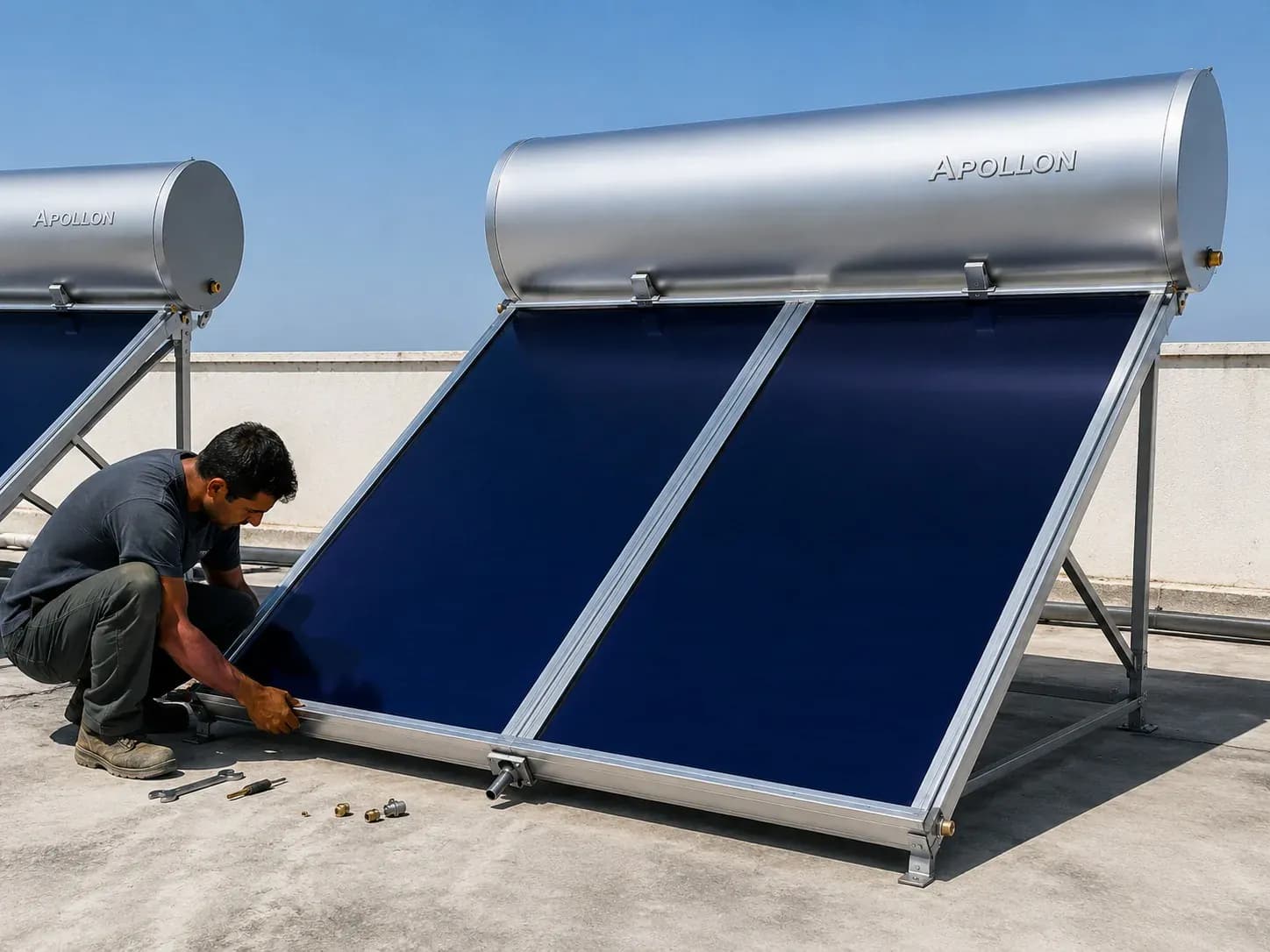
- The installation warranty covers the work carried out — mounting, connections and commissioning — and that is the installing company's responsibility, not the manufacturer's.
The difference shows up the day something fails: a leak from a badly fitted connection is not a manufacturing defect, and a tank corroding from the inside is not an installation defect. If a company gives you only the manufacturer warranty and says "the rest is on the factory", you effectively have no cover on half the risk.
At Aurora both exist, and warranty activation links them to a single service record in your name — so when you call two years later, you don't have to explain from scratch or hunt for paperwork.
"Replacement, not repair" — the phrase that actually matters
This is the most important word in any warranty and the one people ask about least.
Repair means the defective part is fixed and put back. Replacement means it is removed and a new one fitted in its place.
The difference is not cosmetic: a repair returns the part to something less than new, and it often weakens again later. A replacement returns it to zero.
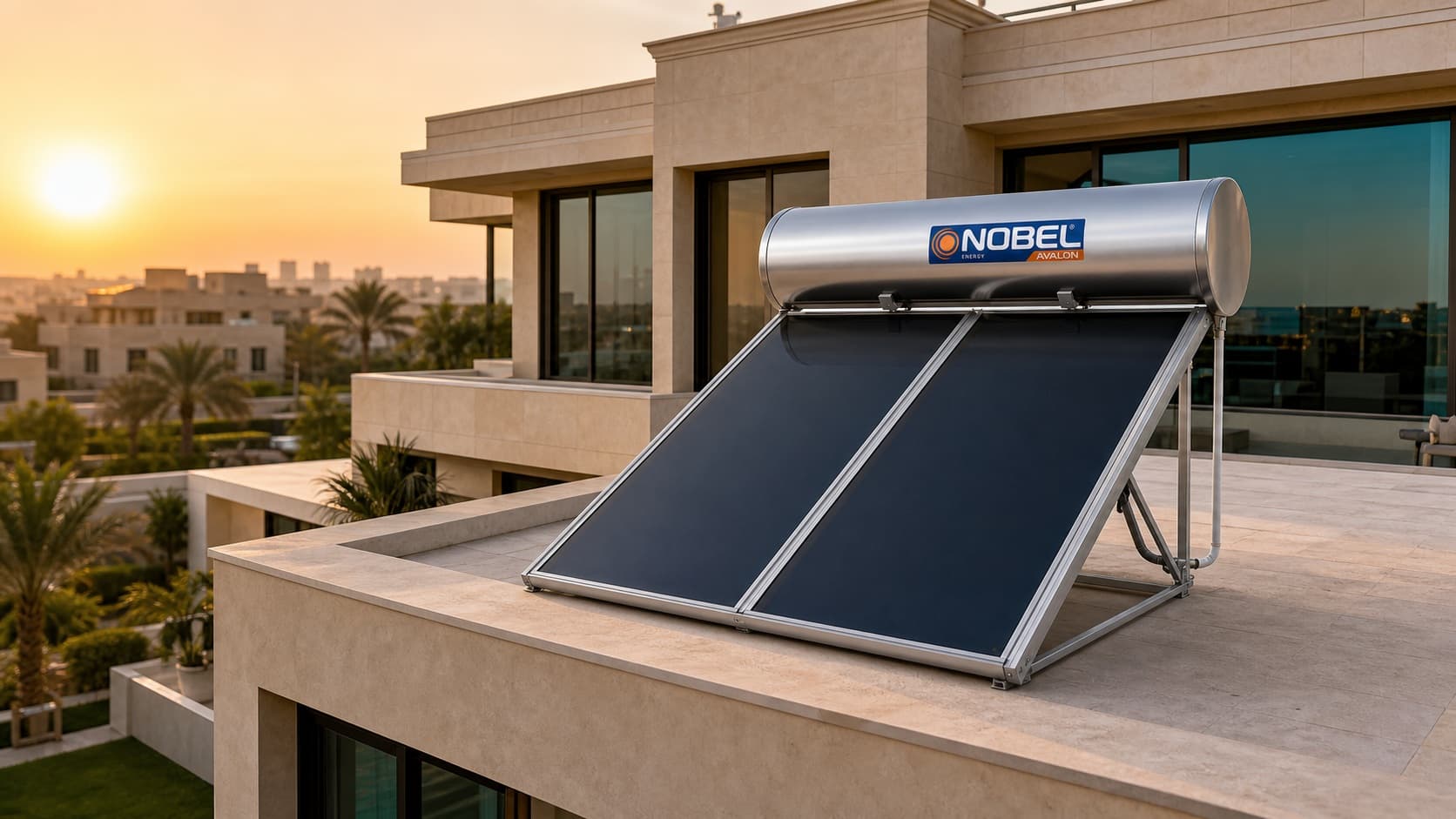
The approved Nobel Apollon warranty: 5 years on the tank and 10 years on the collectors — by replacement, not repair. When comparing any other offer, ask it in those words: "is this warranty replacement or repair?" The answer tells you a great deal about the seller's confidence in the product.
The period is not one number — each part has its own
The second common mistake is assuming the warranty is a single figure covering the whole heater. In reality each part has a different lifespan and different risks:
- The tank — the most expensive part and the hardest to replace; its warranty reflects its resistance to corrosion and scale.
- The collectors — exposed to sun, heat, cold and wind continuously; on Apollon their cover is longer than the tank's, at 10 years.
- The electric backup element, anode and valves — these are consumables by nature. They wear and get replaced over time, and they fall under spare parts rather than system warranty. Our spare parts carry a warranty, usually one year, varying by part type and brand and confirmed at the time of order.
So "10-year warranty" in an advert with no breakdown is not information — ask: ten years on what exactly?
Economy heaters carry a warranty too — but read it
A frequent question: does an economy heater come with a warranty? Yes — every heater is sold with its agent's warranty, and the period varies by brand and model. The difference is not "warranty versus no warranty"; it is duration, coverage and type of remedy.
The rule we work by: the warranty is set out in writing before purchase, not after. And if someone refuses to put the warranty in detail in writing before you pay, that is a complete answer in itself — the other criteria for choosing a company are in how to choose a trustworthy installer.
What actually voids a warranty?
This is the point that hurts people a year or two in, and we state it plainly because knowing it early saves money. The two most common causes in practice:
- Technical intervention by anyone outside the team responsible for the system. Someone opened the tank, swapped a part, or altered the connections — from that moment the company cannot determine what caused a fault, and cover falls away.
- Neglected preventive maintenance — by far the most common cause, especially in areas where water is high in dissolved salts and scale accumulates faster. Scale reduces efficiency first and then damages the tank, and that damage is both predictable and preventable, so it is not reasonable for the manufacturer to carry it.
The detailed terms are always printed on the warranty card supplied with the product, and customer service reviews them with you at activation. Read it once at installation — far cheaper than reading it for the first time when you have a fault.
Warranty ≠ preventive maintenance — and confusing them costs
Many assume activating the warranty means maintenance is included. No, these are two entirely different things:
- The warranty covers manufacturing and installation defects under its terms.
- **Preventive maintenance — cleaning, inspection, scale treatment — is a separate** service that keeps the system efficient.
And the irony is that preventive maintenance is what keeps the warranty itself valid — so whoever saves on maintenance is risking the warranty they paid for. That is not an unfair condition, it is logic: a system that has been inspected can be assessed for a manufacturing defect; a neglected one cannot.
How to activate the warranty, and when
Activation happens right after installation and needs simple details:
- Your name and mobile number.
- The installation address.
- Product type and model.
- Installation date or invoice number where available.
- A photo of the product label or warranty card where possible.
And if the invoice is missing, that is not the end of the road — the warranty activation page explains the alternatives and the team reviews the case.
The four questions to ask before you pay
The whole article in four questions, asked in these words to any company:
- How many years on the tank and how many on the collectors — two numbers, not one?
- Replacement or repair?
- Is there an installation warranty beyond the manufacturer's, and where is it written?
- What voids the warranty, and is preventive maintenance a condition?
A confident company answers all four in a minute. Book a free inspection and we'll set out the warranty in detail before any commitment, and if you are still comparing models the smart advisor gives an initial recommendation in under a minute.
Frequently Asked Questions
How many years is a solar heater warranty?
It is not one number. The Nobel Apollon warranty, for example, is 5 years on the tank and 10 years on the collectors, by replacement rather than repair. Any offer quoting a single figure for the whole heater is missing the breakdown.
What does "replacement, not repair" mean?
A covered defective part is removed and a new one fitted, rather than repaired and returned. A repair returns the part to something less than new; a replacement returns it to zero.
What is the difference between the manufacturer and installation warranty?
The manufacturer warranty covers the product itself — tank and collectors — under the maker's terms; the installation warranty covers the work carried out: mounting, connections and commissioning. They are separate and you should ask about both together.
What can void the warranty?
The two most common causes: technical intervention by anyone outside the team responsible for the system, and neglected preventive maintenance — especially where water is high in dissolved salts and scale builds faster.
Does activating the warranty include preventive maintenance?
No, they are two different things. The warranty covers manufacturing and installation defects; preventive maintenance is a separate service — and it is also what keeps the warranty itself valid.
Do economy heaters carry a warranty?
Yes, every heater is sold with its agent's warranty, and the period varies by brand and model. The rule is that the warranty is set out in writing before purchase, not after.
Are spare parts covered?
Yes, and usually for one year — the period varies by part type and brand and is confirmed at the time of order.
Got a question about what you just read?
Talk to Aurora's team directly for a straight answer — or book a free site inspection if you're ready.