
As a household grows — more people, or bathrooms running at the same time — 200 litres starts sitting at the edge, and the natural range becomes 300 litres or more. This article covers when that's genuinely your capacity, and which model provides it.
When you need 300 L
- Household size of 6 or more, or 5 with heavy usage.
- Two or more bathrooms used simultaneously — this weighs toward the larger capacity more than headcount alone. A five-person home with two bathrooms running together in the morning can need more than a six-person home with one bathroom.
- Steady additional demand: a kitchen with heavy hot-water use, a washing machine on hot water, or near-permanent guests.
- Growing households: family size expected to increase within a year or two.
🔴 Important: Apollon gives you 330, not 300
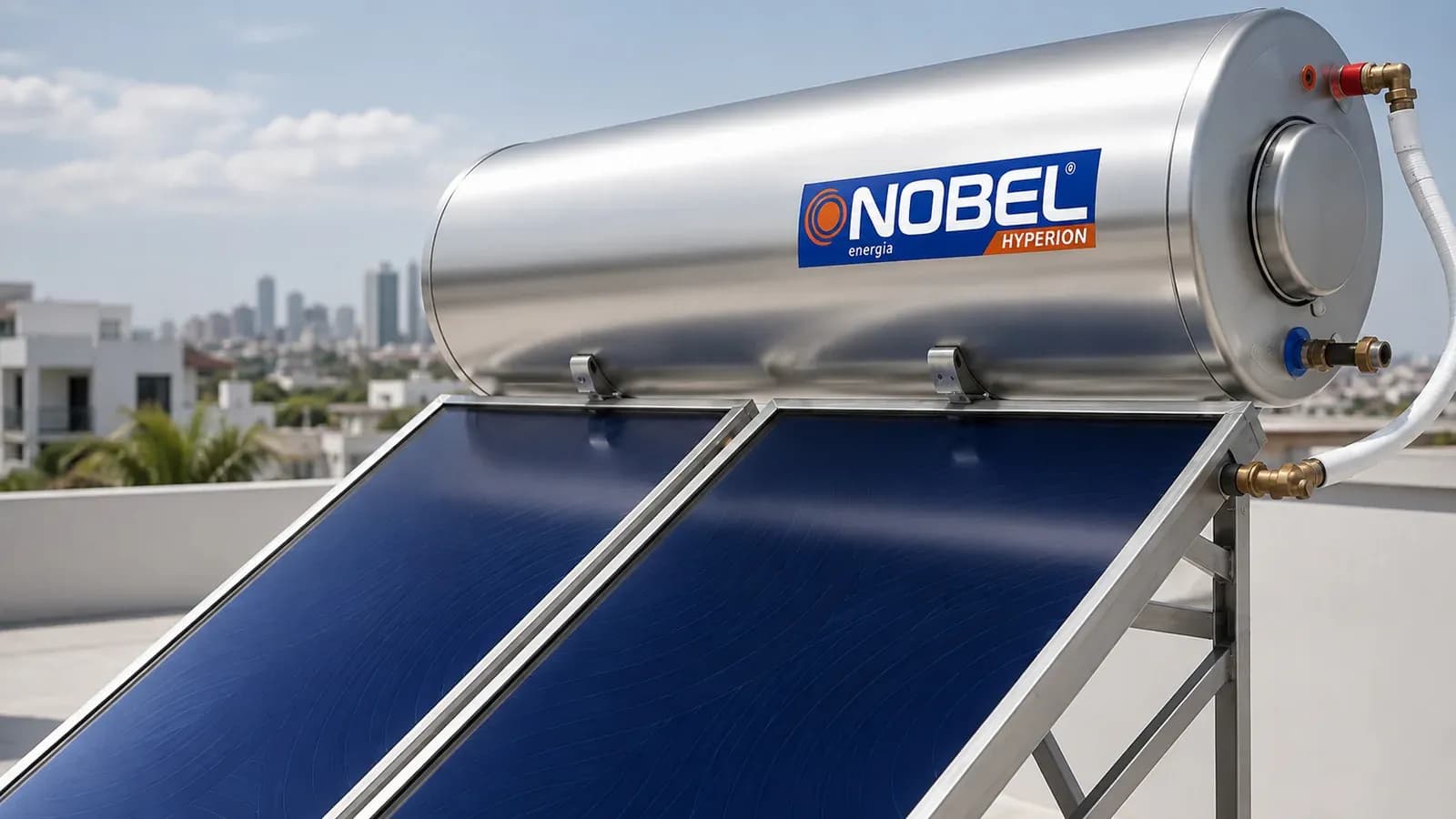
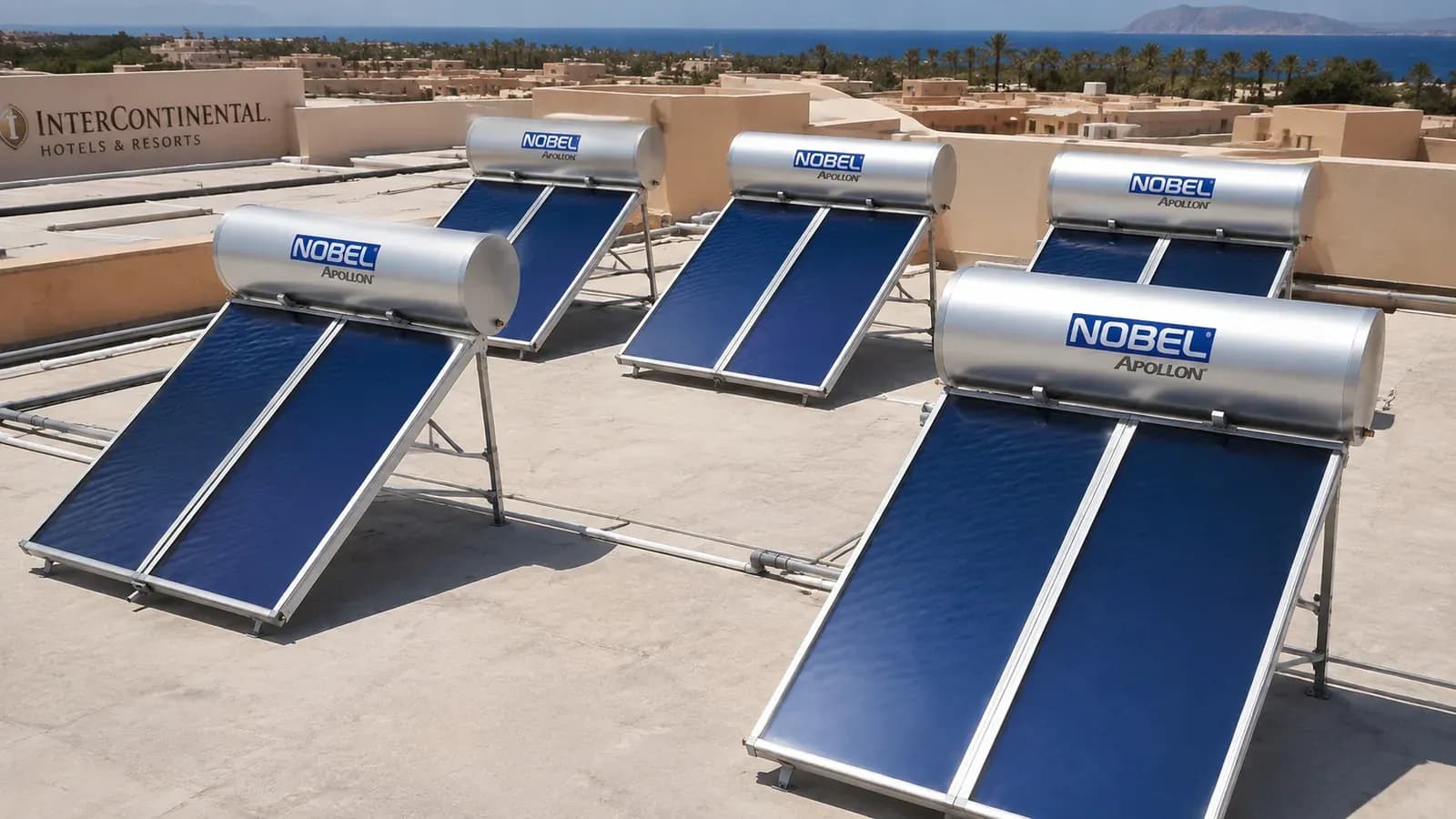
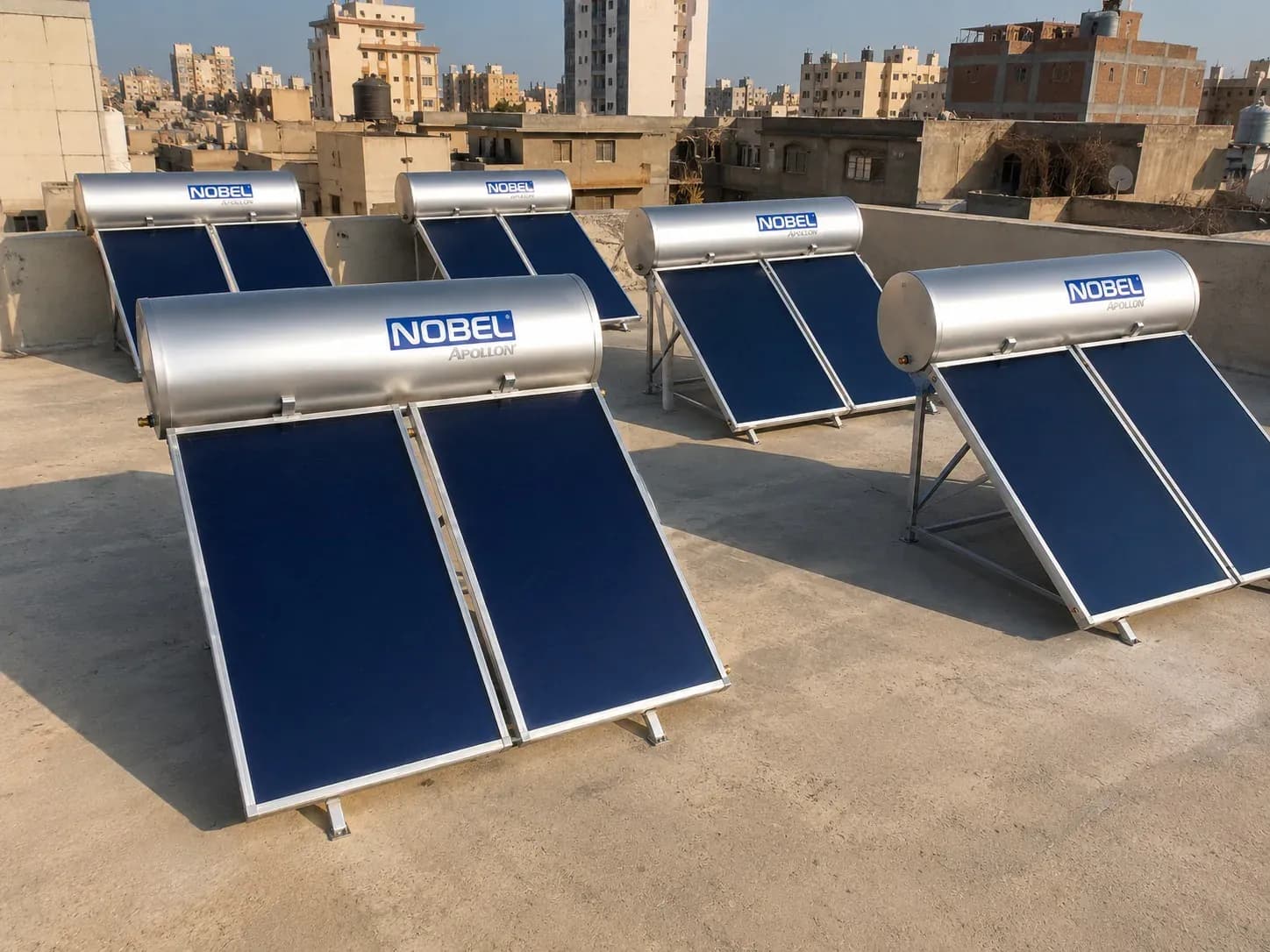
If you're specifically looking for "300 litres", note that Apollon has no 300 — it has 330 litres. The models offering exactly 300 are Hyperion, Aelios and Solfos.
Do the extra 30 litres matter? In a household sitting at the edge of its capacity, yes — it's peak-demand headroom. In a household comfortably under 300, the difference has little practical effect. What matters is knowing the real number you're getting, rather than assuming 300 and receiving 330 (or the reverse).
Per the catalogue, Apollon 330 serves 6 to 8 people and runs on two collectors totalling 4 square metres — meaning it needs more roof area than the 200, which is a factor to account for before installation.
The models offering 300 L
- Hyperion 300 — added corrosion protection, suited to coastal areas and harder water.
- Aelios 300 — the catalogue aims it at larger families and multi-unit projects. (Aelios also offers 500 L for large villas and heavy demand.)
- Solfos 300 — aimed at projects, hotels and large facilities.
The full comparison between them is on the model comparison page.
Roof space — the factor people forget
A larger capacity means more collectors and more roof area. If the roof is crowded with air-conditioning units and tanks, or shaded for part of the day, that affects placement and layout — it doesn't necessarily rule out installation, but it's settled by an on-site inspection, not by guessing from the ground.
Before you commit to 300 L
Capacity is effectively a one-time decision — changing it after installation is expensive. The safe sequence: the calculator gives you a starting capacity based on your household and bathrooms, then the free inspection confirms it and sets the model and placement. If you're still weighing the two capacities, read 200-litre solar heater first.
Frequently Asked Questions
How many people does a 300-litre heater serve?
It suits homes of 6 or more, or 5 with heavy usage and bathrooms running simultaneously. Apollon 330 specifically serves 6 to 8 per the catalogue.
Does Apollon come in 300 L?
No — Apollon comes in 200 L and **330 L**. The models offering exactly 300 are Hyperion, Aelios and Solfos.
Does the difference between 300 and 330 actually matter?
In a household at the edge of its capacity, the extra 30 litres are peak headroom. In a household comfortably under 300, the difference has little practical effect.
Does 300 L need more roof space?
Yes — larger capacity needs more collectors (Apollon 330 uses two collectors totalling 4 m²). The inspection determines whether your roof accommodates it.
Should I choose 300 or 500?
The 500 L (available in Aelios) is aimed at large villas and projects with heavy demand. For a normal home, even a large one, 300 or 330 is usually the better fit — the calculator settles it.
Got a question about what you just read?
Talk to Aurora's team directly for a straight answer — or book a free site inspection if you're ready.