
A heat pump heats your home's water differently from any other appliance: it moves heat that already exists in the air into the water, instead of generating it with an electric element. That difference is the whole story — moving heat takes far less electricity than making it.
And because it runs on electricity alone, with no sun and no gas network, it solves two specific situations: no roof available or sunny enough, or no natural gas in the area. If neither applies to you, there is usually a better fit — and we say so plainly below.
How it actually works
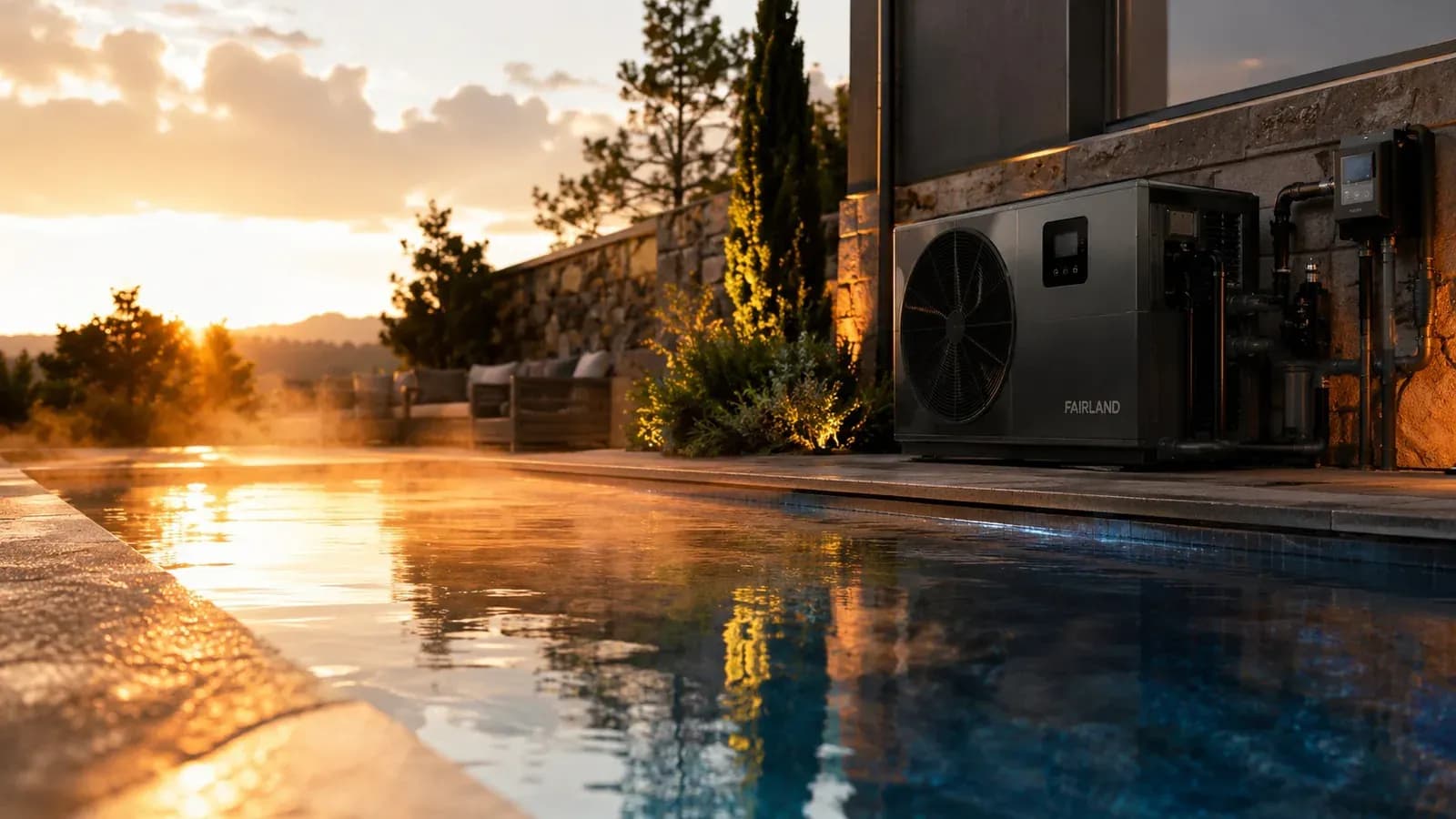
It has a fan that draws outside air, and a refrigerant that carries that air's heat into the water through an exchanger, returning warmed water to the tank. In principle it is closest to an air conditioner in reverse — an AC takes heat from inside and dumps it outside; a heat pump takes it from outside and puts it into your water.
The practical result: the same outcome on a fraction of the electricity. And that difference shows most when it runs year-round, because Egypt's air is warm for most of the year and there is heat in it to draw.
Who it suits
- No roof available, or a shaded one. A flat on a middle floor, a shared roof with no permission, a roof crowded with AC units and tanks, or shade from a neighbouring building for half the day.
- A compound that forbids roof installations or has rules about how the elevation looks.
- No natural-gas network — which puts boilers and instant heaters out of the picture entirely.
- Wanting steady performance day and night, without variation from cloud or season.
- Moderate to high, continuous consumption — these systems prove their value with regular use rather than occasional use.
When it is the wrong choice
We say this plainly so you don't pay for something that doesn't fit:
- If the roof is available and sunny, a solar heater usually saves more — the sun is a free source and a heat pump still draws electricity.
- If you have natural gas, high consumption, and heating in your plan, a boiler covers hot water and heating from one source, while this heat pump heats water only.
- If there is no suitable spot for the outdoor unit. It needs air moving freely in and out — a tight enclosed corner strangles it and cuts its efficiency.
- If use is very occasional — a chalet used twice a year will never recover the system's cost.
Two things to know before deciding
The outdoor unit and its noise. A heat pump has a fan and a compressor, so it makes running noise close to an outdoor AC unit. Placement matters a great deal — at the survey we pick a position away from bedrooms and seating areas.
Airflow around it. Its performance is tied directly to the temperature of the incoming air and its ability to expel the cooled air. Placed in an enclosed space or right against a wall, it keeps re-drawing its own cold air and efficiency falls. That is a design point settled at the survey, not in a catalogue.
Heat pump or solar? The honest answer
This gets asked constantly and the answer is not "one is better". The difference is the energy source and the operating conditions:
- A solar heater takes its energy from the sun for free, so it saves more when sun is available — and it needs a sunny roof, and ships with an electric backup for overcast days.
- A heat pump takes its energy from electricity at high efficiency, so it runs steadily day and night and through cloud — and needs no roof.
So: roof available ⇒ usually solar. No roof ⇒ usually a heat pump. And the survey settles it on your real consumption rather than the general rule. If you are still comparing all three technologies, there is a full comparison page.
The next step
Book a free inspection and we will compare the heat pump against a solar heater and a boiler on your consumption figures and your location, then recommend what actually costs less — even when that is not the pricier option. You can also see the home heat pump details or start from the smart advisor.
Frequently Asked Questions
How does a heat pump work?
It moves heat that already exists in the air into the water rather than generating it with an electric element — closest in principle to an air conditioner in reverse. That is why it uses far less electricity than an electric heater for the same result.
Does it work if I have no roof?
Yes, and that is its best case. It needs no roof and no sun, making it the practical answer for flats and places where the roof is unavailable, shaded, or off-limits.
Should I take this or a solar heater?
If the roof is available and sunny, solar usually saves more because its source is free. If the roof is unavailable or shaded, or you want steady day-and-night performance, the heat pump fits better. The survey settles it on your consumption.
Does it work in winter?
It does, and efficiency falls as the air cools since that is where it draws heat from. Egypt's air is warm for most of the year, so performance stays practical.
Is it noisy?
It has a fan and a compressor, so it makes running noise close to an outdoor AC unit. Placement matters — at the survey we choose a spot away from bedrooms and seating areas.
Can it replace a gas boiler?
For water heating yes, especially where there is no natural gas. But a boiler also runs heating systems while this heat pump heats water only — so if heating is in your plan the calculation changes.
Got a question about what you just read?
Talk to Aurora's team directly for a straight answer — or book a free site inspection if you're ready.