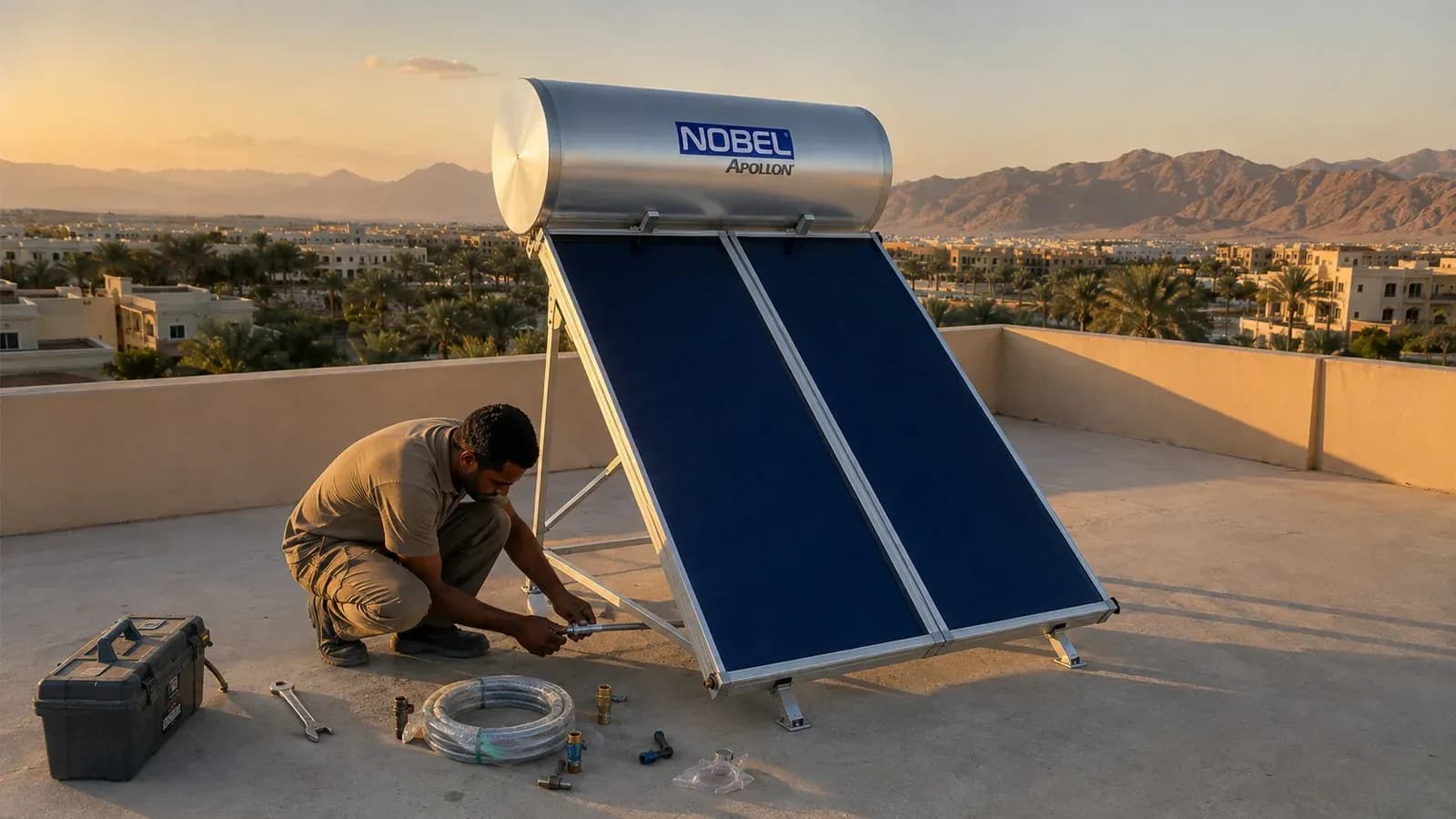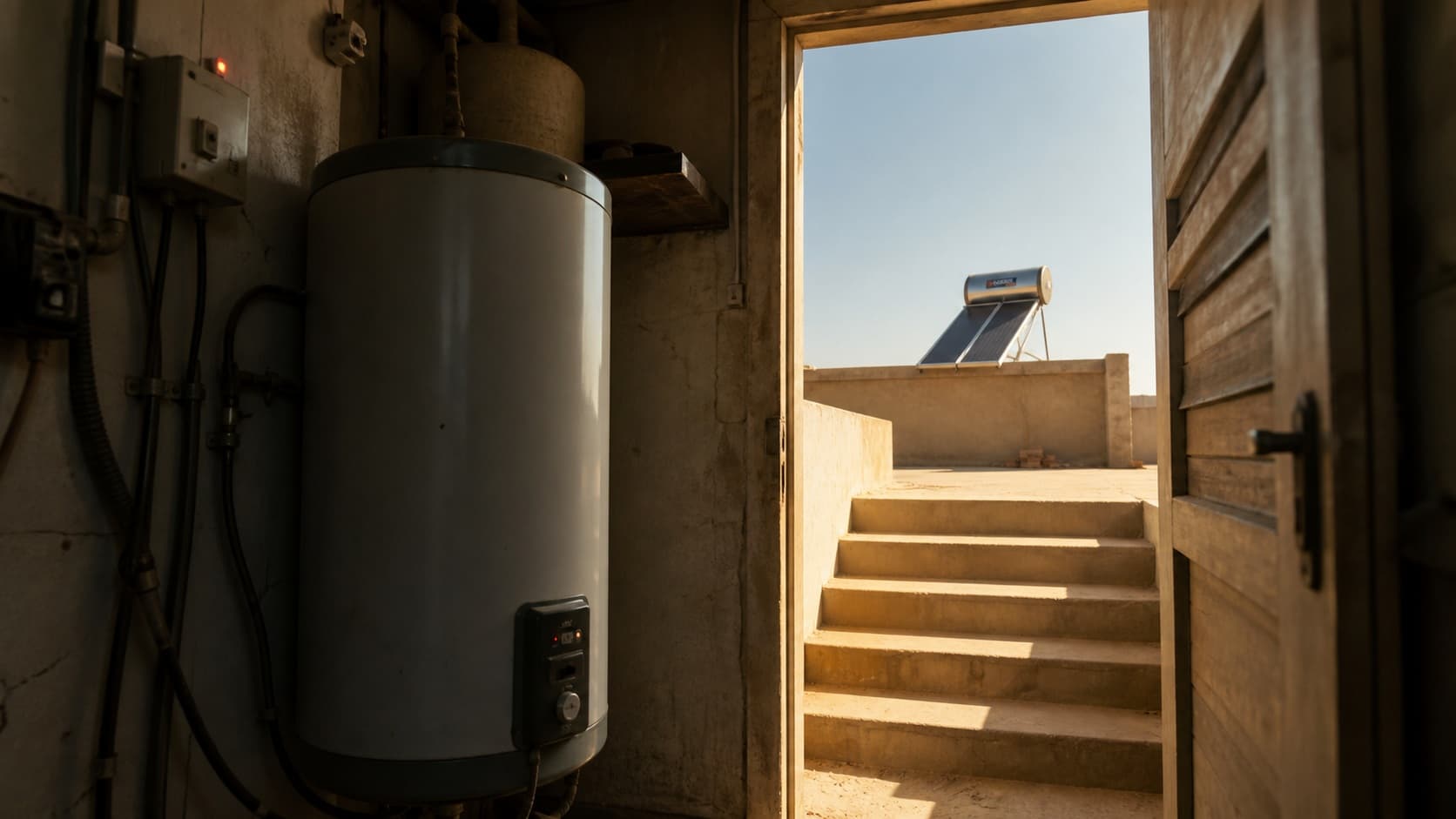


A solar water heater saves you money on electricity because it heats water from the sun for free instead of you paying to heat it every day with electricity. The size of that saving isn't a fixed number — it depends on your actual hot-water use and your electricity rate, and the bigger your household's usage (more people, more bathrooms, frequent daily use), the more visible the saving, because what you used to pay for heating is now running on sunlight. This article explains how to think about savings correctly — without handing you an invented number with no real basis.
How is the saving calculated?
Simply: what you'd have paid to heat water with electricity minus what you actually pay with solar (which is small — only when the backup heater kicks in on cloudy days). That difference is your monthly saving. So the saving grows when:
- Your household is bigger (more daily hot-water use).
- You have more bathrooms and more simultaneous use.
- Electricity prices are higher (and they tend to rise over time, so the value of the saving grows with them).
- The heater size actually matches your usage — a heater smaller than you need means relying on the backup more often, and a heater bigger than necessary just costs you extra money you won't get back. That's why it matters to find your right capacity before installation, not after.
The exact figure for your home is set during the free inspection based on your actual usage — not a guess, and not a generic average that has nothing to do with your house.
So how fast does it pay back?
This is what's called the "payback period": the extra upfront cost of solar is recovered from your monthly savings over a period that varies from home to home depending on usage and electricity rates (we work this out precisely during the free inspection), and after that the saving becomes pure gain for years. You pay more once so you can pay less every month afterward for years — you're not paying more on an ongoing basis. The details behind that upfront cost difference are covered in Solar water heater price in Egypt, and we lay out the full money comparison against electric in Solar vs electric?.
Savings differ between a flat and a villa
Roof area and the number of bathrooms in a villa usually push usage higher than in a flat, and that changes the right heater size and, with it, the savings picture. If you want the full breakdown before deciding, read Solar heater for a flat or a villa? and How many litres does a solar heater need to be? — both explain how home size shapes the decision from the outset.
Do savings drop in winter?
On cloudy days or in winter, the backup heater runs on a bit of electricity to make up for reduced sunlight — that's normal in any solar system. But across the year, the sun carries the bulk of the heating load, so the saving stays clear even with some backup days factored in. The full picture of how a solar heater performs in winter is covered in Solar heaters in winter.
Does the heater tier (economy vs premium) affect the saving?
Both heat water from the same source — the sun — so the core saving mechanism exists across every tier. The real difference between the economy tier and a higher tier isn't so much "how much it saves per month" as it is how stable that performance stays over time: better materials mean heating efficiency stays steady for more years without declining, while a lower-quality unit can lose efficiency over time and lean more heavily on the backup heater. So a higher tier isn't necessarily "saving dramatically more" every month — it's keeping the saving going for longer without it tapering off.
The same four factors — seen from the savings side
The four things that set the price (explained in full in the price article) are the same four that decide how much you save and how long the saving lasts:
- Material quality → the life of the saving, not its size. Economy and higher tiers heat from the same source, so the monthly saving starts out similar. The difference shows years later: weak insulation and lower-grade assembly mean efficiency drifts down quietly and the system leans harder on the backup element — so the bill creeps back up without you noticing. Better materials buy stability of the saving, not more of it.
- Specification → a system smaller than you need cancels the saving. This is the most common real cause of disappointment: too little capacity means the electric backup runs every day to cover the shortfall — so you paid for a solar system and you are still paying an electricity bill. The right capacity is not a luxury; it is the condition for saving at all.
- Consumption → the saving is measured against what you pay today. A household with heavy hot-water use feels the difference far faster than a light one. That is why no single savings figure fits everyone — the number comes out of your own bill.
- Fit with the house → where the system sits changes what it produces. This is the one nobody connects to savings: panel orientation, tilt angle, and shade from a water tank, a neighbouring building or a tree all change how much sun the system actually receives. An excellent system shaded for half the day saves less than a simpler one in the open. That is why the inspection looks at the roof, its orientation and its shade before anyone talks numbers.
Savings add up over time
The monthly saving itself looks like a small amount on its own, but its real value shows up when you add it up across the years — especially since electricity prices tend to rise over time, not fall. That means the gap between what you'd pay on electric and what you pay on solar tends to widen as time passes, not shrink. That's part of why the right question isn't "is a solar heater more expensive?" but "is the saving over years of use worth the difference in upfront cost?" — a question we help you answer during the free inspection with real numbers for your home, not a general estimate.
How do I find out my exact saving?
Because savings depend on your home, there's no single figure that applies to everyone. The practical step: find your home's right capacity first (it sets the system size), and during the free inspection we can give you a close picture of your savings based on your actual usage and local electricity rate.
What affects how fast the cost comes back?
The payback period isn't a fixed number because it's the result of several factors working together: the higher your daily hot-water use, the bigger the monthly saving, so the cost comes back faster. The higher electricity prices are in your area, the same effect applies. And the better maintained the heater is, with correct installation from the start, the more stable its efficiency stays — so the cost comes back on schedule instead of being delayed by gradual efficiency loss. The reverse is also true: a household with very light usage will see a longer payback period, and that's something we're upfront about during the inspection instead of overpromising. The goal is a decision based on your real usage, not a generic number picked up somewhere online.
Find your right capacity ← then Book a free inspection and we'll look at your usage and show you the real savings picture before you decide.
Frequently Asked Questions
How much does a solar heater save per month?
It depends on your hot-water use and electricity rate; the higher your usage, the clearer the saving. The exact figure is set for your home during the inspection.
Does a solar heater pay back its cost?
Yes — the extra upfront cost is recovered through monthly savings over a period, and after that the saving is pure gain for years.
Do savings drop in winter?
On cloudy days the backup runs on a bit of electricity, but across the year the sun carries most of the load, so the saving stays large.
Does the saving differ between a flat and a villa?
Yes — a villa's usage and bathroom count are usually higher, which changes the right system size and the savings picture. The details are set for your specific home.
Does the heater's size itself affect the saving?
Yes — a heater smaller than you need means relying on the backup more, and a heater bigger than necessary is extra cost with no added benefit. That's why the right capacity is worked out first.
Got a question about what you just read?
Talk to Aurora's team directly for a straight answer — or book a free site inspection if you're ready.