
Search for "the best solar water heater in Egypt" and every site names a different model. The reason is simple: there is no absolute best — there is a best for your case. A heater serving four people in a one-bathroom flat is not the one serving a six-person villa with three bathrooms, and neither is the one serving a hotel. So any answer that names a model without asking about your home is an advertising answer, not an engineering one.
This article won't tell you what to buy. It shows you how to compare, so you can decide.
The four criteria that actually matter
1. Tank quality and corrosion resistance. This is the single biggest factor in how long a heater lasts, and water in many parts of Egypt is hard or high in salts. A tank finished in glass enamel resists corrosion far longer than plain steel, and a double-layer coating beats a single one. That's the difference between a heater that lasts for years and one that starts leaking early — and it is invisible in a photo or a price tag, visible only in the specification.
2. Thermal insulation. The heater warms water during the day; insulation is what keeps it warm until the next morning. Thicker insulation means less overnight heat loss, which means less reliance on the backup heater. It's measured in centimetres and stated in the specifications.
3. How it circulates. Some systems run on natural circulation (no pumps, no external controllers), others use pumps. Natural circulation is simpler, has fewer failure points, and needs no electricity to run — which matters for long-term maintenance.
4. The warranty — and its type. "5-year warranty" is an incomplete statement. The real questions: is it replacement or repair? Tank only, or collectors too? That distinction is what shows up the day something actually fails.
The real differences between Nobel models
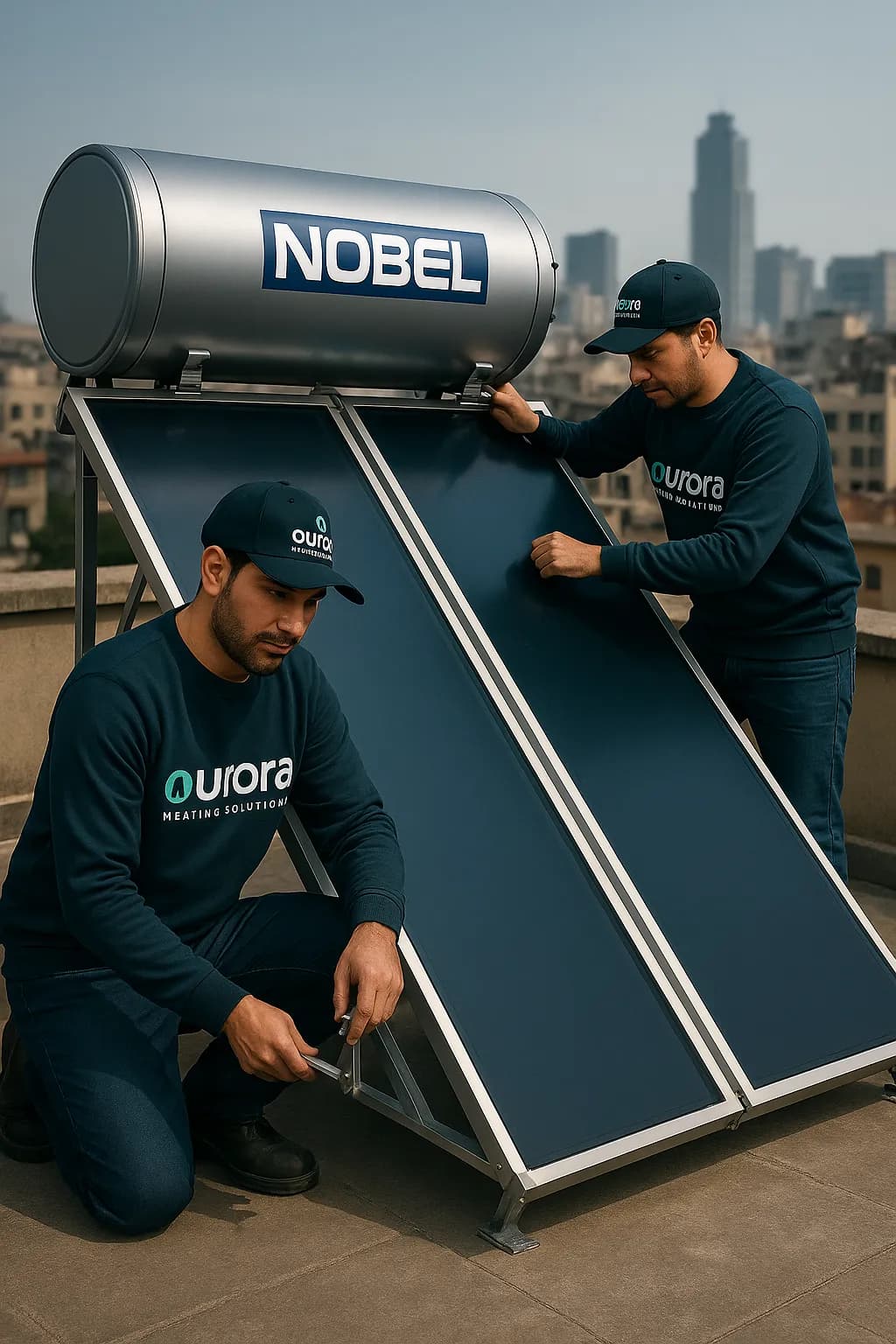
Aurora is the exclusive agent for Nobel products in Egypt. The models differ in capacity and intended use — not in "quality" in the sense of one being good and another poor:
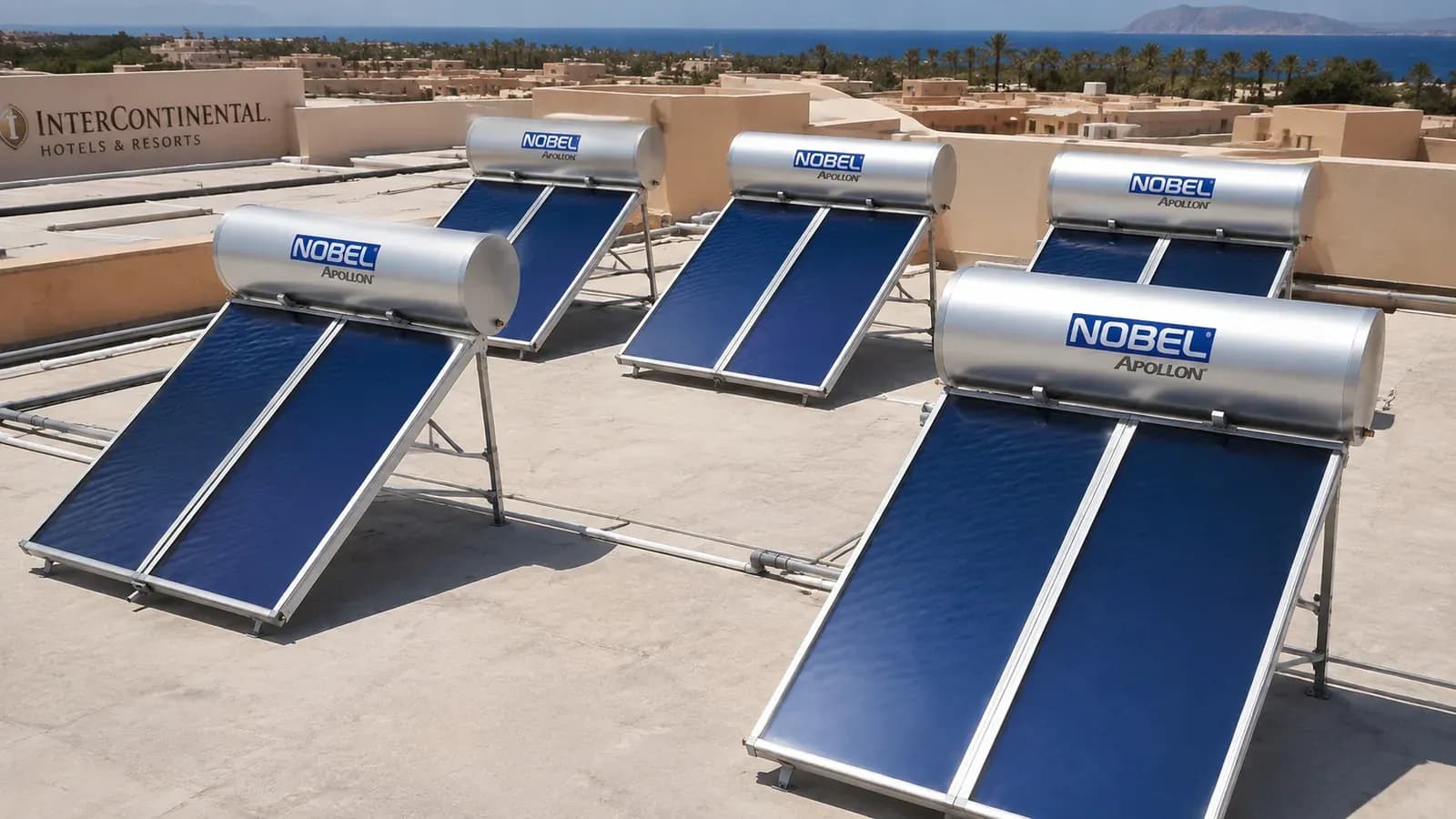
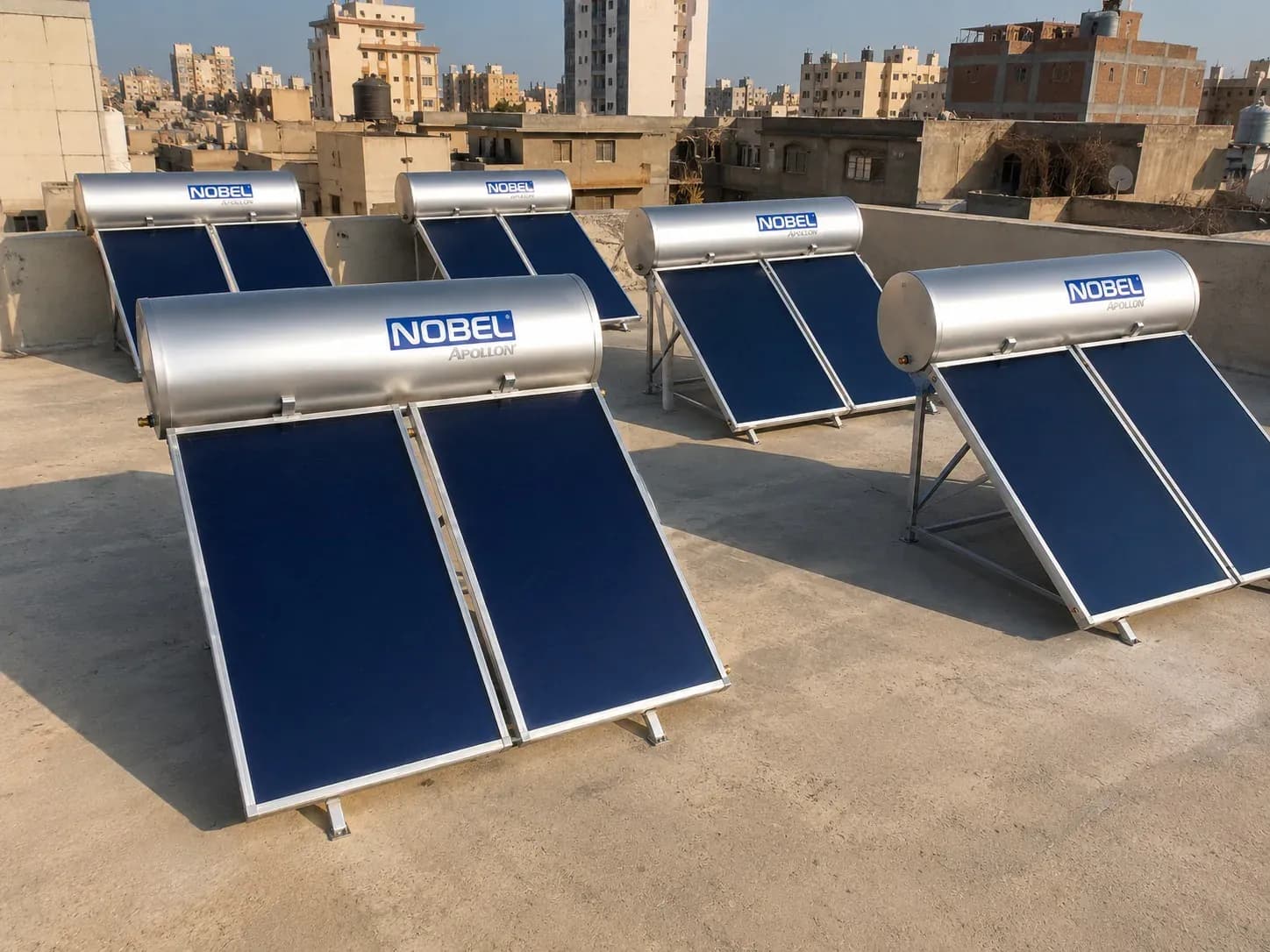
- Apollon — available at 200 L and 330 L. Per the catalogue, the 200 L serves 4-5 people and the 330 L serves 6-8. Double-layer glass-enamel tank, 10 cm insulation, natural circulation without pumps, and a warranty of 5 years on the tank and 10 on the collectors — replacement, not repair. This is the most common model for homes.
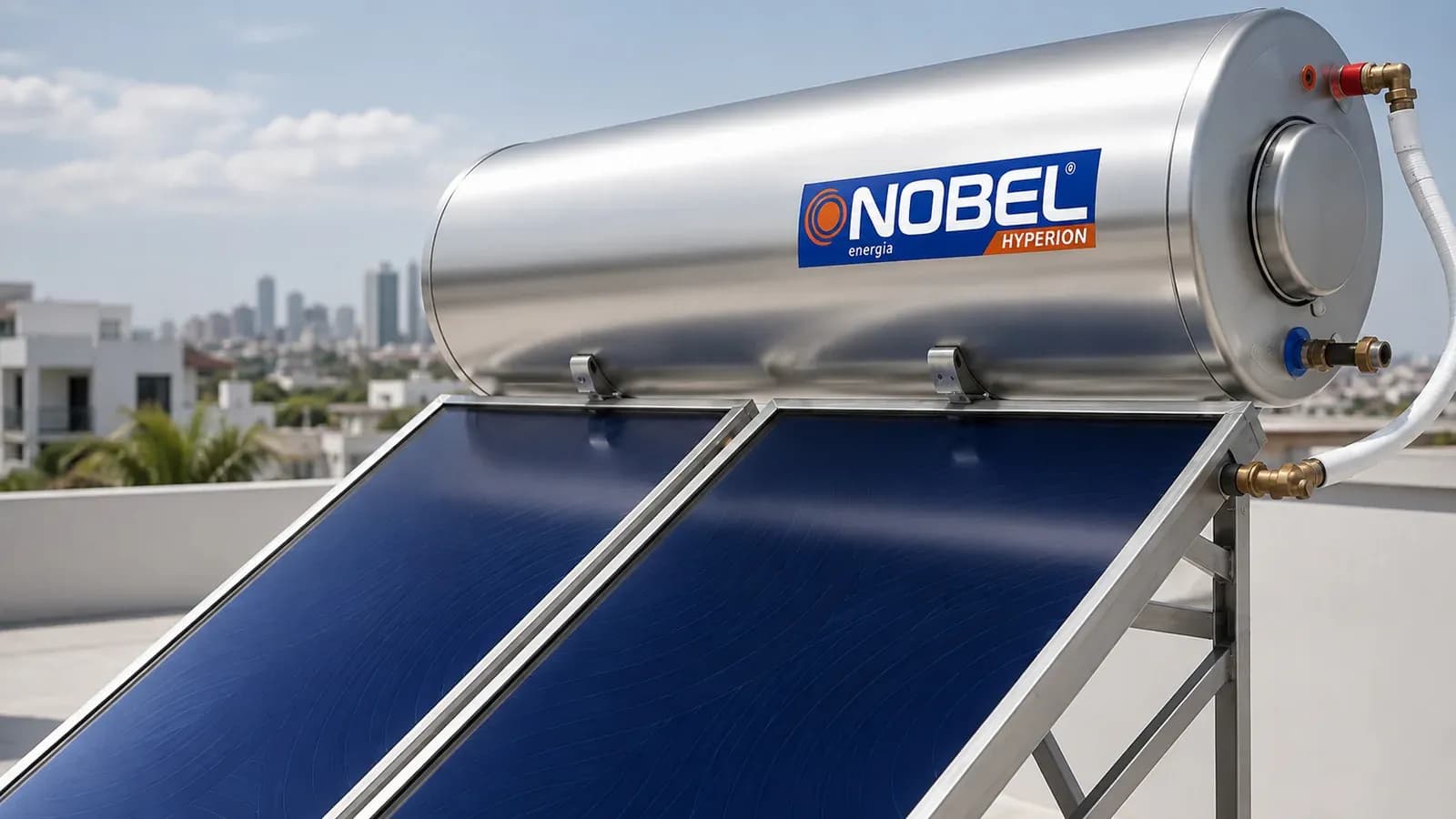
- Hyperion — available at 200 L and 300 L, with added corrosion protection — it makes a difference where water is harder or the air is salty (coastal areas).
- Aelios — available at 200 L, 300 L and 500 L. The 500 L is aimed at large villas and projects with heavy demand.
- Solfos — available at 200 L and 300 L, aimed at projects, hotels and large facilities.
A detail worth knowing: if you're specifically looking for "300 L", note that Apollon does not offer 300 — it offers 330. That isn't cosmetic: 30 extra litres matter in a household sitting right at the edge of its capacity, and many people ask for 300 and actually receive 330.
You can see the full model comparison side by side in one table.
Before comparing models: compare technologies
Many people start with the wrong question. Before "which model?" comes a bigger one: solar, heat pump, or gas boiler? The answer depends on your usage, the energy sources available to you, and the building type. If that isn't settled yet, start from the technology comparison — the cheapest moment to discover a technology doesn't suit you is before you buy.
Why there's no price in this article
Aurora's decision is that we don't publish price figures — not evasion, but because price is set at the inspection: capacity, model, installation location and its requirements all differ from home to home, and any published number would be wrong for most readers. What we can say plainly: our order is quality first, price second, and a model that fails the question "how long will it survive in Egyptian water" never enters the catalogue at all. Details in the pricing article.
The practical takeaway
"Best" means the specification that matches your requirement, from an authorised agent with a real warranty and after-sales service. The sequence that works:
1. Settle the technology (solar or otherwise). 2. Get your starting capacity from the calculator — one minute. 3. Compare the models that cover that capacity. 4. Let the free inspection settle placement and details on-site.
Frequently Asked Questions
Which is the best solar water heater in Egypt?
No single model is best for everyone — the best is the one whose capacity and specification match your household size, bathrooms and roof. The criteria that matter: tank quality and corrosion resistance, insulation, circulation method, and warranty type.
What's the difference between Apollon and Hyperion?
Apollon comes in 200 L and 330 L and is the most common choice for homes; Hyperion comes in 200 L and 300 L with added corrosion protection — it makes a difference where water is harder or the air is salty.
Why is there no price in the article?
Aurora doesn't publish price figures because price is set at the inspection (capacity, model, installation). The inspection is free and gives you the exact figure for your case.
How do I find my capacity before comparing?
Use the [calculator](/en/advisor) — it asks about people and bathrooms and returns a starting capacity in a minute; the inspection confirms it.
Is the most expensive always the best?
No. The more expensive option usually has a larger capacity or is aimed at a different use (projects, for instance). Capacity beyond your requirement is money spent for nothing.
Got a question about what you just read?
Talk to Aurora's team directly for a straight answer — or book a free site inspection if you're ready.